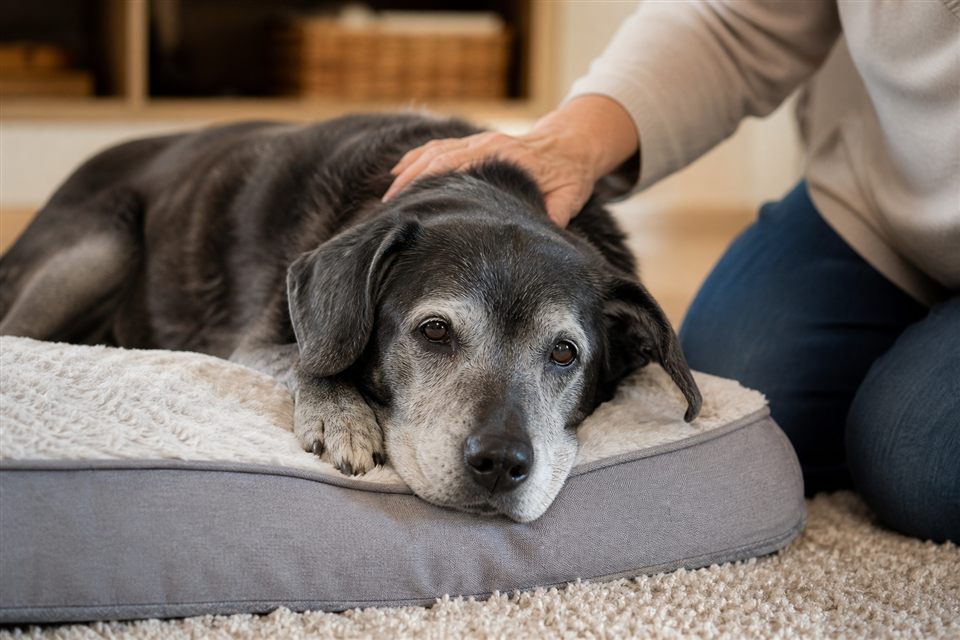
Owners sometimes joke that their older dog ignores commands out of stubbornness when hearing is actually declining. Age-related hearing loss often progresses slowly in both ears, making day-to-day adaptation invisible until the dog fails to react to doorbells or walks away while you call from another room. Partial deafness also increases startle when touched from behind and may contribute to sleep disruption if household noise patterns change. Recognizing early signs allows safety adjustments, modified training with hand signals, and veterinary ear exams to rule out treatable infection or wax buildup mimicking permanent loss.
Deaf dogs live full lives with management. Prevention of startle biting, leash-only outdoor time, and visual cue training become priorities. Because hearing loss pairs with vision changes in some seniors, home layout consistency matters doubly. The sections below describe behavioral clues, home modifications, and communication strategies that reduce frustration for dogs and families alike.
Behavioral signs of declining hearing
Dogs may stop responding to familiar cues unless you are in sight, startle when approached silently, sleep through sounds that once caused barking, or orient to vibrations and floor footsteps instead of voice. One ear loss may cause head tilting toward the hearing side. Owners often notice louder barking because the dog cannot monitor their own volume. Confusion at parks when called from distance is common before total deafness is obvious indoors.
Medical evaluation before assuming age
Ear infections, polyps, foreign material, and otitis media can reduce hearing temporarily or permanently if untreated. Your veterinarian can examine canals, perform cytology, and discuss cleaning under sedation if needed. Sudden complete loss in one ear may indicate deeper pathology warranting referral. Baseline senior blood work still matters because systemic illness affects alertness mistaken for deafness.
Training communication after hearing loss progresses
Start pairing hand signals with verbal cues before hearing fades completely. Standardize one signal per behavior: open palm stop, point to mat, flash light for come inside. Reward eye contact frequently so the dog checks in visually during walks. Avoid startling awake dogs; stomp floor or wave from a distance before touch. Teach children not to grab collars from behind on deaf dogs.
Outdoor safety and identification
Deaf dogs should wear tags noting hearing loss and your phone number. Microchip registration must stay current if the dog bolts during a door dash. Fenced yards need latch checks because recall by voice no longer works. Consider long-line training in open areas instead of off-leash freedom until visual recall is solid. Night walks benefit from reflective gear because verbal warnings to other pedestrians fail.
Questions owners ask most often
Can deaf dogs still go to dog parks? Visual supervision only; off-leash recall by voice will not work. Will hearing aids for dogs help? Commercial pet hearing devices have limited evidence; focus on visual management. Does deafness mean cognitive decline? Not always; sensory loss alone does not equal dementia though both can coexist in seniors.
Key Points
- Hand signals should be taught while some hearing remains if possible.
- Never sneak up on a deaf dog; stomp floor or flick lights before touch.
- Off-leash unfenced areas become unsafe when recall by voice fails.
- Collar tags noting deafness help strangers interact appropriately.
- Lighting cues at night reduce anxiety when verbal reassurance is unavailable.
Practical Tips
- Train a bright flashlight flash or porch light pattern as dinner call signal.
- Use vibration collars designed for training only with professional guidance, not shock features.
- Block driveway and door gaps where a deaf dog might wander into traffic.
- Wake sleeping dogs by letting them smell your hand near the nose before petting.
- Keep furniture layout stable so blind-deaf dogs navigate by memory.
- Inform groomers, sitters, and walkers about communication methods in writing.
First-time pet owners often search these symptoms late at night and worry unnecessarily or wait too long. When in doubt, call your veterinary team with a short video clip; many clinics offer nurse triage by phone. The guidance here supports informed conversations with professionals rather than replacing hands-on examination of your individual dog or cat.
When to call your vet
Schedule an exam for head tilt, ear odor, discharge, balance loss, or sudden hearing change over days rather than years. Ear pain requires treatment regardless of age. Your veterinarian can document progression and discuss quality of life as other senior issues accumulate. Behavioral sudden withdrawal may also indicate cognitive dysfunction overlapping with sensory decline.
Building a two-week action plan
Choose one or two changes from this article to implement this week rather than attempting every tip at once. Note your pet's baseline behavior on day one, then review progress on day fourteen with the same lighting and timing conditions when possible. Small consistent adjustments outperform dramatic overhauls that last only a few days. If you see no improvement after following veterinary guidance for two weeks, schedule a follow-up rather than switching randomly to unrelated internet advice that may confuse the underlying issue further.
Summary for busy owners
If you remember only a few points from this guide, keep these in mind: watch for patterns that repeat daily rather than one isolated incident, adjust home routines before buying expensive products, and contact your veterinary team early when behavior or appetite changes alongside the main symptom. Most problems improve fastest when medical causes are ruled out first and management stays consistent for at least two weeks before you declare an approach failed. Write down dates and take short videos so your next appointment covers facts rather than guesses. Bookmark this page and share specific sections with family members so everyone follows the same plan.
This article is for general educational purposes only and does not replace professional veterinary advice. Contact your vet if your pet shows ongoing symptoms.