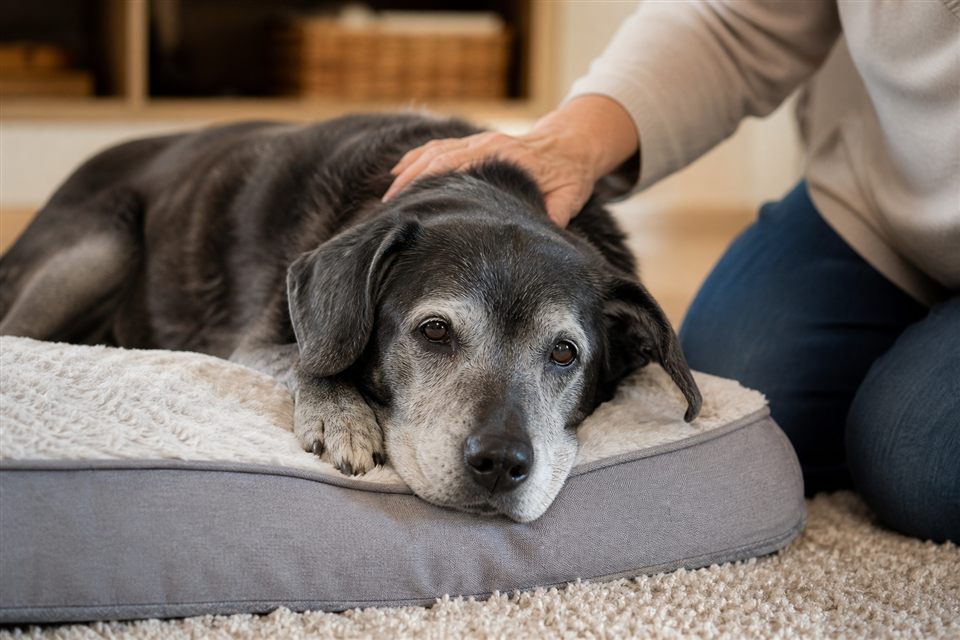
Owners often notice their gray-muzzled companion napping through mornings that used to mean fetch and wonder whether extra sleep is healthy aging or a warning sign. Senior dogs do sleep more than adults, yet they should still show interest in food, family, and gentle activity. Tracking patterns helps you distinguish comfortable rest from pain, illness, or cognitive decline that hides behind closed eyes.
Typical sleep changes with age
Adult dogs often rest twelve to fourteen hours daily including nighttime. Many seniors reach sixteen to eighteen hours, broken into shorter naps because joints stiffen or because night vision and hearing changes disrupt continuous sleep. Shorter walks with longer recovery periods are normal. Complete disinterest in previously loved routines is not.
When extra sleep suggests a problem
Arthritis, hypothyroidism, heart disease, anemia, and cognitive dysfunction syndrome can all increase fatigue. Dogs that sleep deeply but struggle to stand, pant at night, or ignore meals need examination. Sudden sleep schedule changes over days rather than months warrant blood work sooner.
Key Points
- Quality of waking hours matters more than counting every nap.
- Pain often looks like restlessness at night and excessive sleeping by day.
- Orthopedic beds and non-slip rugs improve rest quality without adding hours asleep.
- Consistent moderate exercise preserves muscle that supports joints and improves sleep depth.
- Senior wellness exams twice yearly catch treatable causes of lethargy early.
Practical Tips
- Note daily wake times, meal interest, and walk length in a simple journal for two weeks.
- Offer mentally stimulating sniff walks even when running is no longer possible.
- Keep water bowls near favorite resting spots so hydration does not require long walks.
- Discuss pain management options if your dog circles before lying down or groans rising.
- Maintain predictable routines; cognitive decline worsens when days lack structure.
When to call your vet
Schedule a visit if sleep increases suddenly, if your dog collapses, if breathing is labored while resting, or if confusion appears with pacing and house soiling. Your veterinarian can perform orthopedic and neurologic exams plus blood tests tailored to senior dogs. Treating underlying pain or disease often restores brighter waking periods without reducing healthy rest.
This article is for general educational purposes only and does not replace professional veterinary advice. Contact your vet if your pet shows ongoing symptoms.