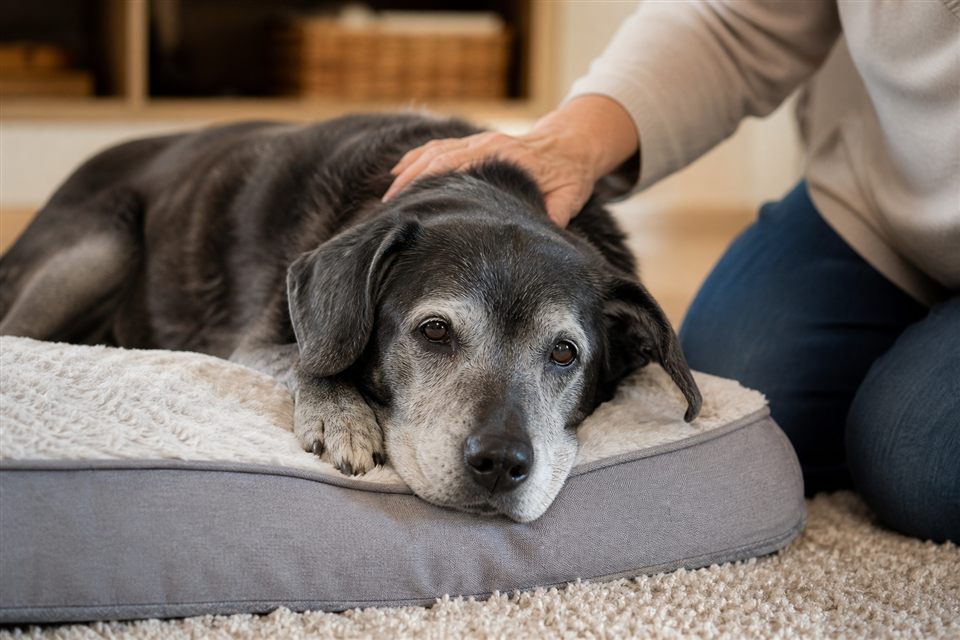
Senior dogs with arthritis or hip weakness need traction and shorter climbs—not motivation alone. Carpet runners on each tread, a harness you can lift from the chest, and a ramp for one daily trip (often bedtime) cut slip risk dramatically. If your dog pauses mid-stair, pants, or skips steps, limit unsupervised stair access the same week.
Key Points
- Install continuous carpet strips or non-slip tread tape on every step—polished wood is a common cause of hind-leg slips in Labs and Shepherds over age 8.
- A lightweight support harness lets you take 10–20% of body weight on the handle during up/down transitions.
- Portable ramps with a gentle slope (about 18–20 degrees) work for sofa or car access; steep human staircases may need a gate plus downstairs bed relocation.
- NSAID or pain plans from your vet improve confidence within 1–2 weeks—hesitation often reflects pain, not stubbornness.
- Same-day vet visit if your dog falls, cries on stairs, or stops using hind legs after a slip—spinal or cruciate injuries hide behind "slowing down."
Practical Tips
- Place yoga mats at top and bottom landings where dogs pivot—most falls happen on turns, not straight runs.
- Keep nails trimmed every 3–4 weeks; long nails reduce grip on carpet edges.
- Film your dog climbing from the side and share the clip at senior wellness visits to track gait change over months.
This article is for general educational purposes only and does not replace professional veterinary advice. Contact your vet if your pet shows ongoing symptoms.