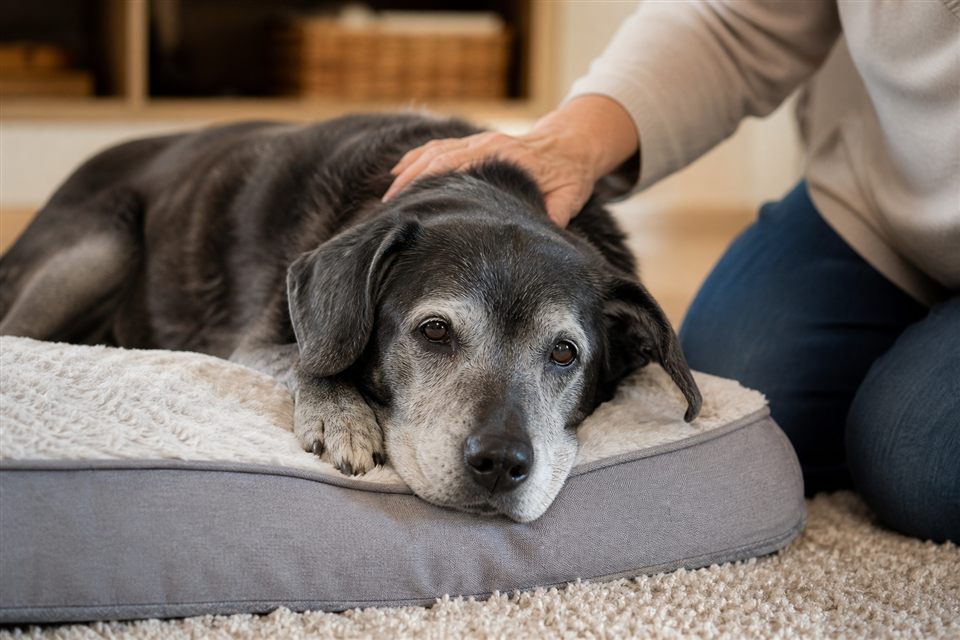
Your older dog wanders the house at 2 a.m., stands staring at a corner, gets stuck behind furniture, and seems unsettled for no clear reason. These nighttime patterns often point to canine cognitive dysfunction syndrome — a dementia-like condition in aging dogs — though pain, vision loss, and other illnesses can look similar. Night pacing deserves attention, not dismissal as "just old age."
Key Points
- Night pacing and corner staring are common signs of canine cognitive dysfunction (CCD).
- Disorientation, sleep-wake reversal, and house-soiling may appear together.
- Pain, anxiety, and sensory decline mimic or worsen cognitive symptoms.
- Early veterinary intervention can slow progression and improve comfort.
- Environmental support and predictable routines help confused seniors rest safer.
Understanding Canine Cognitive Dysfunction
CCD affects memory, learning, awareness, and sleep cycles. Dogs may forget familiar routes, fail to recognize family members momentarily, vocalize at nothing, or pace compulsively — especially when the house is dark and quiet. The corner staring you notice may reflect visual uncertainty, disorientation, or anxiety with nowhere else to turn.
Sundowning — increased confusion at dusk and overnight — parallels patterns seen in human dementia.
Rule Out Other Causes First
Before assuming dementia, your veterinarian should evaluate:
- Arthritis and chronic pain that prevent comfortable lying down
- Vision and hearing loss that increase nighttime anxiety
- Urinary tract disease causing urgency and restlessness
- Cushing's disease, brain tumors, and metabolic disorders
- Anxiety triggered by environmental changes
Blood work, urinalysis, blood pressure, and orthopedic assessment build a complete picture. Treating pain alone sometimes dramatically reduces pacing.
Management and Treatment Options
Prescription diets and supplements containing medium-chain triglycerides, antioxidants, or SAMe show benefit in some dogs. Medications such as selegiline or propentofylline may be prescribed regionally. Anti-anxiety support helps when fear amplifies confusion.
Your vet will tailor plans based on severity and concurrent conditions. No treatment reverses advanced disease fully, but quality of life often improves.
Home Strategies for Night Pacing
Maintain a consistent day-night rhythm with daytime exercise suited to mobility. Offer a comfortable orthopedic bed in your bedroom if separation increases anxiety. Night lights reduce disorientation. Avoid rearranging furniture. Short, predictable evening potty breaks help.
Confused dogs can wander out open doors or fall on stairs — baby gates and leashed yard trips add safety.
When to Seek Urgent Care
Sudden acute pacing with collapse, head tilt, seizure, or extreme pain suggests an emergency distinct from slow CCD progression. Rapid overnight deterioration always warrants same-day veterinary contact.
Bottom Line
A senior dog who paces at night and stares into corners is asking for medical and environmental support, not scolding. Cognitive dysfunction is manageable when recognized early — comfort, safety, and sleep can improve even when youth cannot return.
Veterinary Disclaimer
This article is for educational purposes only and does not replace professional veterinary advice. Diagnosis and treatment of cognitive dysfunction, pain, and neurological disease require examination and ongoing care from a licensed veterinarian.