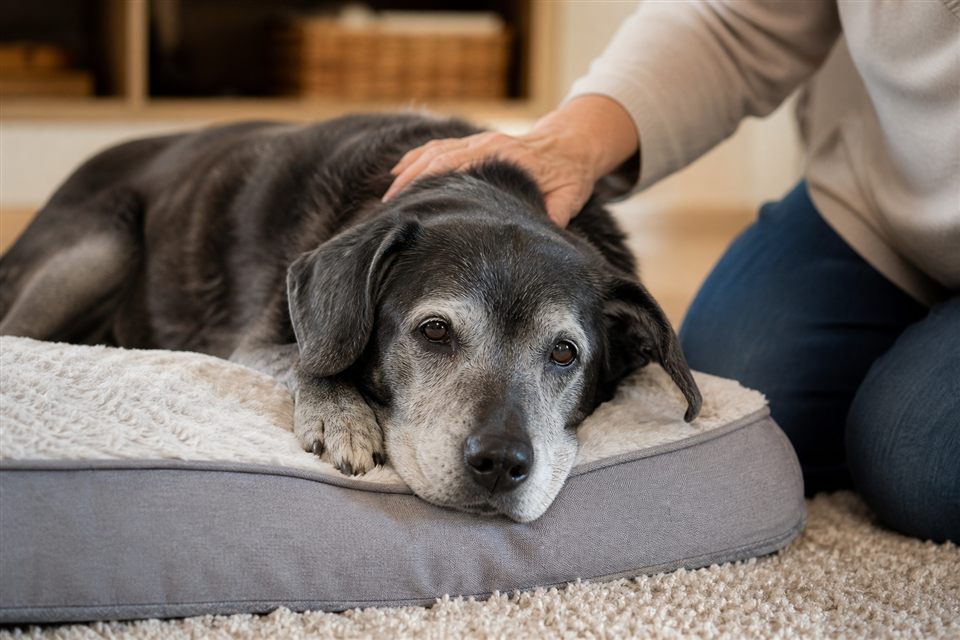
Fourteen-year-old Siamese named Mochi had always been vocal — but at two in the morning she began standing in the hallway crying as if she'd forgotten where the bedroom was, ten feet from a lifetime of sleeping on the pillow. Her owner, Diane, blamed attention-seeking until Mochi stared at the wall beside her food bowl and walked into the same chair twice in one afternoon. The pattern fit feline cognitive dysfunction more than drama.
Key points at a glance
- Feline cognitive dysfunction (FCD) affects memory, learning, awareness, and sleep-wake cycles in cats over ten to fifteen years.
- Night vocalizing with apparent disorientation is a hallmark — especially when paired with house-soiling or altered social behavior.
- Medical mimics — hyperthyroidism, hypertension, arthritis pain, deafness, and vision loss — must be ruled out first.
- DISHA-style changes: Disorientation, Interaction shifts, Sleep-wake disruption, House-soiling, Activity changes.
- Early diagnosis opens management options: enrichment, routine, diet, supplements, and prescription medications.
Normal aging versus dementia
Older cats sleep more and play less — expected. Dementia adds getting lost in familiar rooms, failing to recognize housemates, vocalizing without trigger, and anxiety that looks like pacing or fixation. Mochi still purred on laps but forgot she had already been fed, yowling at the closed pantry as if starvation struck.
The signs Diane tracked in a two-week journal
Disorientation: Stuck in corners, unable to navigate around furniture she formerly sprinted past.
Interaction changes: Clingy then distant; hissing at Diane's partner though they'd cohabited for years.
Sleep-wake reversal: Deep sleep all day, restless loud nights — classic circadian drift in FCD.
House-soiling: Accidents inches from a clean litter box — not protest, confusion.
Activity shifts: Less hunting play, more repetitive pacing or staring.
One sign alone may mean something else. Clusters after vet clears medical copies suggest cognitive decline.
Medical workup before labeling dementia
Bloodwork screens thyroid and kidney function. Blood pressure checks for hypertension damaging vision — blind cats startle and vocalize. Pain from arthritis alters sleep and litter box access. Diane's vet found mild hypertension treatable with medication; some night crying improved before adding cognitive support.
Home management once FCD is likely
Routine anchors: Feed, play, and lights-out at fixed times — predictability reduces anxiety.
Environmental cues: Night lights, extra litter boxes on every floor, shallow easy-entry boxes.
Enrichment without overstimulation: Puzzle feeders at dusk to tire brain before bed.
Veterinary options: Prescription diets and medications like selegiline or anti-anxiety support exist — discuss risks and benefits for Mochi's heart and kidney status.
Avoid punishing accidents — Mochi was not spiteful; she was lost.
When to seek urgent care
Sudden severe disorientation, head tilt, or inability to walk suggests stroke, vestibular crisis, or toxin — not slow dementia. Acute onset needs same-day evaluation. Gradual months-long drift fits cognitive decline timeline.
The bottom line
Spotting senior cat dementia means watching for confusion in familiar spaces, unexplained night vocalizing, and bathroom mistakes with a blank stare instead of attitude. Diane's journal gave her vet a clear picture; treating hypertension helped, and cognitive support plan gave Mochi calmer nights — not her kitten mind back, but fewer hours crying in a hallway she once knew by heart.
This article is for general education only and does not replace advice from a licensed veterinarian.