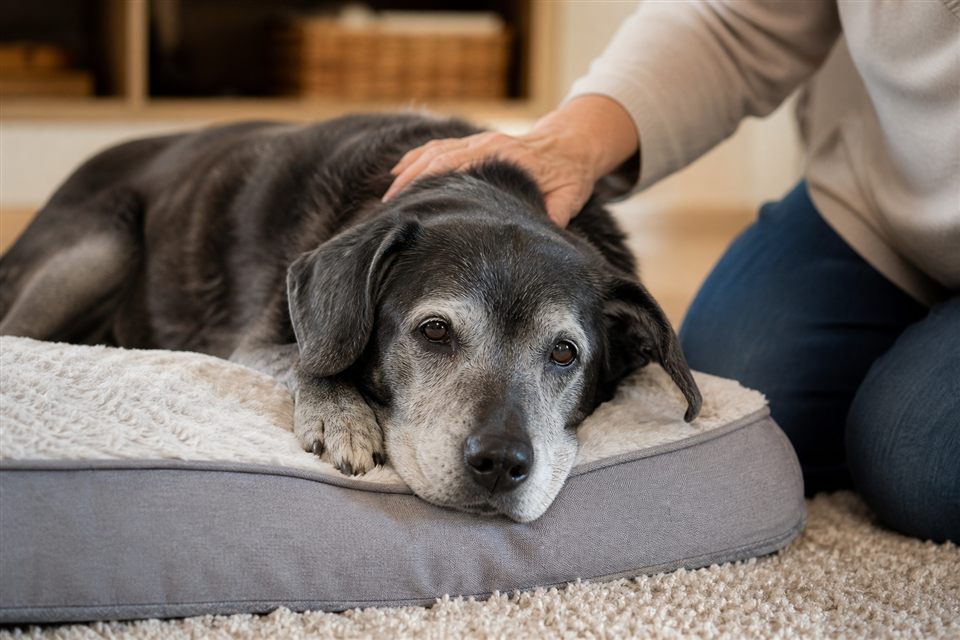
Mochi, a fourteen-year-old shorthair, stopped jumping to her favorite windowsill and began missing the litter box edge. Her owner Priya initially blamed behavior—until the vet diagnosed osteoarthritis in both elbows and hips. Cats hide pain well. Home management under veterinary guidance turned Mochi's last years from stiff and withdrawn to quietly comfortable again.
Key points at a glance
- Never give human NSAIDs or dog pain meds to cats—many are toxic.
- Low-sided litter boxes, soft bedding, and step stools reduce joint stress at home.
- Weight loss in overweight cats often improves mobility more than any single supplement.
- Track good days and bad days so your vet can adjust prescription pain plans.
Recognizing arthritis in cats
Unlike limping dogs, arthritic cats often show subtle signs:
- Hesitation before jumping up or down
- Reduced grooming, especially over the lower back
- Irritability when picked up
- Litter box misses due to difficulty stepping in
- Sleeping more in one accessible spot
Mochi's vet confirmed arthritis with exam and history; imaging is sometimes used but not always required to start treatment.
Veterinary foundation: what home care cannot replace
Priya's veterinarian prescribed a cat-safe pain protocol and rechecked bloodwork before starting long-term medication. Common vet-directed options include:
- FDA-approved NSAIDs for cats (short or long term per label and vet)
- Gabapentin for chronic or neuropathic pain
- Joint injections such as Solensia in eligible cats
- Laser therapy or acupuncture at referral practices
Supplements like glucosamine have mixed evidence in cats. Use them only as additions your vet approves, not substitutes for proven pain control.
Home environment changes that matter
| Modification | Benefit |
|---|---|
| Low-entry litter box | Easier hip and elbow flexion |
| Ramps or steps to couch/bed | Preserves favorite perches |
| Orthopedic or heated beds | Supports stiff joints |
| Food and water on one level | Reduces unnecessary climbing |
| Non-slip mats on slick floors | Prevents painful slips |
Priya placed a small step stool beside the windowsill. Mochi returned to bird-watching within a week—without jumping.
Weight and nutrition under vet guidance
Even half a pound matters on a ten-pound cat. Priya switched to a vet-recommended weight formula and measured meals. Pain improved noticeably before any supplement trial because less load crossed Mochi's joints daily.
Omega-3 fatty acids from fish oil may support inflammation control at veterinary doses. Avoid ad-lib high-calorie treats that undo weight progress.
Gentle movement and enrichment
Arthritis needs activity, not immobility:
- Short play with wand toys on floor level
- Puzzle feeders for mental work without jumping
- Massage along muscles—not joints—if Mochi tolerated it
- Avoid forced exercise or unsupervised outdoor access that invites leaps
Physical rehabilitation for cats is growing; ask if your area has a certified feline rehab therapist.
Monitoring and communicating with your vet
Keep a simple log: appetite, litter box use, grooming, play interest, and mobility. Note medication timing and any vomiting or behavior changes. Cats metabolize drugs differently than dogs—never adjust doses yourself.
Schedule rechecks at intervals your vet recommends. Arthritis progresses; plans evolve. Priya's vet added a low evening gabapentin dose when winter stiffness worsened.
Seasonal adjustments at home
Cold, damp weather often stiffens arthritic cats overnight. Priya added a low-wattage heated bed pad approved for pet use and kept Mochi's favorite sleeping room draft-free. During humid summer weeks, she ensured easy water access on the same floor as the litter box so Mochi never had to choose between hydration and painful stairs.
Emotional care for senior cats
Pain makes cats withdraw or seem "grumpy." Restored comfort often revives affection and curiosity. Multiple soft resting spots near family activity let Mochi stay social without climbing.
Managing senior cat arthritis at home works when veterinary pain control leads and your house adapts around it. Mochi still moves slowly, but she grooms again, uses the box reliably, and naps in sunbeams she can reach without leaping. That quiet return to normal was the measure Priya cared about most.
This article is for informational purposes only and does not replace professional veterinary advice. Never give cats medications intended for humans or dogs without explicit veterinary instruction.