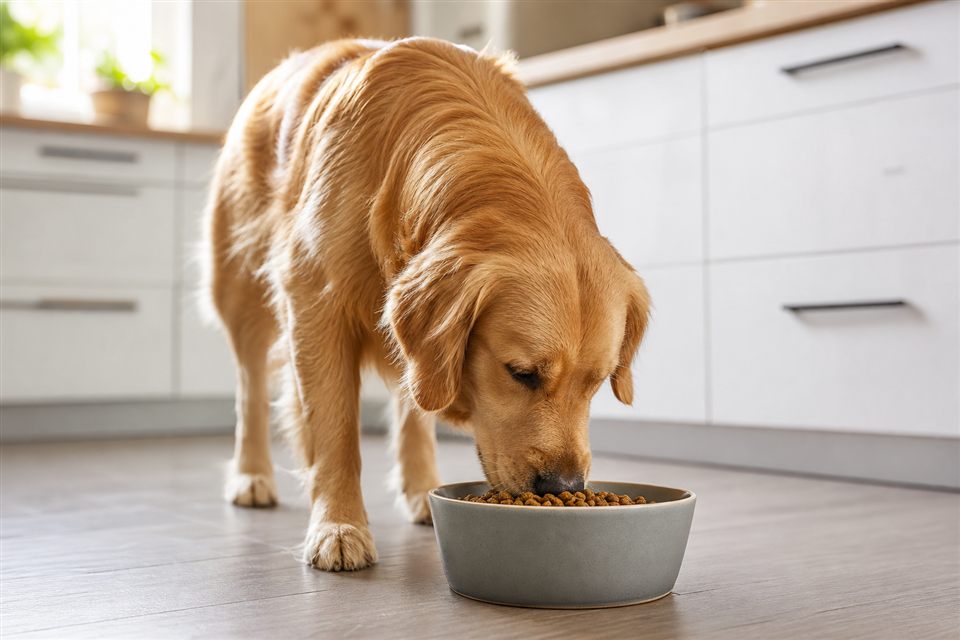
You popped the can, filled the bowl, and the phone rang. An hour later the paté still sits there — your dog grazes, leaves, grazes again. Room-temperature wet food is a bacterial buffet faster than most owners assume. Dry kibble tolerates grazing; canned and fresh wet diets do not.
Key points at a glance
- Discard uneaten wet food after 1–2 hours at room temperature — sooner above 90°F (32°C).
- Opened cans refrigerate 3–5 days covered — label and date the container.
- Refrigerated portion should sit out to warm slightly or microwave briefly; hot spots burn mouths.
- Sour smell, mold, or color change — throw out, do not "just scrape top."
- Slow feeders and puzzle bowls with wet food need timed removal too.
Why wet food spoils quickly
Canned dog food is high moisture and protein — perfect for Salmonella, Listeria, and mold once exposed to air. Manufacturing sterilizes sealed cans; opening breaks that protection.
Dry kibble's low moisture slows bacterial growth — still not ideal to leave out days, but different risk profile.
The two-hour guideline
Food safety authorities apply the two-hour rule to perishable human and pet wet foods:
- Under 90°F ambient: remove or refrigerate within 2 hours of opening/canning into bowl.
- Above 90°F (summer porch, hot kitchen): cut to 1 hour.
After that window, bacteria levels may be unsafe even if smell seems fine.
Bowl grazing habits
Free-feeding wet food invites spoilage and attracts pests. Better patterns:
- Meal feed — offer portion eaten in 15–20 minutes, pick up remainder.
- Split meals if your dog prefers two sittings — two fresh portions, not one all-day bowl.
- Automatic feeders with ice packs exist for wet food — follow manufacturer limits; still clean daily.
Storing opened cans in the fridge
- Transfer leftovers from can to airtight container or seal with can lid — metal can affect flavor if left open.
- Store at 40°F (4°C) or below.
- Use within 3–5 days — write date opened on tape.
- Do not stack old portions behind new indefinitely.
Cold food straight from fridge may be rejected — stir in warm water or let sit 10 minutes at room before serving, but do not leave that warmed portion out again after the meal window.
Freezing extra wet food
Portion single-meal amounts in freezer-safe containers or silicone molds. Thaw in refrigerator overnight. Do not refreeze after thawing. Quality texture may change — still safe if handled cleanly.
Useful when buying cases on sale or cooking home-prepared vet diets.
Signs food has spoiled
Throw away if you notice:
- Sour, rancid, or yeasty odor
- Mold spots — any color
- Slimy surface
- Color shift from when opened
- Dog refused then ate reluctantly — trust refusal
When in doubt, out — veterinary GI bills exceed a can of food.
Risk if your dog ate old wet food
Mild vomiting or diarrhea may resolve in 24 hours with bland diet after vet phone consult. Seek care sooner for:
- Blood in stool
- Lethargy or repeated vomiting
- Puppies, seniors, or immunocompromised dogs
Dry food note — different rules
Kibble left out 24 hours loses crunch and may stale; bacterial risk lower but rodents and stale fats still matter. Wash bowls daily regardless of food type.
The bottom line
Wet dog food belongs in the bowl for at most one to two hours at room temperature — then refrigerate or discard. Opened cans keep a few days refrigerated in sealed containers, not indefinitely. Meal feeding beats all-day grazing for safety, smell, and predictable potty schedules.
This article is for general education only and does not replace advice from a licensed veterinarian. Food handling reduces risk but does not eliminate it — when spoilage is suspected, err on the side of throwing food away.