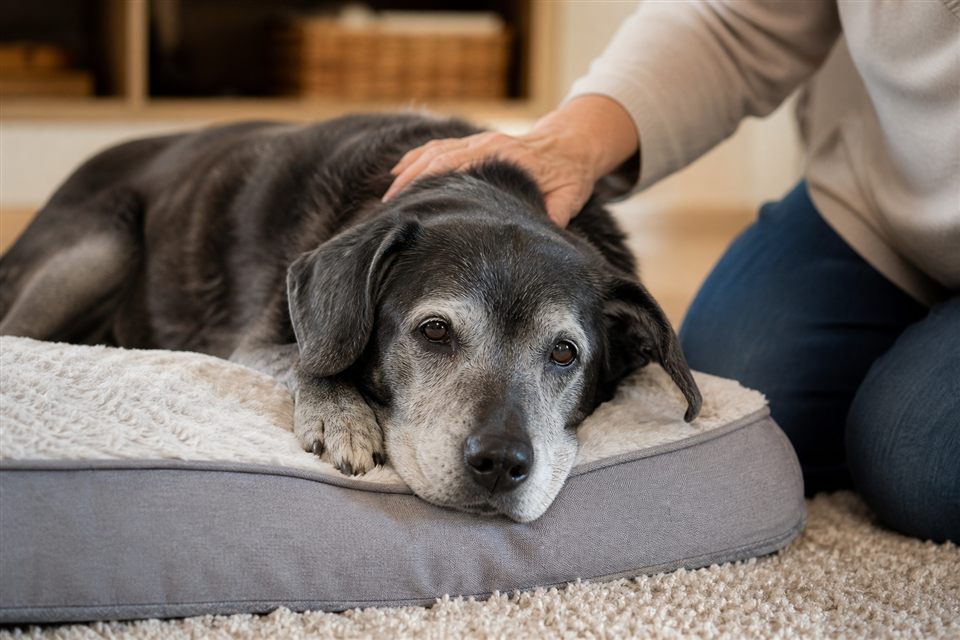
At eleven, Rosa's Labrador, Duke, still wanted to follow her upstairs at bedtime—but his hips hesitated on the first step and his nails scrambled on the hardwood. Rosa could lift eighty pounds, but carrying Duke daily was not sustainable for her back or his dignity. The goal became safer independence: support without constant lifting.
Key points at a glance
- Rule out pain, neurologic issues, and vision loss with your vet before assuming stairs are purely a strength problem.
- Ramps, carpet runners, and harness assist handles reduce slip risk and joint strain.
- Short, rewarded practice on a few steps builds confidence better than forcing full flights.
- Block unsupervised stair access when you are not home if falls have occurred.
Why stairs become hard for senior dogs
Osteoarthritis, muscle loss, neurologic decline, and failing vision all affect stair navigation. Duke's vet found bilateral hip arthritis and mild spondylosis. Pain made him rush, and rushing on slick surfaces caused slips that scared him off stairs entirely. Treating pain was step one; environmental changes were step two.
Veterinary check before modifying the home
Ask your vet about:
- Pain medication timed before bedtime stair use
- Joint supplements as adjuncts, not replacements for meds
- Physical therapy exercises for hind-end strength
- When stairs should be avoided entirely—some spinal conditions make any climbing unsafe
If Duke showed sudden inability to use stairs, back pain, or dragging toes, that warrants urgent evaluation, not DIY ramp shopping.
Equipment that helps without carrying
| Solution | Best use | Tips |
|---|---|---|
| Fixed or folding ramp | Regular indoor/outdoor steps | Angle should be gentle; non-slip surface |
| Carpet treads or runners | Existing staircases | Increases grip on wood or tile |
| Support harness (rear lift) | Assist on difficult steps | You share load; dog still walks |
| Night lights | Dim evening trips | Helps depth perception |
Rosa installed a ramp over the three porch steps Duke used most and added adhesive treads on the interior staircase. She reserved the harness for the steepest section rather than lifting him entirely.
Training a confident stair routine
- Start with one or two bottom steps in daylight with treats at each pause.
- Walk beside Duke on a short leash for guidance, not pulling.
- Use a verbal cue like "easy" for slow, deliberate movement.
- Never rush behind a hesitant dog—pressure increases slips.
- End sessions before fatigue—success builds willingness.
- Practice descent separately—going down often scares arthritic dogs more.
If Duke refused mid-flight, Rosa backed him down calmly rather than forcing upward progress. Retreat without punishment preserved trust.
Managing access when you are away
Use baby gates to limit stair access if Duke has fallen or becomes disoriented at night. Provide a comfortable main-floor bed so he is not tempted to climb for your mattress. Some owners move permanently to a downstairs bedroom during a dog's late senior years—a practical kindness.
Flooring and lighting details that help
Senior dogs misjudge step depth when glare or shadows hide edges. Rosa added contrasting tape on stair noses so Duke could see each tread. She kept clutter off landings so he could pause without weaving around obstacles. On slick top steps, a small bath mat with grip backing gave him a stable platform before the final climb to the bedroom.
When carrying is still the right call
Post-surgical restrictions, acute injury, or vet-ordered crate rest may require temporary carries or sling lifts. Learn safe lifting technique: support chest and hindquarters, bend your knees, avoid twisting. A mobility cart or stair lift for dogs is rare but worth discussing with a rehabilitation specialist for large breeds in multi-story homes.
Duke now takes the ramp to the porch and climbs interior stairs slowly with treads and a rear harness assist. Rosa's back stays intact, Duke keeps a bedtime ritual he loves, and falls stopped once pain management and traction worked together. Senior dogs can keep vertical lives—with structure, not hero lifts every night.
This article is for informational purposes only and does not replace professional veterinary advice. Sudden mobility loss, collapse on stairs, or signs of spinal pain require prompt veterinary evaluation.