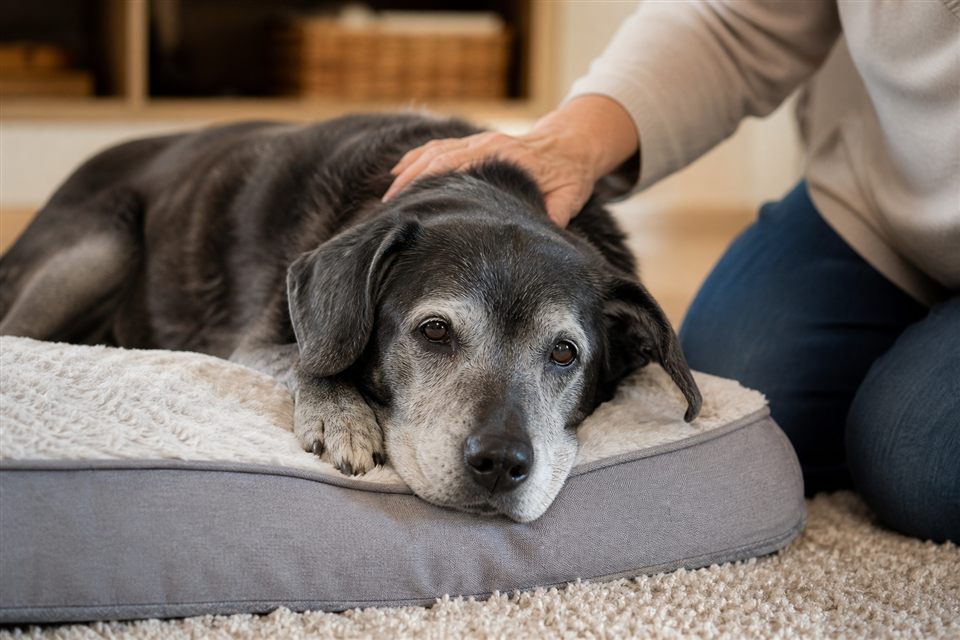
Every evening around six, Eleanor's twelve-year-old Golden Retriever, Murphy, forgot where the back door was. He paced the hallway, whined at walls, and once stood in the bathroom staring at the shower as if it were a portal. Eleanor slept in fragments, afraid Murphy would fall down the stairs. Sundowners turned sunset into the hardest hour of the day.
Key points at a glance
- Sundowners— increased confusion and restlessness at dusk—is common in senior dogs with cognitive dysfunction.
- Consistent light, predictable routines, and daytime enrichment reduce evening anxiety.
- Night safety (gates, non-slip mats, limited access) prevents injury during wandering.
- Veterinary evaluation can identify treatable pain, vision loss, or hormone issues masquerading as dementia.
What sundowners looks like in dogs
Canine cognitive dysfunction (CCD) resembles dementia in people. Sundowners is the pattern where symptoms spike as daylight fades:
- Pacing and inability to settle
- Staring at corners or getting stuck behind furniture
- Increased vocalization at night
- Forgetting housetraining only after dark
- Clinginess or failing to recognize familiar people
Murphy's vet confirmed CCD after ruling out urinary infection, arthritis pain, and vision decline—each can mimic nighttime chaos.
Create a brighter, calmer evening environment
Dogs with failing vision rely on contrast and light. Try:
- Turn on lamps before sunset—do not wait until the room is dark.
- Use night-lights in hallways and near water bowls.
- Keep one room consistently lit as a "safe zone" with bed, water, and a worn shirt that smells like you.
- Reduce noise from TVs or active household traffic during peak confusion hours.
Some owners use white noise or calming classical music at low volume to mask outdoor sounds that trigger barking.
Routine beats improvisation
Senior brains crave predictability:
| Time | Activity |
|---|---|
| Late afternoon | Short sniff walk while light remains |
| 5:00 PM | Dinner at the same spot daily |
| 6:00 PM | Calm enrichment—lick mat, stuffed Kong, gentle massage |
| 7:30 PM | Final potty break with leash guidance |
| 8:00 PM | Lights on, settle in safe zone |
Avoid rearranging furniture. If you must change the layout, lead Murphy through on leash several times in daylight.
Safety for night wandering
Until symptoms improve:
- Baby gates at stairs and room boundaries
- Non-slip runners on slick floors
- Identify tag plus microchip updated with your phone number
- Consider a comfortable harness for guided night potty trips instead of free roaming
If Murphy vocalizes when crated, a larger exercise pen with open top may feel less confining—never lock a confused dog in an unfamiliar small crate at night without acclimation.
Daytime strategies that pay off at night
- Physical exercise matched to ability—tired muscles, not an overstimulated brain
- Scent games and food puzzles during the day to engage cognition
- Medication timing—if Murphy takes pain meds for arthritis, consistent dosing prevents evening discomfort spikes
Veterinary and behavioral support
Treatable contributors must be addressed first. Your vet may recommend:
- Pain management for osteoarthritis
- Anxiety medication for evening panic
- CCD-specific diets or supplements (SAMe, omega-3s—evidence varies; discuss with your vet)
- Prescription medications such as selegiline for cognitive dysfunction
Melatonin is sometimes used under veterinary guidance for sleep-wake cycle support—never dose from human products without approval.
Caregiver sustainability
Eleanor rotated nights with her partner and installed a monitor so Murphy's pacing did not require constant shadowing. Respite matters—burned-out caregivers make rushed decisions. A certified veterinary behaviorist can tailor a plan when home adjustments plateau.
Working with your household
Sundowners affects everyone, not just the dog. Eleanor posted a simple evening schedule on the fridge so family members stopped calling Murphy for loud play after dinner. Visitors were asked to greet him calmly in good light rather than surprising him from behind in a dim hallway.
If you have other pets, monitor whether Murphy's pacing triggers reactive barking from younger dogs. Sometimes separating species for the worst hour—cat upstairs, senior dog in the lit safe zone—reduces cascade chaos.
Murphy still has rough evenings, but predictable light and a lick mat at six-thirty bought Eleanor four-hour sleep blocks again. Small structural changes compound, and documenting what helps each week makes vet follow-ups more productive than vague reports of "bad nights."
This article is for informational purposes only and does not replace professional veterinary advice. Sudden behavior changes, seizures, or extreme distress in a senior dog warrant prompt veterinary evaluation.