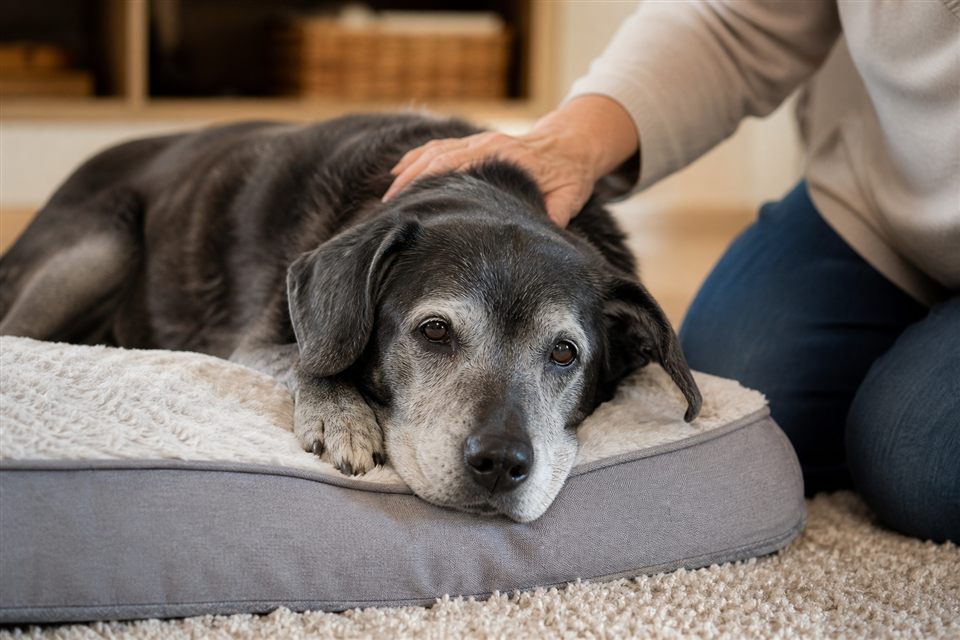
At twelve, Labrador mix Rosie stopped bounding from kitchen to bedroom. Her hips had slowed, but the real panic hit when she scrambled upright on polished oak and slid backward like a cartoon — legs splaying, chin hitting floor, eyes wide with betrayal. Owner Tom thought arthritis alone was the culprit until the vet said neurological weakness plus slick surfaces created a feedback loop of fear and muscle tension.
Key points at a glance
- Slippery floors turn manageable stiffness into injury risk — hips, shoulders, and confidence all suffer.
- Create routed paths of traction mats between bed, food, water, and potty door.
- Keep nails trimmed and fur between toe pads short — both reduce natural grip.
- Support harnesses and non-slip toe grips help many seniors without medicating fear.
- Sudden worsening of slipping warrants exam for spinal disease, vestibular issues, or pain.
Why hardwood punishes old dogs
Senior dogs lift feet less confidently. Reduced proprioception — knowing where limbs are in space — comes with age and some neurologic conditions. Polished floors offer zero shear friction. One fall teaches Rosie to hesitate, which makes the next attempt more frantic and more slippery. Anxiety tightens muscles; tight muscles slip more.
Low-cost traction upgrades Tom installed
Runner rugs with rubber backing: Not decorative throw rugs that skate — real grip mats taped at corners if Rosie drags them.
Yoga mat highways: Cheap interlocking foam or rubber runners from couch to water bowl — ugly but effective in rental-friendly ways.
Strategic placement: Bed, food, and water on one continuous textured surface; minimize unavoidable slick crossings.
Night lights: Dim vision plus shine equals missteps at 3 a.m.
Tom removed loose socks from the floor — Rosie stepped on one once and nearly crashed into the TV stand.
Body maintenance that restores grip
Long nails push toes upward, reducing pad contact. Monthly trims — or dremel if Rosie tolerates — restore paw geometry. Grasping fur between digital pads acts like wearing socks on ice; groomer or careful scissor trim helps.
Toe grip rubber rings slide onto nails on some dogs; others hate them. Booties work for outdoor ice but often fail indoors unless custom fitted.
Support without carrying Rosie everywhere
A harness with front and rear handles lets Tom stabilize without lifting full weight during stand-up transitions. Rear-only support harnesses help hip-dysplasia dogs rise from sit. Avoid collar yanking — trachea and neck already strained in struggling seniors.
Physical therapy exercises on carpet build hind-limb strength; a rehab referral turned Rosie's hesitation into cautious confidence over six weeks.
When slipping signals something new
Progressive hind-end knuckling, head tilt, or falling to one side suggests spinal compression, vestibular disease, or stroke-like events — not just "old dog." Pain medication and treating underlying arthritis often improve gait more than rugs alone, but rugs remain essential while meds take effect.
The bottom line
Helping a senior dog on slippery hardwood floors means engineering friction into daily routes, maintaining paws, and supporting rises without shame. Tom's apartment will never win design awards — mat highways everywhere — but Rosie walks to her bowl without the chin-first landings that stole her dignity. Traction is medicine's partner, not its replacement.
This article is for general education only and does not replace advice from a licensed veterinarian.