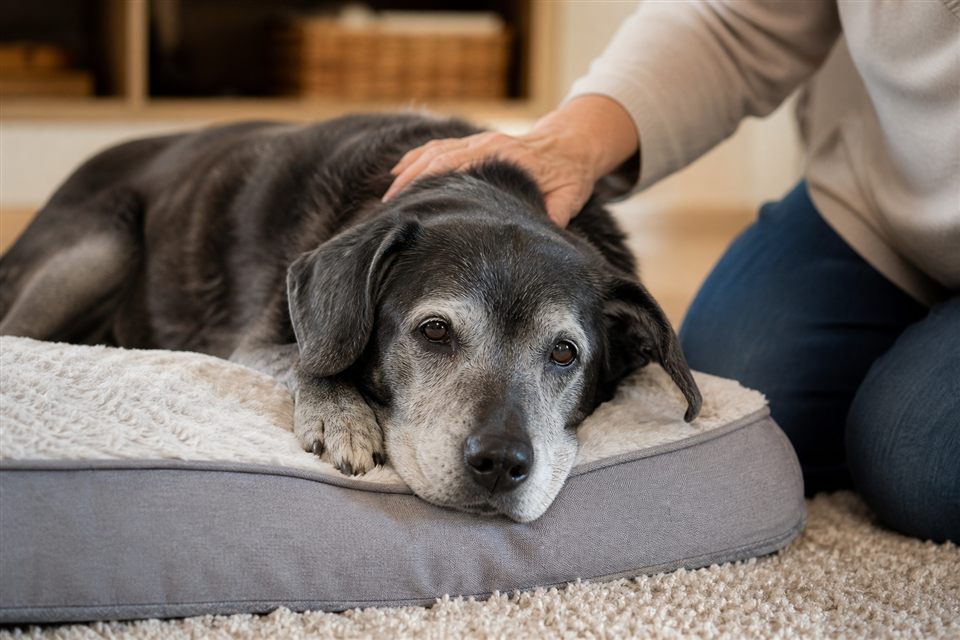
Corinne’s thirteen-year-old terrier mix, Pebble, had been a champion sleeper until last winter. Then 2 a.m. became a hallway tour, a stare at the back door, and a thin whine that meant “I cannot land.” Corinne did not want a knockout pill as the first move. She wanted Pebble to find the bed again.
Key points at a glance
- Night pacing can be pain, a full bladder, hearing loss, or cognitive change.
- A last potty trip, a late snack, and lights before dusk cut a lot of wandering.
- Keep the night path boring and the same. Rearranged furniture is a cruel puzzle.
- Sedation is a veterinary decision, not a leftover people tablet.
- A log of clock times is more useful than “she was up a lot.”
Rule out the body before you blame the brain
Pebble’s first night tour was arthritis plus a small bladder. She would get up stiff, fail to settle, then remember she needed grass. A senior exam, a urine check, and a pain plan changed more than a new blanket. Cognitive dysfunction is real. So are urinary infections, night thirst from kidney disease, and itchy skin that only announces itself when the house goes quiet.
Corinne booked the appointment before she bought a thunder shirt. The vet asked when the pacing started, whether Pebble circled or just walked to the door, and whether she slept hard at dawn.
If she is restless and also drinking more, losing weight, or having accidents, that is lab work, not a bedtime playlist. If she cries when she first stands, pain control comes before brain supplements.
A night script you can run without a pill
| Clock | What happens | Purpose |
|---|---|---|
| Late afternoon | Short sniff walk, not a hero hike | Tires the mind, spares the joints |
| Dusk | Lights on in the hall and near the bed | Softens sundown confusion |
| After dinner | Same settle spot, same cue | Tells the brain the day is closing |
| Last thing | Potty, then a small easy meal or prescribed snack | Empties the bladder; some dogs sleep better with food |
| Overnight | Water in the usual place; pads if needed | She should not have to guess |
Write the order down if two people share nights. Corinne’s partner used to sneak a late play session. That pushed the first wake-up to 1:40. They moved play to 5 p.m. and kept nights dull on purpose.
A night light in the hallway is not cute décor. Dogs with cloudy eyes hit chairs. A runner rug on the path to the door gives traction. Gates that suddenly block a lifelong route will start a panic loop.
The bed should be easy to step onto. A thick foam pad on the floor beats a tall bolster she has to climb. If she already chooses the bathroom tile, put a washable bed there.
Daytime habits that show up at 2 a.m.
A senior who sleeps from noon to five will clock in at midnight. Corinne split Pebble’s rest: a morning walk, a midday nap, a short afternoon outing, then evening quiet.
Keep water available. Restricting water to prevent accidents can make a kidney dog miserable and still up. If accidents are the issue, add a 10 p.m. trip and pads near the door.
Hearing loss makes night sounds into threats. A low, boring fan can cover the trash truck. Short “find it” games with a treat in plain sight give the brain a win before bed. Hard puzzles at 9 p.m. wind some dogs up.
When you should talk about medication anyway
This article is about delaying sedation, not refusing medicine that would make her humane. Dogs with true night dementia sometimes need a prescription. That is a clinic conversation with a weight and a liver history. Do not split a human sleep aid. Do not stack three Amazon chews and leftover tramadol.
Track a week: first wake time, whether she needed to go out, whether she settled after, and how she walked in the morning. Corinne brought that scrap of paper to the recheck. They adjusted pain meds. Pebble still wakes once. She goes out, drinks, and lies down. The hallway tours stopped without a sedative.
Night restlessness in an older dog needs a veterinary workup. This is not a substitute for pain control, lab tests, or prescribed medication. Never give human sleep drugs or another pet’s sedative.