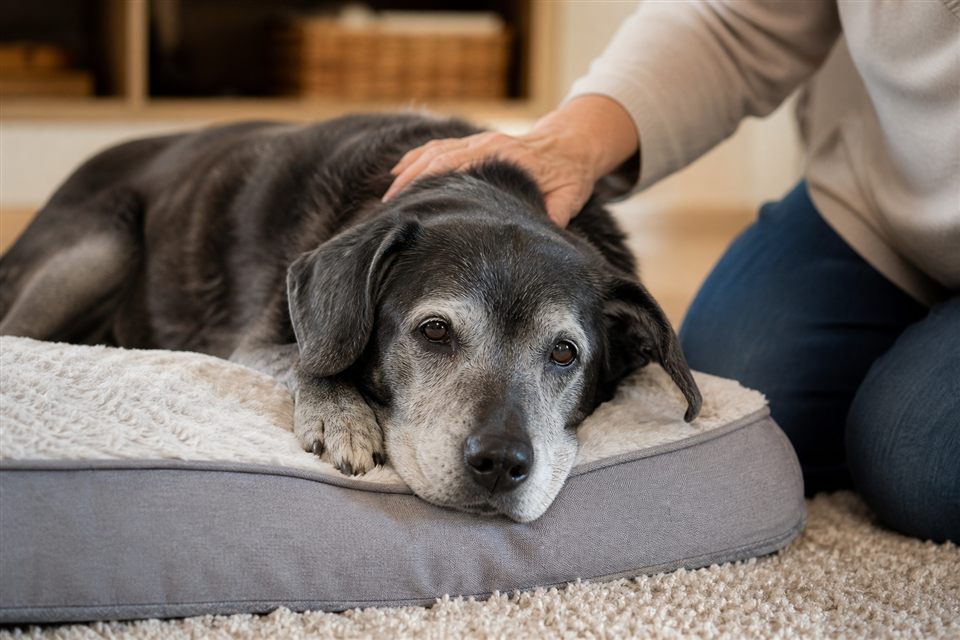
At thirteen, Baxter the cocker spaniel stopped responding to his name unless Gwen shouted from three feet away — and sometimes not even then. Doorbells, treat bags, and squeaky toys that once spun him around now passed unnoticed. Gwen worried Baxter felt isolated in a house full of sounds he could no longer share. Age-related hearing loss in dogs is common and irreversible, but communication is not lost — it shifts. Hand signals, visual routines, and environmental safety changes let Baxter know when dinner arrives, when walks start, and when Gwen wants him close without relying on ears that faded gradually over two years.
Key points at a glance
- Senior dogs often lose high-frequency hearing first — whistles and some verbal cues fail before low tones do.
- Hand signals work at any age; dogs with partial hearing benefit from pairing visual cues with remaining audible ones during transition.
- Consistency matters — same signal, same meaning, same reward; family members must use identical gestures.
- Never startle a deaf dog from behind; stomp floor, flick lights, or enter within their line of sight.
- Sudden hearing loss, head tilt, or balance problems need veterinary evaluation — not all deafness is benign age change.
Recognizing hearing loss versus selective ignoring
Gradual loss shows as sleeping through arrivals, failing to orient to sounds behind them, and startle when touched unexpectedly. Baxter still heard Gwen's car if the window was open — low rumbles lingered longest. Complete deafness means no response to clapping behind the head at close range when awake and not distracted.
Veterinary causes to rule out: chronic ear infections, otitis media, polyps, tumors, and certain medications. A vet exam with otoscope check establishes baseline and treats treatable contributors before accepting age as the full explanation.
Hand signals Gwen taught Baxter
Dogs read body language naturally — formal signals just standardize what Baxter already watched.
| Cue | Hand signal | Training tip |
|---|---|---|
| Come | Open palm sweeping toward chest | Reward at arrival; never recall to scold |
| Sit | Palm up, fingers raised once | Lure with treat, fade lure to gesture only |
| Stay | Flat palm facing dog like stop sign | Start one second, build duration |
| Down | Point finger down to floor | From sit, lure nose down |
| Good / yes | Thumbs up or single clap visible | Marker before treat delivery |
| Watch me | Finger to your eyes | Builds check-ins on walks |
Gwen paired each new signal with a treat Baxter could see — he learned "come" from a sweeping arm faster than she expected because he watched her hands during meals anyway.
Transitioning from voice to vision
If Baxter still hears some frequencies, say the verbal cue while performing the hand signal, then reward. Fade voice volume over weeks. For fully deaf dogs, replace clicker markers with a thumbs-up flash or gentle vibration from a collar buzzer designed for deaf dog training — test vibration on lowest setting; some dogs find it aversive.
Practice in quiet rooms first, then with mild distractions. Sessions stay short — five minutes beats thirty for senior focus and arthritic patience.
Safety at home and outdoors
Approach within sight — wake Baxter by letting him smell your hand near his nose, not by grabbing from behind. Flick lights when calling from another room. Secure yards and doors — Baxter cannot hear cars or recall shouts off-leash. Leashed walks or fenced areas only unless signals are rock-solid at distance. ID tags should note deafness for strangers and emergency responders.
At night, Baxter wore a small LED tag so Gwen could locate him in the yard without shouting into darkness.
Enrichment without sound
Scent games, food puzzles, and nose work engage deaf seniors richly. Baxter's favorite became a snuffle mat Gwen hid kibble in daily — no ears required. Visual toys — flirt poles, light-chasing where safe — replace squeaky reliance.
When hearing loss signals more than aging
Sudden bilateral deafness, head tilt, circling, or vomiting suggests vestibular or neurological disease — urgent vet visit. One-sided loss may indicate ear infection or mass. Painful ears with odor need treatment regardless of signal training plans.
The bottom line
A senior dog with hearing loss can live a connected home life when you teach clear hand signals, avoid startling from behind, and adapt safety for a world they no longer hear. Baxter still meets Gwen at the kitchen door — not because he heard her footsteps, but because he learned that her waving arm and open palm mean the same love they always did. Patience and visual consistency turn deafness from isolation into a different dialect you both speak fluently.
This article is for general education only and does not replace advice from a licensed veterinarian.