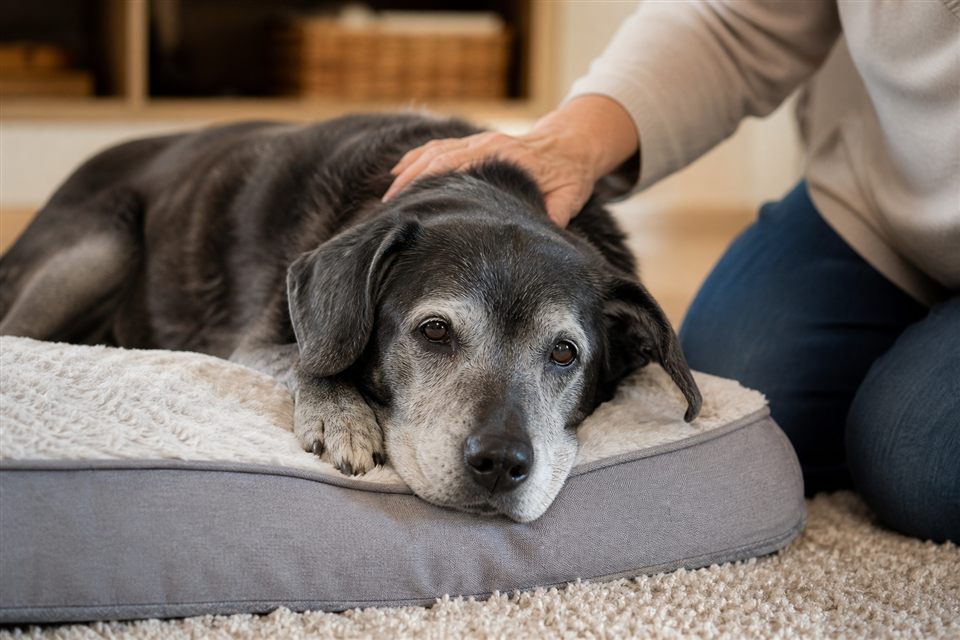
Ignacio’s twelve-year-old golden, Harlan, still trotted to the kitchen at 7 a.m. He would eat a third of the bowl, wander to the back door, then look faintly surprised that breakfast existed. Ignacio kept rotating brands. Harlan kept leaving. The problem was not boredom with chicken. It was a dog who could not comfortably finish a sitting.
Key points at a glance
- Walking away can be dental pain, nausea, fatigue, or a bowl that is awkward to reach.
- Serve less, more often. A senior does not owe you an empty bowl in four minutes.
- Warm, wet, or softened food is easier on worn teeth than a deep pile of kibble.
- Pick up uneaten food so it does not turn into a stale dare.
- Sudden refusal, weight loss, or vomiting is a vet day, not a new topping.
Find out why he leaves before you buy another bag
Harlan’s mouth had a cracked molar the family had missed because he still “ate.” He ate until the tooth hit a hard piece, then quit. Nausea, early kidney disease, and pain-drug side effects can look the same: interest, then a polite exit.
Ignacio booked a senior panel and a dental look. That order matters. A brand change on top of nausea just trains a dog that food is a disappointment. If Harlan is losing weight, drinking more, or leaving food and then eating grass, skip the toppers and go in.
Watch the meal. Chewing on one side, dropping pieces, or backing up with drool is mouth or nausea. Sitting as if the floor is far away is joints. Leaving when the room gets noisy means the bowl needs a quieter corner.
Serve the meal in a way an old body can finish
| Tactic | How to do it | Best when |
|---|---|---|
| Split the ration | Two or three small meals, same daily calories | He fades after a few bites |
| Soften kibble | Warm water or low-sodium broth, wait ten minutes | Teeth are worn or missing |
| Switch texture | Add a prescribed wet food mixed in | He prefers easier chewing |
| Raise or lower the bowl | Try a stand, then try a plate on a mat | Neck or shoulder pain |
| Time limit | Set down, pick up in 15–20 minutes | Food sitting out all morning |
| Hand-feed a few bites | Sit on the floor, offer, then return the bowl | He needs a start, not a full service |
A wide, shallow plate beats a deep bucket that hits the wrists. Harlan’s old hopper bowl made him push his face into a corner. A plate let him see the food and leave without knocking the dish.
Warmth helps smell. Microwave wet food until lukewarm, not hot. Stir. Dogs burn tongues on the middle.
If he walks away, do not follow him around the house with the bowl. Offer the rest at the next sitting. Ignacio started a 7 a.m. and 5 p.m. split, with a tiny lunch if the morning was light. Harlan finished more in a week than he had in a month of one big breakfast.
Make the room and the food less of a chore
Feed where he already likes to stand. The corner by the washer was loud. The dining room rug was better. Keep the other dog out.
Skip the rotating buffet of leftovers. A stable senior diet the vet already likes is easier on a sensitive gut. If you need a topper, use a spoon of the wet food you already feed.
Dental chews are not a meal fix. After Harlan’s tooth came out, kibble still needed soaking. Soft is how he gets the calories.
A dog who leaves meals for three days needs a call. So does a senior who wants food, then stands over the bowl and drools. Track weight every two weeks. Ignacio noted cups offered, cups left, and stool quality.
Harlan still takes a break mid-bowl some mornings. The rest waits in the fridge and comes back at noon. The bag stayed the same. The sitting changed.
A senior who stops finishing meals may have dental disease, nausea, or organ trouble. This feeding advice does not replace an exam, bloodwork, or a prescribed diet. Do not give human appetite stimulants unless your veterinarian directed them.