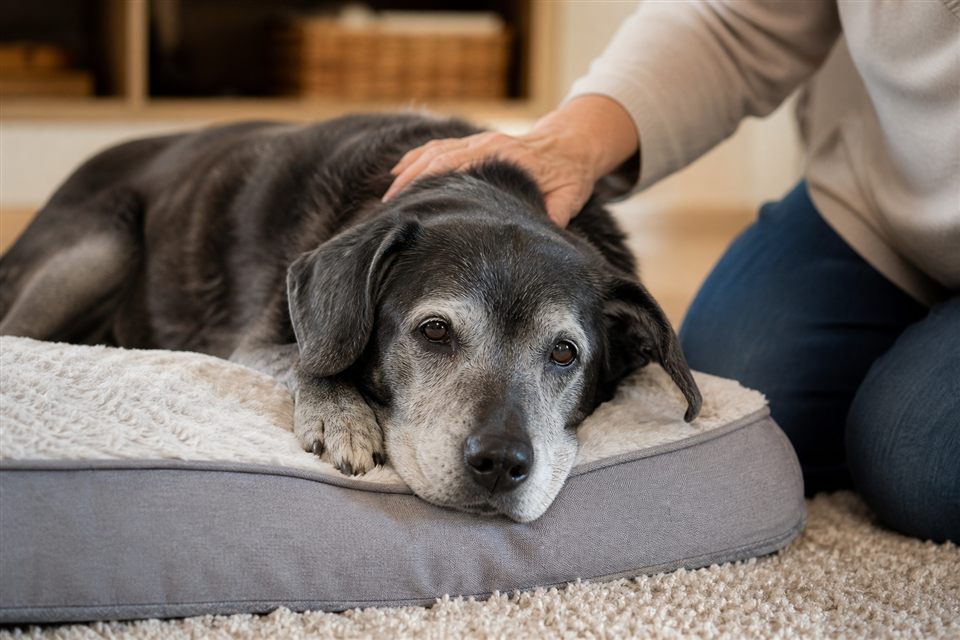
Jorge stood in the hallway in Tucson at 6:50 p.m. with a glass of ice water and a dog who would not lie down. Copper, 48 lb and 11 years old, paced the same oval: kitchen, rug, back door, kitchen. He panted with a wet, wide tongue. The thermostat read 84°F. The swamp cooler had been running since noon. Copper had not come in from a walk. He napped from two to five, ate dinner, then started this loop as the light went gold. Jorge ran through the list. Heat. Sore joints. Anxiety. The foggy evening restlessness some older dogs get. He wanted a cooler room and a night light. He did not want a leftover human pill from the bathroom shelf. He called the clinic for a same-week slot. Copper needed a workup, not a guess.
Key points at a glance
- Dusk pacing in an 11-year-old can be heat, pain, anxiety, or evening restlessness — sort it with a vet, not a label you pick in the hall.
- Cool the room, offer water, and add a low night light so shadows are less sharp.
- Book a same-week exam if this is new, nightly, or paired with stiffness or confusion.
- Never sedate a dog with leftover human sleep or pain pills.
- An 84°F house can make panting look like a behavior problem when it is heat.
Heat, pain, anxiety, or evening fog
Copper's loop started when the light went gold, which is why people reach for the word sundowning. That word is a prompt for a clinic visit, not a diagnosis you assign at 6:50 p.m. Pain can look the same: a dog who cannot get comfortable will patrol. Anxiety can look the same: he follows you, startles, and cannot settle. Heat can look the same on an 84°F evening even after the cooler has been on.
Watch for extras. Slow on stairs. Crying when he lies down. Accidents. Circling that does not stop. Those push the appointment from "this week" toward "today."
What to do tonight, and what to leave in the cabinet
Jorge dropped the thermostat, put Copper on tile with a fan across the room, and clicked on a hallway night light. He offered water. He did not dim the whole house into a cave. A little light can help an older dog place his feet.
The bathroom shelf stayed shut. Human leftover tablets are not a dog evening plan. Wrong dose, wrong drug, wrong species. If Copper still paced after the room cooled, Jorge had already left a message for the clinic. Same week. Sooner if Copper seemed painful or lost.
| What you are seeing | First move |
|---|---|
| House at 84°F, wet tongue, seeks tile | Cool the room; skip a dusk walk |
| Paces, then winces sitting or rising | Same-week vet; do not guess pain meds |
| Starts as light fades, better by morning | Night light; still tell the vet |
| Follows you, startles, cannot settle | Calm routine; ask about anxiety at the exam |
| Leftover human sleep or pain pills | Leave them on the shelf. Always. |
| New nightly loop in an 11-year-old | Book the clinic this week, not "if it lasts" |
Jorge slept with the night light on and the cooler lower. Copper still did a short loop at 9, then dropped on the tile.
This is general dog-care information, not a diagnosis. Call your veterinarian if dusk pacing is new, worsening, or paired with pain or confusion — and never use leftover human medication.