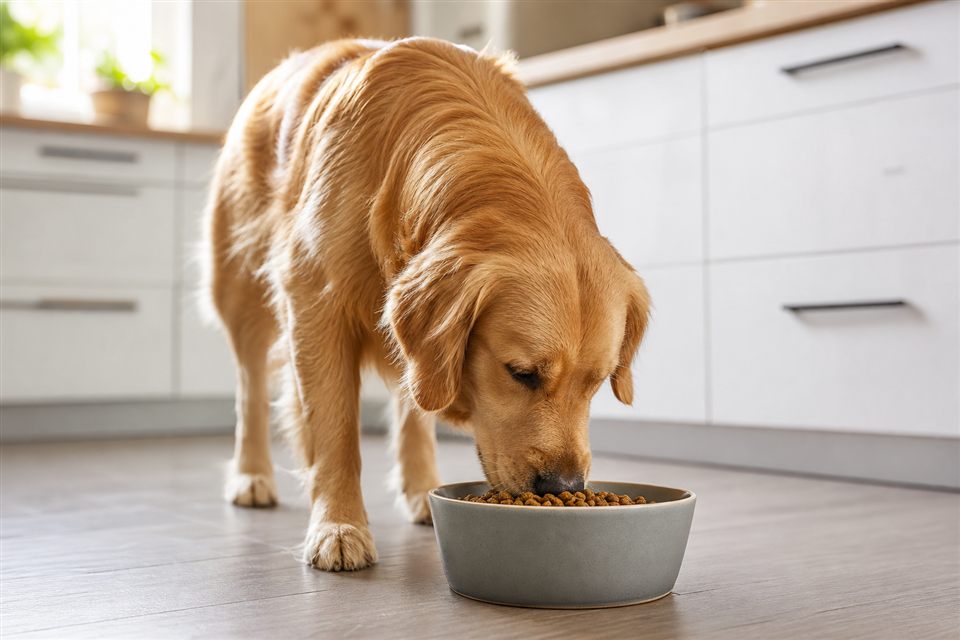
Golden Retrievers combine appetite enthusiasm with breed tendency toward weight gain—making portion questions critical from puppyhood through senior years. Bag feeding charts provide starting points only; individual metabolism, neuter status, activity, and food calorie density vary widely. A cup of one brand may equal one point four cups of another calorically. Overfeeding during rapid puppy growth stresses joints; adult obesity strains hearts and ligaments. Measuring cups, body condition scoring, and veterinary weight checks beat guessing based on begging eyes at dinner time.
Starting Guidelines by Life Stage
Puppies need growth-formulated diets fed three to four times daily per breeder and veterinary guidance—amounts change monthly with weigh-ins. Adult Goldens near ideal weight often eat roughly three to four cups total daily of average-calorie kibble split into two meals for a sixty-five to seventy-five pound dog, but athletic dogs may need more while seniors need less. Neutered adults typically require ten to twenty percent fewer calories than intact counterparts at same weight. Senior formulas reduce calories while supporting joint nutrients when weight creeps upward despite unchanged cups.
Adjusting Portions Using Body Condition
Ribs should be palpable without prominent visibility; waist visible from above; abdominal tuck present. Missing waist means reduce ten percent and reweigh in two weeks. Visible hip bones may mean increase cautiously or investigate illness—not automatic free feeding. Treats, chews, and table scraps count toward daily totals—owners frequently overlook training treat volume. Switch foods gradually over seven to ten days measuring new bag feeding recommendations converted via calories per cup when labels provide kcal/cup data.
Key Points
- Feeding charts are starting points—adjust using body condition scoring.
- Measure kibble with standard cup—not random mugs.
- Neutered Goldens often need fewer calories than package examples.
- Treats must stay under ten percent of daily calories.
- Puppies need growth diets with frequent veterinary weight checks.
- Sudden appetite changes with weight loss need medical evaluation.
Practical Tips
- Use kitchen scale weighing daily portions for precision.
- Pre-portion treat bags matching training sessions each morning.
- Log monthly weights on phone calendar reminders.
- Choose foods listing calories per cup on labels when possible.
- Discuss joint supplements with vets when maintaining lean weight.
When to Contact Your Veterinarian
Schedule visits for unexplained weight gain or loss, poor coat despite adequate feeding, or puppy growth concerns compared with littermates. Nutrition consults help obese Goldens lose weight safely without hunger misery.
This article is for general educational purposes only and does not replace professional veterinary advice. Contact your vet if your pet shows ongoing symptoms.