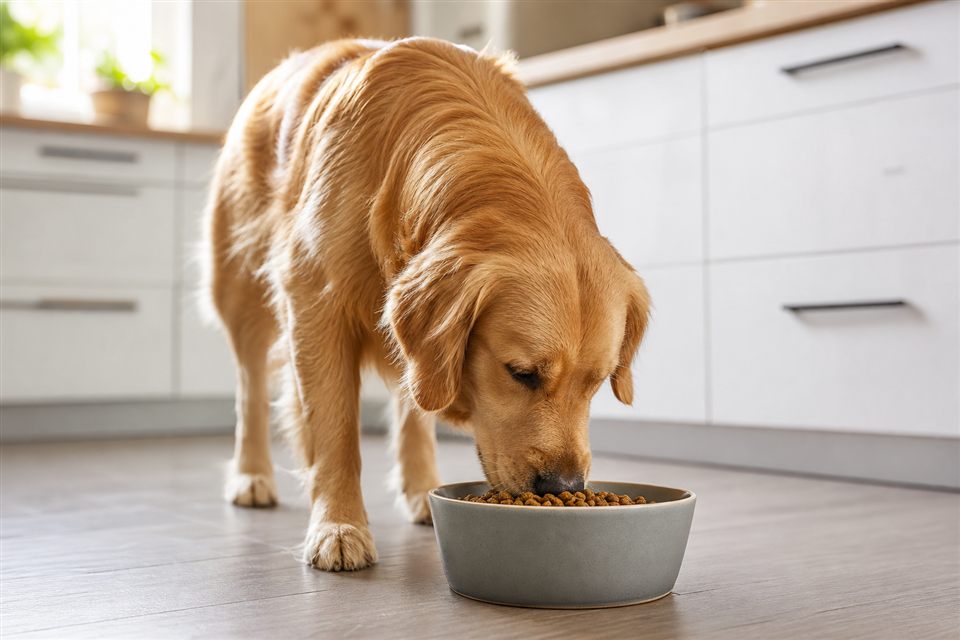
When Diane opened a can of chickpeas for her own salad, her bulldog, Bruno, appeared at her ankle with the expression he reserves for cheese and bacon. She rinsed a few beans under cold water, skipped the salt and olive oil, and dropped them in his bowl. Within two hours, Bruno was clearing the room. Diane wondered whether the gas was normal or whether canned legumes were off the table entirely.
Dogs can eat plain rinsed canned chickpeas in small amounts. Rinsing removes much of the sodium and some of the oligosaccharides that cause gas, but some flatulence is still normal — especially the first time or when portions creep too large. Chickpeas provide protein and fiber but are not a complete meal; think of them as an occasional add-on, not a staple.
Key points at a glance
- Plain canned chickpeas, rinsed thoroughly, are safe for most dogs in moderation.
- Some gas after eating is normal; excessive gas, bloating, or diarrhea means reduce portions or stop.
- Rinse to lower sodium — canned chickpeas can contain 300–400 mg sodium per half cup before rinsing.
- Never feed hummus, seasoned chickpeas, or falafel (onion, garlic, spices).
- Introduce one or two beans first and build slowly over several days.
Why chickpeas cause gas
Legumes contain raffinose and stachyose — complex sugars that dogs and humans digest poorly in the small intestine. Gut bacteria ferment them in the large intestine, producing gas. Rinsing canned chickpeas washes away some of these sugars along with canning liquid, but it does not eliminate gas entirely.
Bruno's post-chickpea performance after five unrinsed beans was predictable. After rinsing and cutting to two beans, the room-clearing episodes stopped.
| Portion (rinsed canned chickpeas) | Expected gas level | Notes |
|---|---|---|
| 1–2 beans (small dog) | Mild or none | Good starting test |
| 3–5 beans (medium dog) | Mild to moderate | Normal for legumes |
| 1/4 cup or more | Moderate to heavy | Often causes loose stool |
| Daily large servings | Excessive gas, bloating risk | Not recommended |
Deep-chested breeds like Bruno's bulldog lineage deserve extra caution with bloating, though chickpeas alone rarely cause GDV (gastric dilatation-volvulus). Still, if a dog shows a distended hard abdomen, unproductive retching, or restlessness after eating, treat it as an emergency regardless of what they ate.
Preparation matters
Choose chickpeas packed in water, not salted brine when options exist. Rinse under running water for 30 seconds, draining twice if sodium restriction matters for heart or kidney disease. Mash lightly for small dogs to reduce choking risk. Do not add cumin, garlic, onion, or oil.
Dried chickpeas cooked plain without salt work similarly but take longer to prepare. Canned is fine when rinsed.
Nutritional role
Chickpeas offer plant protein, fiber, folate, and iron. Dogs digest animal protein more efficiently, so chickpeas supplement rather than replace meat in a balanced diet. Dogs with pancreatitis, inflammatory bowel disease, or legume-linked diet-associated heart disease concerns (DCM discussions tied to pulse-heavy diets) should get vet guidance before regular legume feeding.
The bottom line
Rinsed plain canned chickpeas are a safe occasional snack when you expect a little gas and keep counts low. Diane gives Bruno two mashed chickpeas on salad nights — he still produces a modest symphony, but nothing like the first experiment. If gas comes with vomiting, diarrhea, or a hard swollen belly, skip the chickpeas and talk to your vet.
This article is for general information only and is not a substitute for advice from your veterinarian.