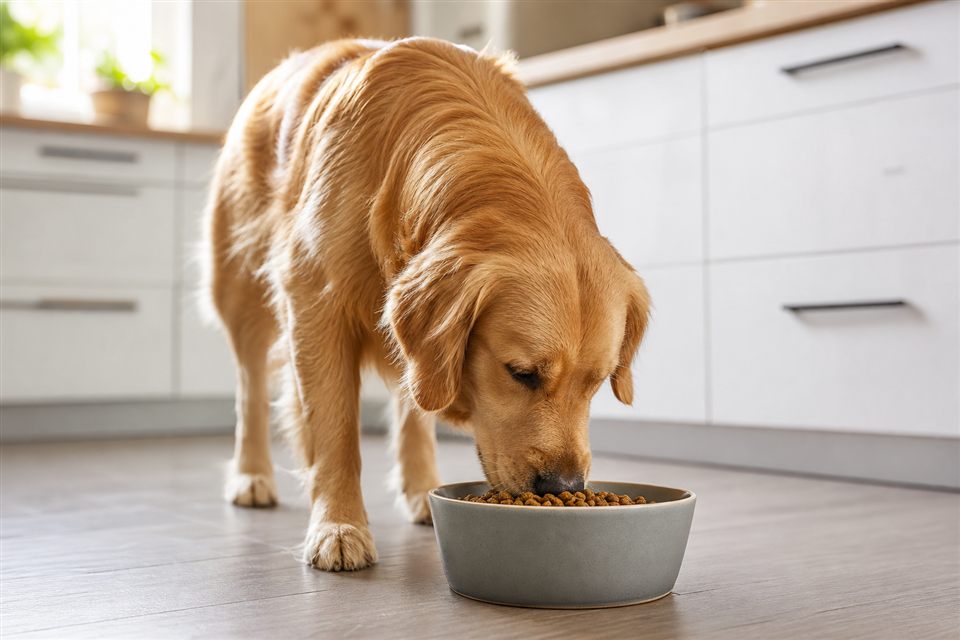
Jorge sliced papaya for breakfast, and his mixed-breed, Coco, parked herself under the counter with the patience of a chess player. When a chunk slipped off the cutting board, Coco caught it midair. Jorge froze — then remembered reading that papaya enzymes help digestion. He just needed to know whether Coco's spontaneous catch counted as smart supplementing or a mistake.
Papaya flesh with seeds removed is safe for most dogs in moderation. The fruit contains papain, a natural enzyme that aids protein breakdown, which is why some owners offer small amounts for mild digestive sluggishness. Seeds must be removed — they contain trace amounts of cyanide compounds and can cause intestinal blockage if swallowed in quantity. Peel is tough and best discarded.
Key points at a glance
- Ripe papaya flesh (no seeds, no peel) is safe as an occasional treat.
- Papain may support mild digestion but is not a substitute for vet care.
- Papaya seeds are not safe — always scoop them out before feeding.
- High natural sugar means small portions, especially for diabetic or overweight dogs.
- Introduce gradually; too much causes loose stool.
Papaya and digestion
Papain breaks down proteins similarly to stomach enzymes. Some commercial digestive supplements include papaya extract for this reason. A teaspoon of fresh papaya for a small dog or a tablespoon for a large dog may help move things along when constipation is mild and diet-related.
It will not fix blockages, foreign bodies, parasites, or infections. If your dog has not defecated in 48 hours, strains painfully, or vomits repeatedly, skip the fruit bowl and call your vet.
Coco's accidental chunk was roughly two tablespoons — reasonable for a 40-pound dog. Jorge would not repeat it daily.
| Dog size | Safe treat portion | Digestive use (with vet awareness) |
|---|---|---|
| Small (under 20 lbs) | 1 tsp – 1 tbsp | Once, then monitor stool |
| Medium (20–50 lbs) | 1–2 tbsp | Occasional only |
| Large (50+ lbs) | 2–4 tbsp | Not a daily supplement |
Seeds and peel: remove both
Papaya seeds are peppery, hard, and contain compounds that can irritate the GI tract. Dogs that swallow many seeds risk obstruction. The peel is fibrous and difficult to digest — strip it before offering flesh.
Never feed green unripe papaya; it is harder to digest and higher in latex compounds that can upset stomachs.
Sugar and calorie caution
Papaya tastes sweet because it is sweet — roughly 11 grams of sugar per cup. For overweight dogs or those with diabetes, treat portions should shrink further. Pairing papaya with regular meals without reducing kibble adds hidden calories fast.
What to avoid
Skip papaya smoothies with xylitol, dairy, or added sugar. Dried papaya often contains sulfites and concentrated sugar. Papaya enzyme tablets for humans may include additives unsuitable for dogs — whole fresh flesh in tiny amounts is simpler and safer.
The bottom line
Papaya flesh with seeds removed is a safe occasional treat that may gently support digestion in small doses. Jorge now saves Coco a tablespoon of seeded, peeled papaya after his weekend breakfast — not every morning. Remove seeds every time, keep portions modest, and treat serious GI symptoms with veterinary care, not tropical fruit.
This article is for general information only and is not a substitute for advice from your veterinarian.