The back door becomes a concert hall every dusk. Your indoor cat scratches the frame, yowls, and stares at the knob like they invented curiosity. Wanting outside is normal — windows show birds, breezes carry smells, and intact cats feel seasonal drives. Whether to open the door is a safety and lifespan decision, not a test of love.
Key points at a glance
- Free-roaming outdoor cats face shorter average lifespans — cars, predators, disease, fights.
- Door meowing often peaks at dawn/dusk — hunting instinct and boredom stack.
- Safer middle ground: supervised leash walks, catios, or secured cat-proof fencing.
- Spay/neuter reduces roaming urge and fights; does not eliminate interest in windows.
- Never declaw then turn outdoors — defenseless against dogs and cats.
Why indoor cats fixate on the door
| Driver | What you notice |
|---|---|
| Prey sight/sound | Meowing when birds or squirrels visible |
| Boredom | Same time daily, no environmental change |
| Habit | You once let them out; they remember |
| Territorial patrol | Intact males especially; neighbor cats visible |
| Heat cycle | Unspayed females vocalize and try to escape |
Some cats outgrow intense door fixation with enrichment; others maintain lifelong interest.
Risks of letting indoor cats roam free
Outdoor-access cats face:
- Vehicles and traffic
- Coyotes, dogs, cruel humans
- FIV, FeLV, rabies, parasites from fighting or hunting
- Abscesses and injuries from fights
- Toxin and antifreeze exposure
- Getting lost or trapped in sheds and garages
Veterinary consensus favors indoor life with enrichment for longevity — regional risk varies (urban vs rural).
Safer outdoor options
Catios and window enclosures
Screened porch or window box gives fresh air and sun without roaming. DIY or commercial kits attach to windows or patios.
Harness and leash training
Indoor cats can learn short supervised yard sessions with secure harness (escape-proof style) and patient training. Avoid busy streets and unfenced dogs nearby.
Cat-proof fencing
Some yards add overhang fencing preventing escape — still requires supervision and parasite prevention.
Controlled "cat garden"
Small enclosed run with climbing shelves — middle ground between couch and freeway.
Enrichment to reduce door obsession
- Window perches on interesting views — bird feeder outside glass, not on cat reach.
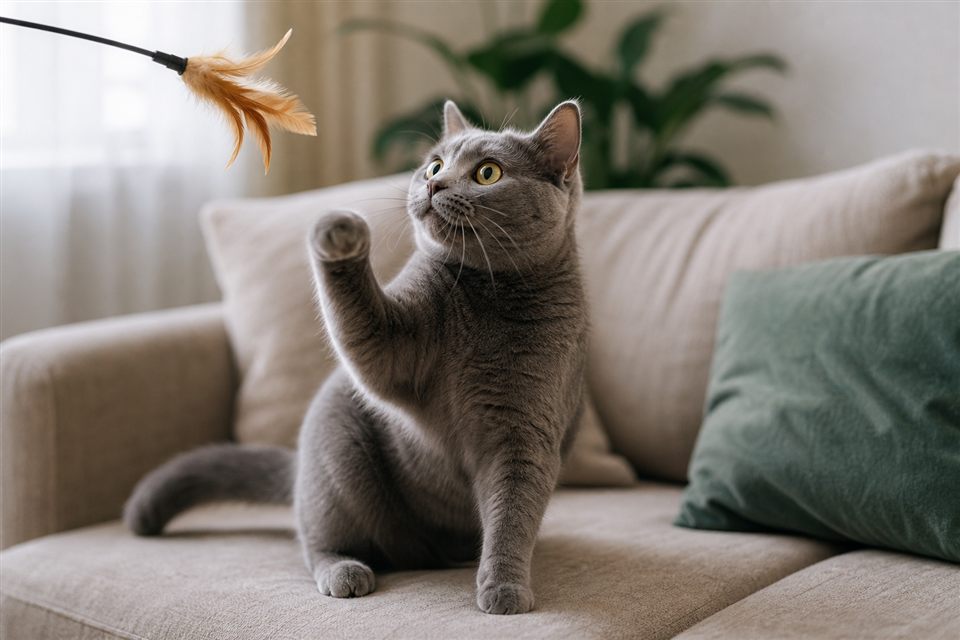
- Scheduled play at dawn/dusk with wand toys — drain hunting drive indoors.
- Food puzzles — meals as work, not bowl only.
- Ignore demand meowing after vet clears health — reward quiet with play, not door opening.
- Feliway or routine — predictable feeding reduces anxiety-driven vocalizing.
Opening door to stop meowing trains louder meowing.
Should you ever convert indoor-only to outdoor?
Most behaviorists and vets say no free roaming if avoidable. If you must:
- Microchip and collar ID updated.
- Full vaccination and parasite prevention year-round.
- Spay/neuter mandatory.
- Transition gradually with supervised yard time — not dump outside hoping instinct works.
Cats raised indoor-only may panic outdoors and hide dangerously.
When meowing is medical
Sudden increase in vocalization with weight change, thirst, or confusion in seniors — hyperthyroidism, pain, cognitive dysfunction. Exam before assuming door drama only.
The bottom line
Cats meow at doors because outside smells like adventure — but free roaming carries real mortality and disease risks most indoor owners underestimate. Catios, leashed yard time, and dawn-dusk play often satisfy the urge safely. Do not reward screaming with escape; build indoor hunting life instead. If vocalization spikes suddenly in older cats, check health before buying a cat flap.
This article is for general education only and does not replace advice from a licensed veterinarian. Local leash and roaming laws may apply.