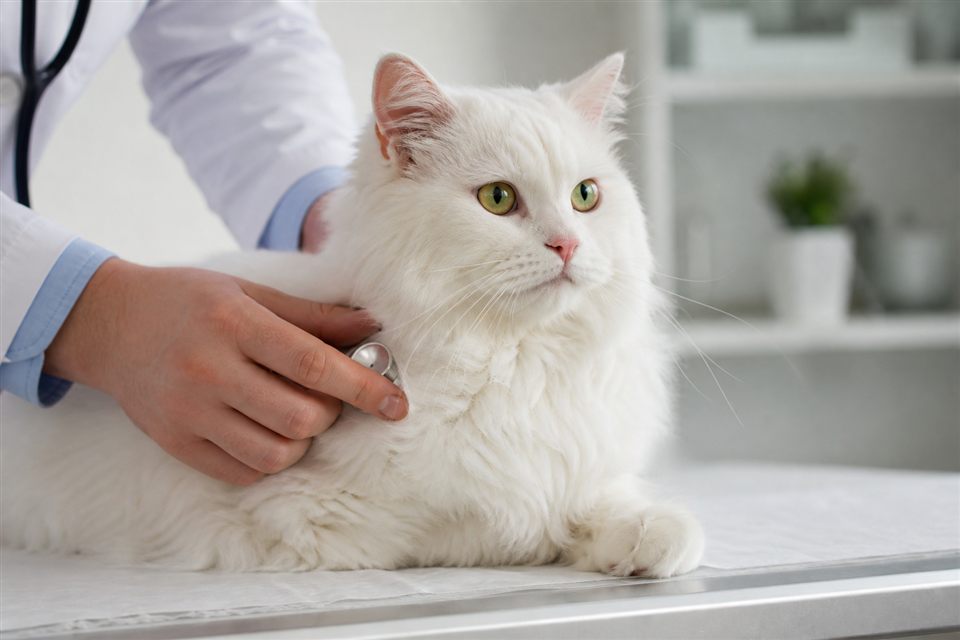
Whenever Nina stroked her black domestic shorthair, Shadow, along the lower back near the tail, his skin rippled like a wave — twitch, twitch, twitch — and sometimes he snapped at her hand or bolted off the couch. Nina checked for fleas and found none visible. Shadow's dramatic skin jumps looked like irritation, but the cause was not obvious from fur alone.
Skin twitching along the back during petting — especially in the lumbar and tail-base region — is a recognized pattern in cats. Fleas and flea allergy are the most common cause and must be ruled out first, even when you see no insects. Feline hyperesthesia syndrome — a condition of exaggerated skin sensitivity and nerve reactivity — is another explanation when flea control is solid and exams find no dermatitis. The two can overlap, and both deserve veterinary attention when twitching is frequent or aggressive.
Key points at a glance
- Back-skin twitching during petting is common and not always harmless excitement.
- Fleas and flea allergy dermatitis are the top cause — often with no visible fleas on dark-coated cats.
- Feline hyperesthesia syndrome causes rippling skin, tail chasing, and sudden aggression during touch.
- Other causes include arthritis, skin infection, anal gland discomfort, and anxiety.
- Effective year-round flea prevention is the first diagnostic and treatment step.
Why the back twitches when petting
The lumbosacral area — lower back and tail base — has dense nerve supply and is a flea-preferred zone. Stimulation here triggers:
Flea allergy reaction — A single flea bite can sensitize allergic cats. They feel itch without visible infestation. Skin ripples as muscles contract reflexively against perceived itch.
Hyperesthesia — Cats with this syndrome have lowered sensory threshold. Normal petting feels overstimulating. Rippling skin, dilated pupils, vocalization, and self-directed biting or tail chasing may follow.
Mild irritation or pain — Arthritis in the spine, anal gland fullness, or skin infection can make the area hypersensitive to touch.
Normal reflex — Some cats ripple skin mildly without other signs. Context matters — Shadow's snapping and fleeing suggest more than a cute quirk.
Fleas versus hyperesthesia — how they differ
| Feature | Flea allergy | Hyperesthesia syndrome |
|---|---|---|
| Flea evidence | May be absent visually; flea dirt at tail base | No flea findings on exam |
| Seasonality | Often worse in warm months | Can occur year-round |
| Skin lesions | Scabs, hair loss, redness at tail base | Often normal skin on exam |
| Behavior | Scratching, overgrooming | Tail chasing, sudden aggression, rippling when not touched |
| Response to flea control | Improves within weeks | Partial or no improvement |
Many vets treat presumed flea allergy first because it is more common and cheaper to rule out than advanced neurological workup.
What Nina should do first
Apply veterinarian-recommended flea prevention to Shadow and all household pets — even indoor cats. Comb with a flea comb over white paper; look for flea dirt (black specks that turn red-brown when wet). Examine the tail base and belly for scabs or thin fur. If twitching persists after 4–6 weeks of consistent flea control, schedule a full veterinary exam.
Your vet may check for skin infection, anal gland issues, and spinal pain. Video of episodes helps diagnosis.
The bottom line
Shadow's rippling back when petted could be fleas, hyperesthesia, or pain — and flea allergy remains the most likely starting point even without visible insects. Nina should not assume a clean-looking coat means no fleas. Year-round prevention and a flea comb test come first; if twitching and snapping continue, her vet can pursue hyperesthesia and other causes. The skin wave is not a charming personality trait when the cat bites and runs — it is a signal worth investigating.
This article is for general information only and is not a substitute for advice from your veterinarian.