Rachel cleaned the litter box on Tuesday and noticed six small wet spots instead of the usual two substantial clumps from her four-year-old tabby, Mochi. Mochi had visited the box four times in an hour that morning — squatting, producing a teaspoon of urine each time, then leaving with an irritated twitch of her tail. She was not crying in the box yet, but she over-groomed her belly after each trip. Rachel wondered if it was a urinary tract infection or something worse. In cats, the distinction matters because "UTI" is less common than owners think, and the same symptoms can signal a life-threatening blockage in males.
Frequent urination of small volumes — pollakiuria — is a bladder and urethra problem until proven otherwise. True bacterial UTIs occur in roughly one to three percent of cats with lower urinary signs; far more common causes include feline idiopathic cystitis (FIC), bladder stones, and urethral obstruction. Early recognition separates a cat who needs antibiotics and stress management from one who needs emergency catheterization within hours.
Key points at a glance
- Small frequent urination in cats often reflects bladder inflammation or irritation, not always bacterial infection.
- True UTIs are more common in older cats, diabetic cats, and those with chronic kidney disease.
- Early signs include frequent box visits, small clumps, straining, blood-tinged urine, and over-grooming the belly or genitals.
- Male cats straining without producing urine need emergency care immediately — obstruction kills quickly.
- Diagnosis requires urinalysis and often culture; treating with leftover antibiotics without testing misses the real problem.
Early UTI and lower urinary tract signs in cats
Owners use "UTI" as a catch-all, but veterinarians parse symptoms carefully. Lower urinary tract disease (FLUTD) shares overlapping signs:
Pollakiuria — Peeing often with little output each time.
Stranguria — Visible straining, prolonged squatting, or vocalizing in the box.
Hematuria — Blood in urine; clumps may look pink or rusty.
Periuria — Urinating outside the box; owners sometimes blame behavior before medical causes.
Over-grooming — Licking belly, inner thighs, and genital area because the bladder hurts.
Behavior change — Irritability, hiding, or restlessness without obvious limp or wound.
Mochi's small clumps and repeated visits are early-stage signs. She is female, which makes complete urethral obstruction unlikely — males have a longer, narrower urethra that plugs more easily with crystals or mucus — but females still suffer painful inflammation and can develop life-threatening complications if stones block the outflow.
UTI versus feline idiopathic cystitis versus stones
Bacterial UTI — Bacteria in the bladder, more likely when urine is dilute from diabetes, when kidney disease reduces immunity, or when a cat is on long-term steroids. Urinalysis shows bacteria, white blood cells, and sometimes nitrites; culture confirms species and antibiotic sensitivity.
Feline idiopathic cystitis (FIC) — Inflammation without infection, often linked to stress, indoor living, multi-cat tension, and diet. Accounts for the majority of young adult cat urinary flare-ups like Mochi's. Antibiotics do not fix FIC; environmental and dietary management do.
Urolithiasis (bladder stones) — Struvite or calcium oxalate crystals aggregate into stones that irritate the bladder wall. X-rays or ultrasound detect them.
Urethral plugs — Emergency in males: mucus, crystals, and debris form a plug; cat strains, cries, and produces nothing. Kidney failure and bladder rupture follow untreated obstruction.
Rachel should not assume antibiotics from a neighbor's leftover script will solve this. Wrong treatment delays correct care and contributes to antibiotic resistance.
When Mochi's symptoms need emergency care
Go to emergency immediately if:
A male cat strains in the box and no urine appears — or only drops with extreme distress.
Any cat shows repeated vomiting, lethargy, or refusal to eat alongside urinary signs — toxin buildup from obstruction or severe azotemia.
The belly feels hard and painful when gently touched — distended bladder.
Collapse or extreme weakness develops
For female cats like Mochi, same-day urgent (not necessarily emergency) care is appropriate when blood is visible, straining worsens, or she stops eating for 24 hours. Do not wait a long weekend hoping clumps normalize.
What the vet visit should include
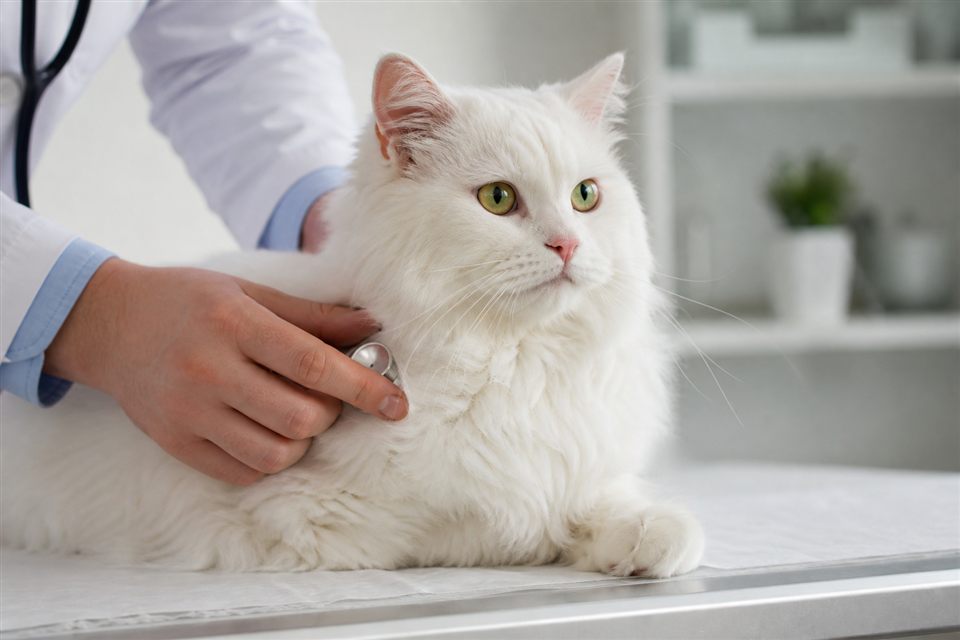
Bring a fresh urine sample if you can collect one — non-absorb litter from the vet or a clean shallow tray. The exam covers bladder size, pain on palpation, hydration, and kidney feel.
Diagnostics typically include:
Urinalysis — Concentration, pH, crystals, blood, white blood cells, bacteria.
Urine culture — Gold standard for confirming true infection; results take days but guides therapy.
Blood work — If obstruction, recurrence, or systemic illness is suspected.
Imaging — X-rays or ultrasound for stones, masses, or structural abnormalities.
Treatment depends on findings: antibiotics matched to culture for true UTI; analgesics and environmental modification for FIC; prescription dissolution or surgical removal for stones; catheterization and hospitalization for blocked males.
At home for FIC-prone cats: increase water intake through wet food and fountains, reduce stressors, provide multiple clean boxes, and consider veterinary urinary diets. Feliway and predictable routines help some cats; punishment for periuria makes inflammation worse.
Prevention and follow-up Rachel can start now
Add another litter box — the rule is one per cat plus one. Scoop twice daily during flare-ups. Switch to low-stress box placement away from loud appliances and dominant cats' territory.
Track clump size and frequency in a notebook or phone note. Photos of litter help your vet assess volume objectively at follow-up.
If Mochi recurs within months, ask about chronic pain management and long-term stress reduction rather than repeated antibiotic courses without culture proof of infection.
The bottom line
Small amounts of urine frequently mean Mochi's bladder is irritated and she feels urgency — the classic early picture of lower urinary tract disease in cats. True bacterial UTI is possible but less common than stress-linked cystitis or crystals, especially in a young indoor tabby. Rachel caught early signs before obstruction-level crisis, which is exactly when intervention works best. A urinalysis beats guessing, and any male cat who strains without output skips the wait entirely — that is always an emergency.
This article is for general information only and is not a substitute for advice from your veterinarian.