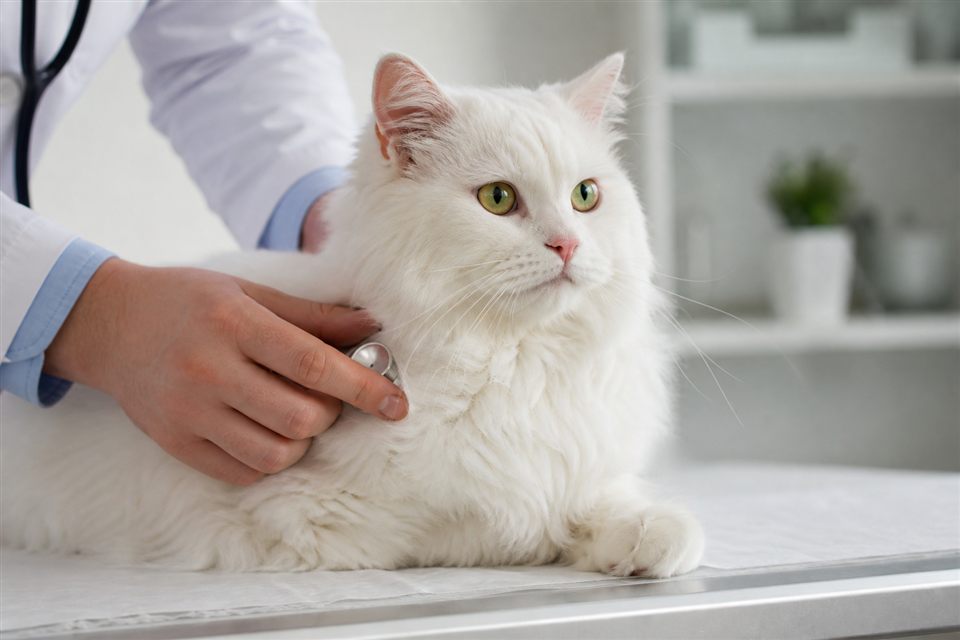
Michelle had only seen dogs pant until the afternoon she loaded her cat, Cleo, into the carrier for a vet visit. Within ten minutes Cleo was open-mouth breathing — tongue out, sides heaving — in the back seat. After the appointment ended, the panting stopped within minutes of returning home. The same thing happened during a heat wave when the AC failed. A third time, Cleo panted after jumping from a high shelf and landing awkwardly. Open-mouth panting in cats is always notable because cats are not dogs; they do not thermoregulate by panting routinely. When Cleo does it, context separates benign stress or heat from pain, heart disease, and respiratory emergencies.
Cats breathe quietly through the nose at rest — roughly twenty to thirty breaths per minute. Panting — rapid open-mouth breathing with tongue extended — appears in specific situations: overheating, extreme stress, exertion after intense play, and illness affecting oxygenation or causing pain. Unlike dogs, panting is never Cleo's normal baseline. Repeated or resting panting demands veterinary attention even if it once resolved after a car ride.
Key points at a glance
- Open-mouth panting is abnormal in resting cats and warrants evaluation if it recurs, persists, or pairs with distress.
- Stress panting often follows car rides, vet visits, or conflict; it typically resolves when the trigger ends.
- Heat panting occurs in hot environments without adequate cooling; heat stroke progresses to collapse and is an emergency.
- Pain panting may accompany hiding, aggression, limping, or belly guarding — sometimes without obvious injury.
- Respiratory and cardiac disease cause panting at rest and are emergencies when gums turn pale or blue.
Stress panting — when fear drives breathing
Cats in fight-or-flight mode increase respiratory rate. Carrier confinement, car motion, unfamiliar smells, dog barking in the waiting room, or construction noise can trigger open-mouth panting in sensitive cats. Cleo's vet-trip pattern fits classic stress panting:
Starts after a identifiable trigger
Resolves within minutes to an hour once calm returns
No other illness signs — Normal appetite and energy at home before and after
May pair with drooling, vocalizing, or urinating in carrier
Reducing stress panting long term involves acclimating the carrier as furniture, short positive car trips, Feliway spray twenty minutes before travel, and gabapentin or other pre-visit anxiolytics your vet may prescribe for known stressful events. Stress panting is real physiological arousal, not "drama" — but it should not be dismissed if it happens at home without triggers.
Heat and overheating — summer AC failure scenario
Cats dissipate heat primarily through grooming (saliva evaporation) and seeking cool surfaces — not panting. When ambient temperature overwhelms these mechanisms, panting appears late and indicates significant heat stress.
Heat-related panting clues:
Hot room, sunbeam trapping, closed car, or recent dryer vent access
Panting develops during or after heat exposure
Bright red gums early; pale or muddy gums as shock advances
Weakness, vomiting, wobbly gait, collapse follow untreated panting
Cleo's AC outage episode resolved when Michelle moved her to a tiled bathroom with fan — appropriate first aid. Heat stroke kills cats quickly; active cooling with lukewarm (not ice-cold) water to paws and belly, airflow, and emergency vet care are mandatory if panting continues after removing heat or if Cleo acts weak.
Prevent: keep indoor temps below eighty degrees Fahrenheit for long-haired breeds, never leave cats in parked cars, ensure water and shade for any outdoor access.
Pain panting — the sign owners miss
Cats hide pain. Open-mouth breathing is an underrecognized pain signal alongside hiding, reduced grooming, appetite drop, and aggression when touched.
Pain-associated panting may follow:
Trauma — Falls like Cleo's shelf jump; fight injuries.
Abdominal pain — Pancreatitis, urinary obstruction, intestinal disease.
Orthopedic pain — Less commonly causes panting unless severe.
Post-surgical recovery — Inadequate analgesia.
Cleo's brief pant after the awkward landing deserved monitoring for limping, reluctance to jump, and repeated episodes. Single short panting that never recurs may be benign; repeated pain panting without obvious cause needs exam and possibly imaging.
Respiratory and cardiac emergencies — when panting means insufficient oxygen
The most dangerous category: panting at rest in a cool, quiet home with no stressor. Causes include:
Asthma and bronchitis — Cats extend neck, cough, wheeze; allergic airway disease common.
Heart failure — Fluid in lungs; older cats; may have history of heart murmur.
Pleural effusion — Fluid around lungs from cancer, heart disease, or infection.
Pneumonia or upper airway obstruction — Foreign body, laryngeal disease.
Anemia or toxin exposure — Reduced oxygen carrying capacity.
Emergency signs with panting:
Gums pale, gray, or bluish
Breathing effort with belly and chest exaggerated movement
Open-mouth breathing lasting more than a few minutes at rest
Collapse or inability to walk
Forelimbs extended and head lowered — "air hunger" posture in cats
These override wait-and-see regardless of prior stress panting history. Cleo at home on a normal Tuesday panting on the couch would be ER — car-ride panting that stops at home is a different calculus.
How Michelle can tell the categories apart
Use context checklist:
| Situation | Likely category | Action |
|---|---|---|
| During carrier ride, stops at home | Stress | Discuss pre-visit meds; monitor |
| During heat wave, hot room | Heat | Cool immediately; vet if persists |
| After fall or known injury | Pain | Exam if repeated or limping |
| At rest, cool quiet room | Medical emergency | Emergency vet now |
| After intense play briefly | Exertion | Normal if rare and brief |
Count resting respiratory rate at home when Cleo sleeps — consistently above forty at rest suggests pathology. Video panting episodes; duration and gum color help your vet more than "she panted in the car."
What to do when Cleo pants again
If panting during travel: ensure airflow, avoid stacking carriers, cover partially to reduce visual stimuli, and pull over safely if distress escalates — prolonged heat in a parked car worsens both stress and temperature.
If panting at home without trigger: check gum color, stop handling if she is agitated, keep environment cool and quiet, and call emergency vet if breathing effort is high or gums look wrong.
Schedule non-emergency workup for recurrent panting even if it always "stops eventually" — asthma and heart disease can present as intermittent episodes before crisis.
Never give human asthma inhalers or painkillers without prescription — wrong drugs kill cats fast.
The bottom line
Cleo panting with her mouth open means her body is overwhelmed — by fear in the carrier, by heat when the AC failed, possibly by pain after a hard landing, or in the worst case by lungs that cannot get enough oxygen. Cats are not small dogs; open-mouth breathing at rest in a cool quiet room is never normal. Michelle correctly noticed three different contexts; her job now is tagging each episode and involving her vet if panting ever happens without an obvious stressor or heat source. Stress and heat panting end when the trigger ends; pain and disease panting keep coming back until treated.
This article is for general information only and is not a substitute for advice from your veterinarian.