Cat owners often mistake asthma attacks for hairballs: the cat hunches, extends its neck, and makes a harsh coughing or wheezing sound without producing much hair. Feline asthma—chronic inflammation of the lower airways—affects an estimated 1–5% of cats and can progress from occasional cough to life-threatening respiratory distress. Early recognition separates manageable disease from emergency crises.
What happens during feline asthma
Inflamed airways narrow when muscles around the bronchi constrict and mucus accumulates. Triggers include inhaled allergens (pollen, dust mites, mold), smoke, perfume, aerosol cleaners, clay litter dust, and stress. Some cats develop symptoms after upper respiratory infections that leave airways hypersensitive for months.
Attacks range from brief cough episodes with normal breathing between them to open-mouth breathing, blue-tinged gums, and collapse. Siamese and related breeds appear overrepresented in research, though any cat can develop asthma.
How asthma coughing differs from hairballs
Hairball cough: Often preceded by gagging rhythm, may produce a cylindrical hair mass, cat returns immediately to normal grooming or eating.
Asthma cough: Dry, hacking, or wheezing; neck extended low; no hair produced; may occur at rest or after minimal exertion; repeats in clusters during flare-ups.
Video record episodes—veterinarians diagnose partly from description, and video clarifies whether breathing effort involves abdominal heaving (lower airway) versus throat gagging (upper airway or hairball).
Other conditions that mimic asthma
Heartworm-associated respiratory disease (even indoor cats in endemic areas), lung parasites, pneumonia, heart failure, and foreign bodies can cause cough or labored breathing. Never assume asthma without veterinary imaging and sometimes fecal or blood testing. Treating the wrong disease wastes critical time.
Diagnosis your veterinarian may recommend
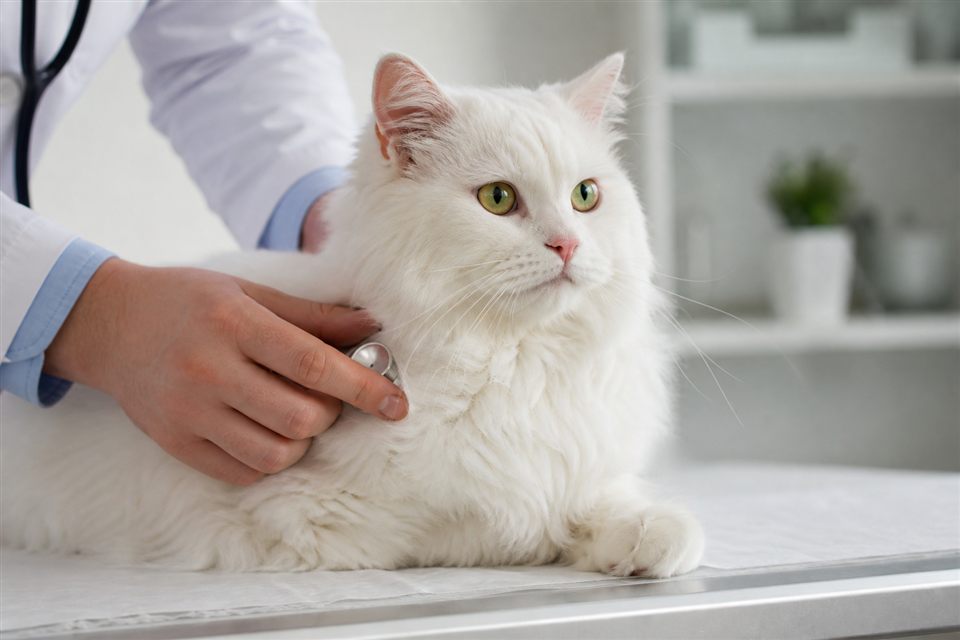
Physical exam listening for wheezes; chest radiographs showing airway patterns or overinflated lungs; fecal tests for lungworms in outdoor hunters; heartworm antibody/antigen where regional. Advanced cases may need bronchoscopy or tracheal wash under anesthesia—risk balanced against need when standard therapy fails.
Baseline blood work assesses steroid safety if long-term anti-inflammatory treatment is planned. Document weight—obesity worsens respiratory effort.
Treatment and home management
Acute flare: Open-mouth breathing or persistent distress is an emergency—oxygen and injectable bronchodilators may be required at the clinic.
Long-term control: Inhaled corticosteroids via feline aerosol chambers (spacer masks) reduce systemic steroid side effects. Oral medications suit some cats who reject masks. Bronchodilators may accompany steroids during attacks.
Environmental control: Switch to low-dust litter (unscented); replace HVAC filters frequently; eliminate smoking, incense, and plug-in air fresheners; wash bedding in hot water to reduce dust mites.
Monitoring and when to recheck
- Count resting respiratory rate while asleep: over 40 breaths per minute at rest suggests flare—contact your vet
- Keep a symptom diary: date, trigger suspicion, cough frequency
- Never stop inhaled steroids abruptly without veterinary guidance
- Recheck radiographs periodically if disease is moderate to severe
Living well with an asthmatic cat
Many asthmatic cats live normal lifespans with consistent medication and trigger reduction. Travel requires packing inhalers or pills; boarding facilities need written protocols. Stress management—predictable routines, hiding spots during guests—reduces flare frequency alongside medical care.
If your cat coughs more than twice weekly, loses weight, or breathes faster after play that used to be easy, schedule a respiratory evaluation before the next severe attack. Asthma is manageable when owners treat cough as a lung conversation, not always a stomach one.
Insurance, cost planning, and medication storage
Inhaled steroid chambers and refills represent ongoing expense—budget monthly alongside litter and food. Pet insurance may cover diagnostics and medication if enrolled before chronic diagnosis; read pre-existing condition clauses carefully. Store inhalers at room temperature away from humid bathrooms; rinse spacer masks weekly per manufacturer instructions to prevent bacterial buildup.
Boarding facilities and pet sitters need written asthma action plans: trigger list, medication schedule, emergency clinic authorization, and your veterinarian’s phone number. A single missed steroid dose rarely causes crisis, but chaotic holidays with skipped doses stack into flare risk—use phone reminders during travel.
Secondhand smoke and air quality at home
Cats with asthma living with smokers face measurably worse outcomes even when smoking occurs in another room. HEPA air purifiers sized to room square footage reduce particulate load; replace filters on schedule, not when visibly gray. New furniture off-gassing and renovation dust temporarily worsen symptoms—board asthmatic cats with a relative or increase medication only under veterinary guidance during major home projects.
This article is for general educational purposes only and does not replace professional veterinary advice. Contact your vet if your pet shows ongoing symptoms.