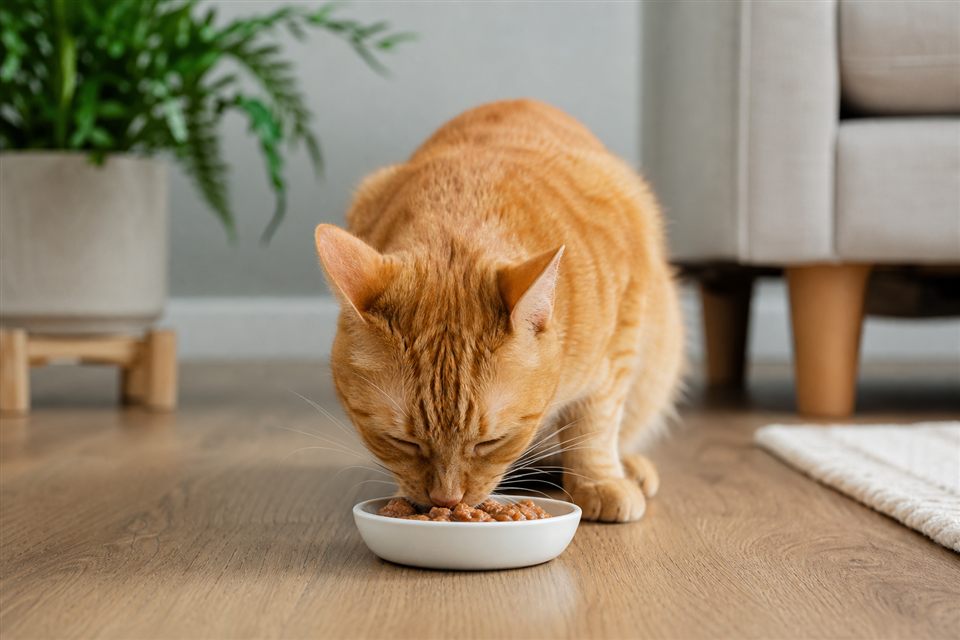
It depends on your cat's health goals—not one format wins for every indoor cat. Wet food adds moisture (often 75–80% water), which helps cats that drink little from bowls; dry kibble is calorie-dense and convenient but can contribute to weight gain if portions are free-fed. Many vets suggest at least some wet food for indoor adults prone to urinary or weight issues.
Key Points
- Wet food typically delivers 70–85% moisture vs about 10% in dry kibble—useful for cats with low water intake or history of urinary crystals.
- Dry food allows precise measuring and slower spoilage, but a sedentary 10 lb (4.5 kg) indoor cat may need only 180–220 kcal/day—overfilling a bowl adds weight fast.
- Dental benefit claims for dry food are modest; daily brushing or vet dental care matters more than kibble texture alone.
- Mixing both is fine if total calories stay on target; sudden switches between brands or textures can trigger diarrhea for 3–5 days.
- Prescription renal, diabetic, or urinary diets should not be diluted with random grocery brands without veterinary guidance.
Practical Tips
- Weigh your cat monthly; adjust portions by 10% if ribs become hard to feel under a light hand.
- Place water bowls away from food and litter, and try a fountain if your cat ignores still water.
- Bring a photo of the label and your cat's daily scoop size to wellness visits so your vet can calculate calories.
This article is for general educational purposes only and does not replace professional veterinary advice. Contact your vet if your pet shows ongoing symptoms.