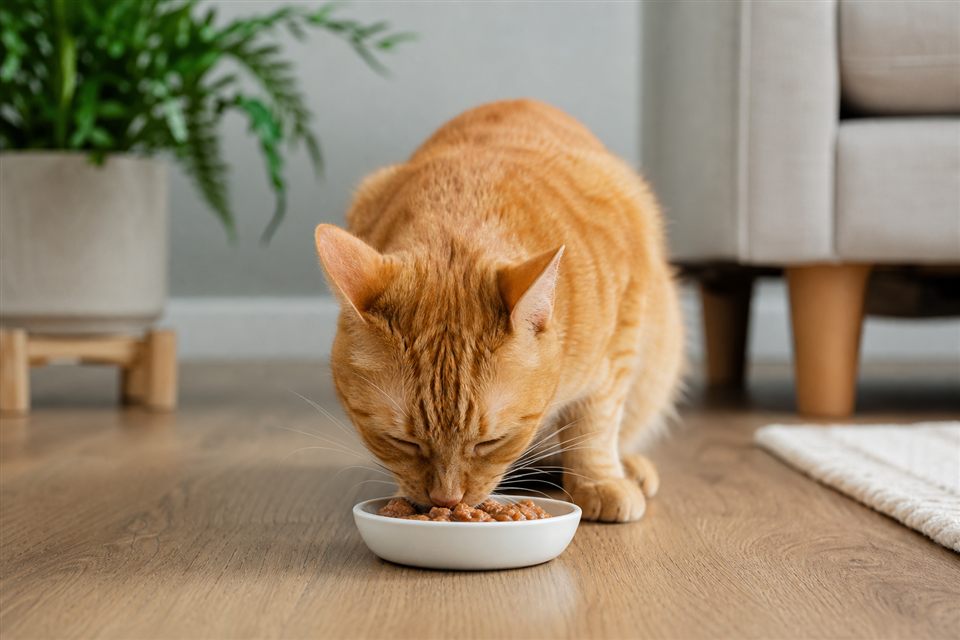
Cat food cans list vague feeding guides while your indoor cat gains weight on "only one can." Wet food feeding by body weight requires calorie math, not guesswork. Can sizes vary from two point eight to six ounces; calorie density differs wildly between brands and formulas. Indoor cats need fewer calories than outdoor hunters. Neutered adults burn less than intact cats. Weight loss and kidney plans change targets entirely. Measuring portions by scale—not can count alone—prevents obesity, the most common preventable cat disease.
Starting With Calorie Needs
Many veterinarians estimate maintenance near twenty calories per pound of ideal body weight daily for indoor neutered adults—confirm with your clinic for your cat. A ten-pound cat might need roughly two hundred kilocalories daily including treats. Wet food labels list kcal per can or per kilogram on compliant packaging. Divide daily calories by per-can calories to get cans per day—often three-quarters to one and a half cans split across meals for average products, but verify your label.
Adjusting for Life Stage and Goals
Overweight cats need veterinary weight-loss plans—never crash diet. Kittens and nursing queens need growth formulas at higher frequency. Active outdoor cats may need more. Combining wet and dry requires counting both calorie sources. Treats and dental chews count toward totals. Transition portions when switching brands because calorie density changes.
Key Points
- Feed by daily calories, not by cans alone.
- Use ideal weight, not current weight, if your cat is obese.
- Split wet food into at least two meals to reduce begging.
- Weigh your cat monthly during portion changes.
- Refrigerate opened cans within two hours; use within one to two days.
- Prescription diets follow clinic targets, not generic charts.
Practical Tips
- Buy a kitchen scale for consistent meal portions.
- Warm refrigerated wet food slightly to improve palatability.
- Use puzzle feeders to slow eating and increase activity.
- Separate feeding in multi-cat homes to track intake.
- Log body condition score photos every four weeks.
When to Contact Your Veterinarian
Schedule weight checks if your cat gains or loses more than ten percent without intentional plans. Appetite spikes or drops alongside portion questions may signal thyroid or kidney disease requiring prescription nutrition.
This article is for general educational purposes only and does not replace professional veterinary advice. Contact your vet if your pet shows ongoing symptoms.