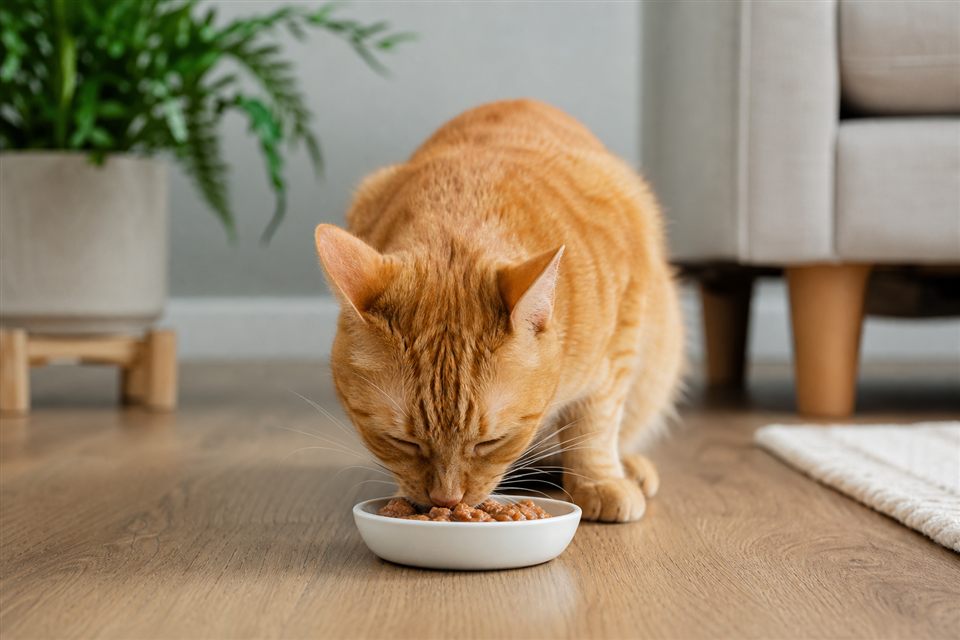
Cats cannot produce enough taurine—a sulfur-containing amino acid—on their own. Without adequate dietary taurine over months or years, they develop dilated cardiomyopathy, reproductive failure, and retinal degeneration that can lead to blindness. Unlike dogs, cats are obligate carnivores whose evolutionary diet supplied taurine through muscle, organ meats, and whole prey. Modern commercial cat foods supplement taurine precisely because processing and ingredient choices alter natural content. Owners feeding homemade, raw, or unconventional diets need explicit taurine planning—not guesswork from internet recipes.
Why Taurine Matters
Taurine supports heart muscle contraction, bile acid conjugation, vision, immune function, and fetal development in queens. Deficiency develops gradually; early signs are subtle—reduced activity, poor kitten growth, or reproductive issues in breeding cats. Advanced heart disease and irreversible eye damage may appear before owners connect diet to illness. Heat processing, fiber content, and certain ingredient mixes affect how much taurine remains bioavailable in finished food. That is why reputable kibble and canned diets list taurine supplementation and meet AAFCO cat nutrient profiles.
Key Points
- Cats require dietary taurine daily; they cannot synthesize sufficient amounts internally.
- AAFCO-complete commercial cat food is formulated to meet minimum taurine levels.
- Homemade and raw diets need veterinary nutritionist formulation plus taurine testing.
- Heart murmurs or vision changes in poorly fed cats warrant diet review and blood work.
- Dogs can share a home but not a food bowl—dog food lacks adequate cat taurine.
- Supplementing random human taurine capsules without dosing guidance is unsafe.
Getting Taurine From Food Safely
For most owners, feeding a complete commercial diet labeled for the correct life stage—kitten, adult, or senior—is the simplest safe approach. If you prepare food at home, work with a board-certified veterinary nutritionist who calculates taurine and all essential nutrients based on your recipes and your cat’s weight. Muscle meats contain taurine, but grinding, freezing, and ingredient ratios change totals unpredictably. Periodic blood taurine measurement may be recommended for cats on long-term homemade plans. Never feed dogs’ food to cats long term even if they prefer the taste—taurine inadequacy follows. Treats should remain a small calorie fraction so complete meals supply the majority of amino acids.
Practical Tips
- Check labels for an AAFCO nutritional adequacy statement for cats, not dogs.
- Store opened wet food properly; prolonged storage degrades nutrient quality.
- Discuss taurine before starting raw or homemade programs with influencers online.
- Weigh kittens regularly—slow growth may reflect nutrition gaps.
- Retest heart health after any major diet change in predisposed breeds.
When to Contact Your Veterinarian
Schedule an exam if your cat shows exercise intolerance, rapid breathing, weight loss, or bumping into objects. Breeding queens with small litters or kittens with poor development need nutritional review. Your veterinarian can recommend echocardiography, eye exams, and diet correction before damage becomes permanent.
This article is for general educational purposes only and does not replace professional veterinary advice. Contact your vet if your pet shows ongoing symptoms.