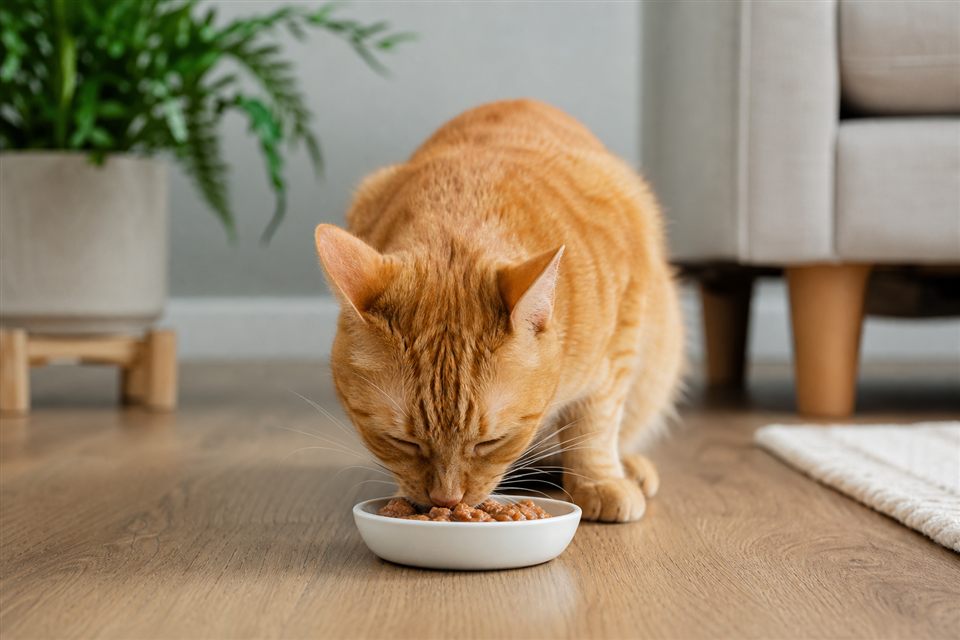
Many cats prefer canned or pouch food, but wet diets spoil quickly once the can is open. Warm room temperatures accelerate bacterial growth, and cats that graze slowly may eat food that looks fine but is no longer safe. Following clear time limits reduces stomach upset and helps you build a feeding routine that fits work schedules without risking foodborne illness.
Safe time limits for opened wet food
Most veterinary nutrition guidelines suggest treating opened wet cat food like any perishable protein. At room temperature around 68–72°F (20–22°C), remove uneaten wet food after 30 to 60 minutes. Above 80°F (27°C) or in direct sunlight, shorten that window to 20–30 minutes. Food left out overnight should always be discarded. Unopened cans remain safe until the best-by date if stored in a cool dry place.
Refrigeration and reheating
Store opened wet food in an airtight container in the refrigerator for up to 48–72 hours. Covering the can with a tight lid reduces odor and drying. Many cats refuse cold food; warm refrigerated portions to near room temperature by adding a spoon of warm water or microwaving briefly, then stir well and test temperature so hot spots do not burn the tongue.
Key Points
- Do not leave wet food in the bowl for free-feeding during summer; schedule smaller more frequent meals instead.
- Flies and ants arrive within minutes in warm weather; they contaminate food even if you plan to discard it later.
- Automatic feeders with ice packs exist for short outings but still follow manufacturer time limits.
- Dry kibble also degrades in heat and humidity, but wet food spoils much faster once opened.
- Kittens, seniors, and cats with weakened immune systems need stricter freshness rules than healthy adults.
Practical Tips
- Offer only what your cat finishes in one sitting; you can increase meal frequency rather than portion size.
- Wash food bowls with hot soapy water daily; biofilm buildup harbors bacteria.
- Label refrigerated containers with date and time opened.
- If your cat walks away, refrigerate leftovers immediately instead of leaving them out to tempt grazing later.
- During heat waves, feed in the coolest part of the home and avoid placing bowls near windows.
When to call your vet
Contact your vet if your cat vomits, has diarrhea, or refuses food after eating wet food that may have sat out too long, especially if lethargy or dehydration appears. Repeated digestive upset after meals may indicate sensitivity or infection rather than spoiled food alone, but your veterinarian can guide testing and diet changes.
This article is for general educational purposes only and does not replace professional veterinary advice. Contact your vet if your pet shows ongoing symptoms.