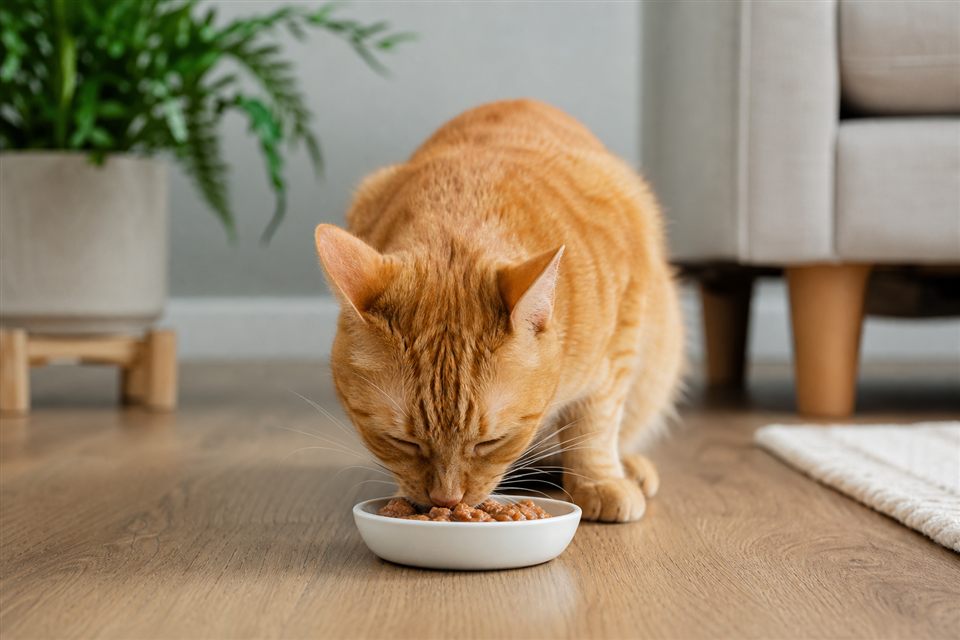
Feed the prescription diet only to the cat who needs it by separating meals in space and time—sharing bowls lets the healthy cat eat medicated food while the sick cat misses doses. A practical setup uses closed rooms or microchip-activated feeders for 2–3 weeks until each cat eats only from their assigned station.
Key Points
- Free-feeding kibble in one dish fails immediately—cats graze each other's food within hours, especially at night.
- Station feeding: Cat A in bedroom with prescription wet food for 20 minutes, Cat B in kitchen with maintenance food simultaneously, then pick up bowls.
- Microchip or RFID feeders open only for the registered cat—worth the cost if you work long hours and need 8–10 hour separation.
- Prescription renal or urinary diets are not balanced for healthy adults; long-term stealing can cause weight gain or mineral imbalance in the wrong cat.
- If the non-prescription cat loses weight or the medicated cat gains, reassess portions with your vet—stealing may still happen through fences or jumps.
Practical Tips
- Feed on a schedule (e.g., 7 a.m. and 6 p.m.) so both cats learn meal windows instead of constant grazing.
- Place the prescription cat's bowl on a counter or shelf only that cat can reach if they are lighter and more agile.
- Log who ate what for 7 days with photos of empty bowls before your recheck appointment.
This article is for general educational purposes only and does not replace professional veterinary advice. Contact your vet if your pet shows ongoing symptoms.