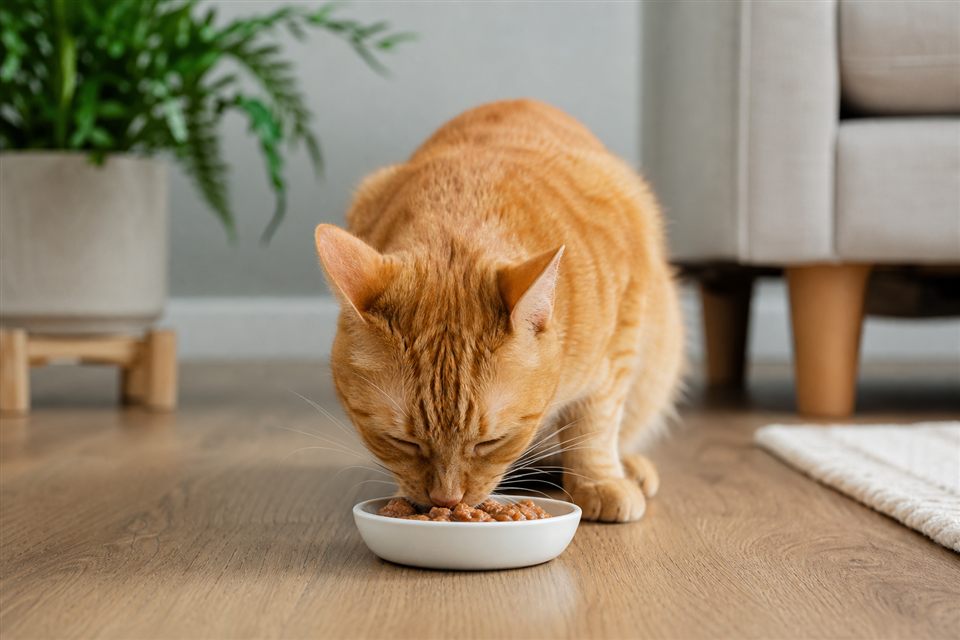
Trevor pulled a plainly poached pork tenderloin strip from the pot before adding soy sauce and garlic to the human portion. His Maine Coon, Gus, watched from the counter stool—illegal per house rules but effective for guilt. Trevor wanted to know whether pork's fat content made it richer than chicken and whether trichinosis fears meant pork should never leave the human plate.
Key points at a glance
- Plain fully cooked pork without onion, garlic, salt, or seasonings can be an occasional treat for many cats.
- Pork can be fattier than lean chicken breast depending on cut; tenderloin trimmed of fat is relatively lean.
- Always cook pork thoroughly; raw or undercooked pork carries bacterial and parasite risks.
- Processed pork—bacon, ham, sausage—contains salt, nitrates, and fat levels unsafe for cats.
- Small shredded portions prevent choking and limit calorie load.
- Some cats tolerate pork as a novel protein; others develop digestive upset from rich fat.
- Pork cannot replace balanced cat food long-term.
Is pork fat too rich for cats?
Fat content varies by cut. Pork tenderloin trimmed of visible fat compares reasonably to skinless chicken breast—moderate protein, not excessively greasy. Pork belly, shoulder, or ground pork with standard fat ratios carries far more lipid. That richness can trigger vomiting, diarrhea, or pancreatitis flares in susceptible cats.
Gus received a teaspoon of shredded tenderloin poached in water, blotted dry. Trevor's garlic-soy stir-fry used thigh meat with higher fat—never Gus's portion.
Cats metabolize animal fat efficiently when healthy, but indoor obesity is epidemic. Rich treats accumulate. Trevor weighed Gus monthly and skipped pork weeks when the scale ticked up.
Onion, garlic, and hidden seasonings
Allium toxicity damages feline red blood cells. Onion powder hides in marinades; garlic infuses oils during stir-fry even if cloves are removed. Trevor's separate plain pot eliminated cross-contamination. Cutting boards and knives washed between prep streams matter when cooking for cats and humans simultaneously.
Soy sauce adds sodium cats do not need. Barbecue rubs contain sugar, salt, and sometimes onion. Holiday ham glazes combine multiple hazards—processed ham itself is too salty for cats even without glaze.
Cooking pork safely for cats
Cook pork to one hundred sixty-five degrees Fahrenheit with no pink juices. Poaching, baking, or boiling without oil works. Shred finely along muscle grain to reduce stringiness. Cool before serving.
Freezing does not kill all pathogens if meat stays undercooked. Trevor used a thermometer, not color alone.
Avoid feeding pan drippings; concentrated fat and fond may include seasonings. Gus got meat, not gravy.
| Cat weight | Plain cooked pork treat | Frequency |
|---|---|---|
| 5–8 lb | 1 tsp shredded | Weekly or less |
| 8–12 lb | 1–2 tsp | Weekly or less |
| 12–16 lb | 2 tsp to 1 tbsp | Weekly or less |
| Sensitive GI | 1/2 tsp trial | Monitor 48 hours |
Pork versus chicken and other proteins
Chicken breast remains the leanest common treat default. Turkey matches closely. Pork tenderloin sits in the middle when trimmed. Beef varies widely by cut. Fish adds omega-3s with mercury caveats for tuna-heavy feeding.
Novel protein theories suggest rotating meats reduces allergy risk; evidence is mixed. Gus rotated chicken, pork, and his prescription dental kibble without digestive drama because portions stayed tiny and plain.
Some raw feeders offer pork; veterinary public health guidance recommends thorough cooking to eliminate Trichinella spiralis and bacterial pathogens. Modern farming reduced trichinosis incidence, but cooking remains the safe standard for table treats.
Processed pork products are not plain pork
Bacon's salt and fat load can cause salt poisoning or pancreatitis in small cats from seemingly tiny strips. Ham carries nitrates linked to health concerns in humans; cats face sodium overload. Sausage includes onion, garlic, and spices routinely.
Trevor's roommate once offered Gus a bacon corner "just once." Gus vomited foam an hour later—lesson learned without emergency visit, but Trevor posted a fridge note: plain poached only.
When to avoid pork treats
Cats with hyperlipidemia, pancreatitis history, or inflammatory bowel disease may not tolerate pork fat even from lean cuts. Kidney disease diets restrict phosphorus; muscle meats including pork contribute phosphorus that adds up when treats become habits.
Food allergies to pork exist though chicken and fish dominate allergy panels. Chronic itching after pork trials warrants veterinary elimination diets, not repeated treats.
If Gus refused his regular food expecting pork nightly, Trevor knew he had overdone novelty— treats should not train meal refusal.
The bottom line
Cats can eat plain cooked pork with no onion, garlic, or seasoning when the cut is lean, fully cooked, and served in small shredded portions. Pork fat can be too rich if you choose fatty cuts or processed products like bacon and ham—tenderloin poached plain sits closer to chicken than to sausage. Trevor's separate pot kept Gus safe from stir-fry dangers and let pork remain an occasional luxury, not a salty shortcut from the breakfast skillet.
This article is for general informational purposes and is not a substitute for professional veterinary advice. Speak with your veterinarian before adding pork if your cat has pancreatitis, obesity, kidney disease, or gastrointestinal sensitivity.