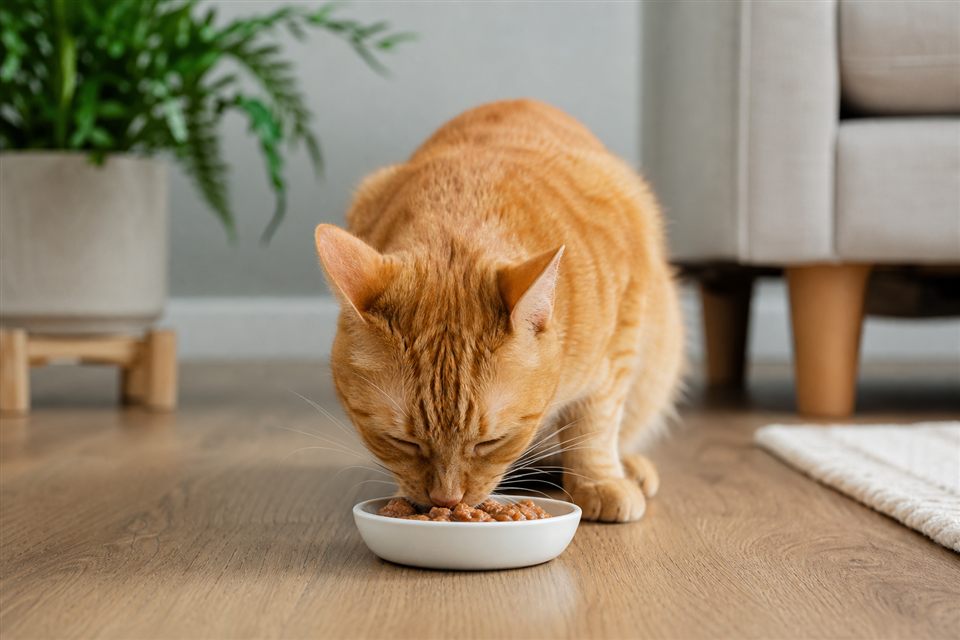
Marcus roasted a duck for Sunday dinner and set aside a few scraps of plain breast meat before adding any glaze. His long-haired cat, Sable, wove between his ankles until he dropped a bite in her dish. She ate it in four seconds. Marcus knew duck was richer than chicken — the question was whether "plain and skinless" made it safe or whether he had just given Sable a pancreatitis ticket.
Plain cooked duck meat without skin is safe for most cats as an occasional treat or meal topper. Removing skin cuts fat significantly — duck skin is where most of the calories and saturated fat live. Unseasoned breast or leg meat, thoroughly cooked with no salt, onion, garlic, or sauce, is fine in tablespoon-sized portions for average cats. It should not replace balanced cat food regularly.
Key points at a glance
- Skinless plain cooked duck is safe for most cats in small amounts.
- Duck is fattier than chicken even without skin — keep portions smaller.
- Never feed seasoned duck, duck fat drippings, or crispy skin.
- Cook to well-done; remove bones completely.
- Cats with pancreatitis history, obesity, or sensitive stomachs need vet approval first.
Why skin removal matters
Duck breast with skin can contain three times the fat of skinless breast. Cats process excess fat poorly — high-fat meals trigger vomiting, diarrhea, and in susceptible cats, pancreatitis. Marcus's careful trimming of skin and fat edges before cooking is exactly what makes duck reasonable for Sable.
Plain means plain: no soy sauce, no five-spice rub, no butter basting, no store-bought rotisserie duck with brine and preservatives.
| Preparation | Safe for cats? | Notes |
|---|---|---|
| Skinless breast, poached or baked plain | Yes, in moderation | Best option |
| Skinless thigh, fat trimmed | Yes, small amounts | Slightly fattier than breast |
| Crispy duck skin | No | Too much fat; seasoning risk |
| Peking duck, sauced duck breast | No | Garlic, onion, salt, sugar |
Portion guidance
Treat duck like a rich bonus protein, not a daily staple.
| Cat weight | Occasional portion | Frequency |
|---|---|---|
| 5–8 lbs | 1 tsp – 1 tbsp diced | Once weekly or less |
| 8–12 lbs | 1–2 tbsp | Once weekly or less |
| 12+ lbs | 2 tbsp max | Not daily |
Sable gets a tablespoon of shredded duck mixed into her usual wet food on holidays — not a weekly duck rotation. Overfeeding novel rich proteins also trains pickiness; cats hold out for duck and refuse balanced food.
Cooking and safety
Cook duck until juices run clear and meat is no longer pink. Shred and inspect for bone fragments — duck bones splinter and must never be fed. Let meat cool before serving. Refrigerate leftovers within two hours and use within three days, or discard.
When duck is a bad idea
Cats recovering from pancreatitis, cats on low-fat prescription diets, and cats with chronic diarrhea should skip duck unless a veterinarian specifically approves. Duck allergy exists but is less common than chicken or beef allergy; introduce a pea-sized test bite first if your cat has food sensitivity history.
The bottom line
Plain cooked duck without skin is a safe occasional treat for cats when portions stay small and seasoning stays absent. Marcus saves Sable a trimmed bite from holiday roasts — not a standing duck menu. Remove skin, skip the sauce, and keep it rare enough that her regular cat food remains the foundation of her diet.
This article is for general information only and is not a substitute for advice from your veterinarian.