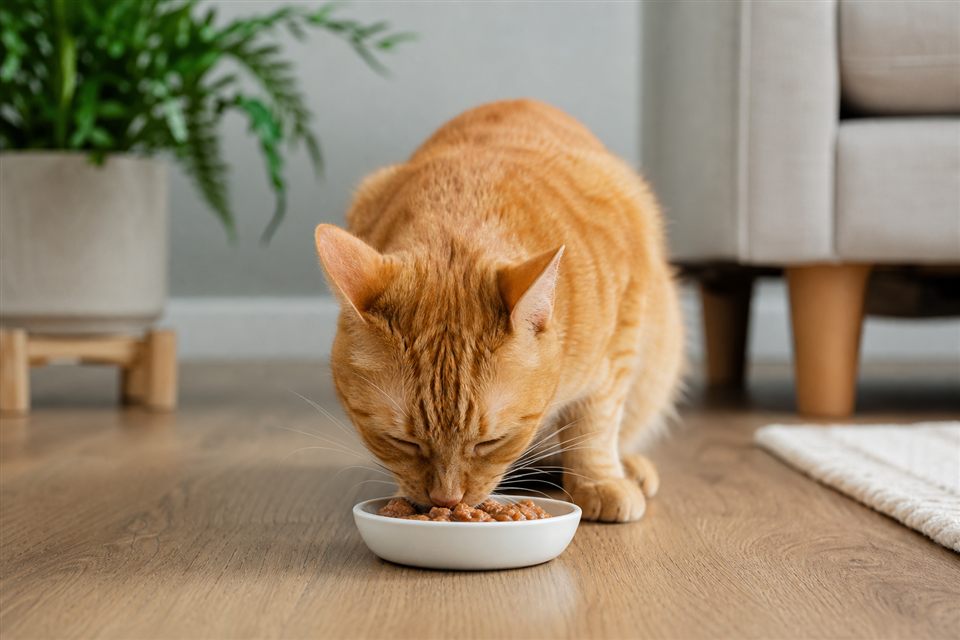
Priya's tabby, Mochi, had turned her nose up at chicken for three days straight — a new record of fussiness. Priya poached a fillet of cod with no salt or butter, flaked a tablespoon into Mochi's bowl, and watched her inhale it. The relief lasted until Priya started wondering about mercury and whether fish twice a week was responsible pet parenting or a slow mistake.
Plain cooked cod and other low-fat white fish (tilapia, flounder, haddock, pollock) are safe for cats as an occasional treat or meal topper. Cod is lower in mercury than tuna, swordfish, or mackerel, which makes it a sensible fish choice. It is still not a complete diet on its own and should not replace balanced cat food long-term.
Key points at a glance
- Plain cooked cod and white fish are safe for most cats in small portions.
- Cod is low on the mercury scale compared to tuna and large predatory fish.
- Feed fish as a treat or topper — not as the sole daily protein source.
- Cook thoroughly; never feed raw fish due to thiaminase and parasite risks.
- Remove all bones before serving.
Why white fish works for cats
Cats are obligate carnivores who relish animal protein. White fish is lean, digestible, and appealing to picky eaters like Mochi. Cod provides protein, B vitamins, and omega-3 fatty acids in modest amounts without the heavy fat load of salmon skin or oil-packed tuna.
Cook by poaching, baking, or steaming. No garlic, onion, salt, butter, or breading. Flake and inspect for bones — even small pin bones can lodge in a cat's throat or GI tract.
| Fish type | Mercury level | Suggested frequency |
|---|---|---|
| Cod, tilapia, flounder | Low | 1–2 times weekly as treat/topper |
| Canned light tuna | Moderate | Once weekly or less |
| Albacore tuna, swordfish, king mackerel | High | Avoid or rare tiny portions |
How often is mercury a concern with cod?
Cod accumulates far less mercury than large long-lived predatory fish because it is lower on the food chain and has a shorter lifespan. A tablespoon of cod twice weekly for an average indoor cat sits well within low-risk territory. Mercury becomes a concern when fish replaces balanced cat food daily for months, or when high-mercury species dominate the diet.
Symptoms of chronic mercury exposure — weight loss, incoordination, neurological changes — are rare from occasional cod treats. Thiamine deficiency from raw fish or fish-only diets is a more practical concern for cat owners.
| Cat weight | Occasional portion | Notes |
|---|---|---|
| 5–8 lbs | 1 tsp – 1 tbsp flaked | Mix with regular food |
| 8–12 lbs | 1–2 tbsp | Monitor for picky refusal of cat food |
| 12+ lbs | 2–3 tbsp max | Still a supplement, not a meal |
Raw fish: do not
Raw fish contains thiaminase, an enzyme that destroys thiamine (vitamin B1). Cats fed raw fish regularly develop neurological problems. Freezing does not fully solve this for home feeding. Cook fish until it flakes opaque white throughout.
When to avoid fish
Cats with fish allergies may vomit or develop skin reactions. Cats with kidney disease need vet approval for fish toppers. Kittens and pregnant queens should follow veterinarian feeding plans.
The bottom line
Plain cooked cod is a safe, low-mercury fish option for cats when portions stay small and frequency stays moderate. Priya gives Mochi cod once a week to break chicken fatigue, not as a permanent swap for complete cat food. Keep it plain, cooked, and boned — and save the high-mercury tuna for rare occasions.
This article is for general information only and is not a substitute for advice from your veterinarian.