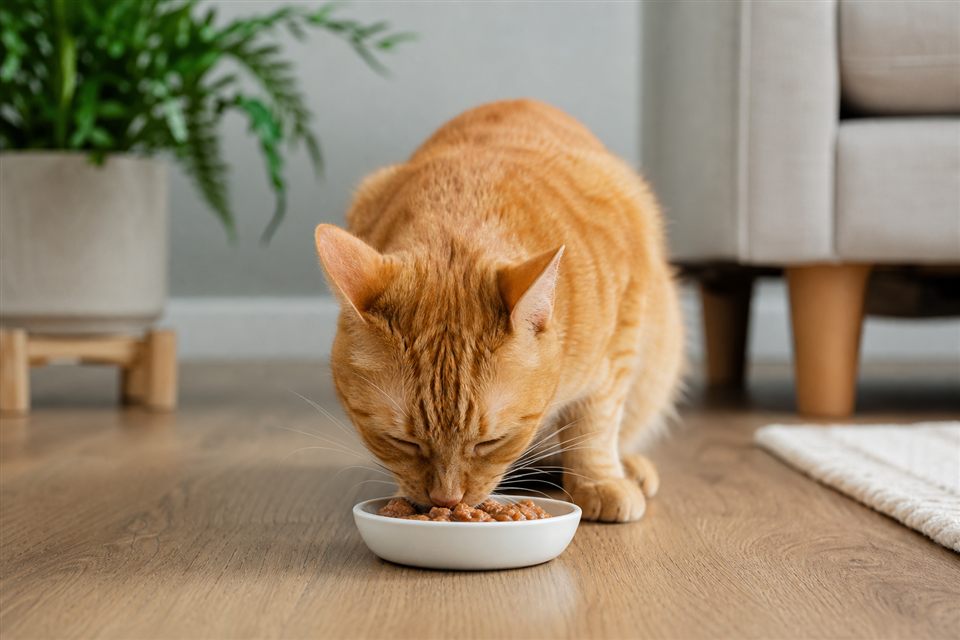
When a lamb roast filled the kitchen, Priya set aside a thumb-sized piece of plainly boiled lamb for her tabby, Mochi. No rosemary, no garlic butter, no salt. Mochi chirped and tore into it while Priya compared lamb to the chicken she usually offered as a treat. The question was not whether Mochi would eat it—she would eat almost anything—but whether lamb's reputation as a richer meat made it a special-occasion protein only.
Key points at a glance
- Cooked plain lamb without seasoning, onion, or garlic can be a safe occasional treat for many cats when fully cooked.
- Lamb is often fattier than skinless chicken breast, especially if you include visible fat trim.
- Cats need animal protein; lamb provides protein but lacks taurine balance when fed alone long-term.
- Remove bones entirely; cooked lamb bones splinter and cause obstruction or perforation.
- Small portions—a teaspoon to tablespoon depending on cat size—prevent digestive upset and weight gain.
- Some cats with food sensitivities tolerate novel proteins like lamb; others react to any new meat.
- Never feed raw lamb due to bacterial and parasite risks.
Is lamb fattier than chicken?
It depends on the cut and preparation. Skinless chicken breast is among the leanest common meats—roughly three grams of fat per three-ounce cooked portion. Lamb leg or loin trimmed of visible fat sits moderately higher; lamb shoulder or ground lamb with default fat content can reach double-digit fat percentages. That matters for cats prone to pancreatitis or obesity.
Priya chose lean leg meat, boiled and drained, then blotted fat with a paper towel. Mochi's usual chicken treat came from poached breast with similar handling. On paper, Priya's lamb piece carried perhaps thirty percent more fat than her chicken equivalent—noticeable if fed daily, negligible if fed weekly in teaspoon amounts.
Rendered lamb fat tempts cats because of aroma. That richness is exactly why portion control beats enthusiasm. A cat who begged successfully yesterday remembers lamb's smell tomorrow.
Nutritional fit for obligate carnivores
Cats require protein, arachidonic acid, preformed vitamin A, and taurine from animal tissues. Lamb muscle meat supplies protein and B vitamins but does not automatically supply complete feline nutrition. Taurine degrades with excessive cooking water loss; extreme fat trimming removes some calories cats need but does not fix missing minerals like calcium when meat becomes the main diet.
Commercial cat food balances these nutrients. Lamb as a treat topper on complete wet or dry food fits the model. Lamb as fifty percent of homemade meals without veterinary formulation causes deficiencies within weeks.
Some prescription elimination diets use lamb as a novel protein for cats with chicken or fish allergies. Those diets are tested formulations—not table scraps from Sunday roast.
Safe cooking and serving methods
Boil, bake, or poach lamb without oil, salt, or spices. Cook to well-done with no pink center. Shred finely to prevent gagging on stringy fibers. Cool to room temperature before offering.
Avoid lamb prepared for humans: mint jelly, garlic-studded roasts, curry spices, and gravies containing onion. Priya's roast for family sat separate from Mochi's plain pot on the back burner—a habit worth the extra pan.
| Cat weight | Occasional plain lamb treat | Frequency |
|---|---|---|
| 5–8 lb | 1 tsp shredded | 1–2 times weekly |
| 8–12 lb | 1–2 tsp | 1–2 times weekly |
| 12–16 lb | 2 tsp to 1 tbsp | Weekly, adjust for weight |
| Overweight | 1 tsp max | Sparingly |
Reduce main meal calories slightly on treat days to avoid slow weight creep.
Bones, fat, and digestive risks
Cooked lamb bones splinter into sharp shards. Never offer chop bones, rib bones, or shank remnants, even if Mochi "only gnaws." Gnawing breaks shards free. Obstruction surgery follows some holiday bone traditions.
Sudden rich meat can cause soft stool or vomiting in cats with sensitive stomachs. If diarrhea persists beyond twenty-four hours or includes blood, stop treats and consult a veterinarian.
Lamb allergy exists though chicken and fish dominate allergy lists. Itching, ear inflammation, or vomiting after lamb suggests elimination trials under veterinary guidance—not repeated treats to confirm suspicion.
Lamb versus other proteins for cats
Chicken breast remains the lean default treat meat. Turkey and rabbit offer similar leanness when skinless. Beef trim can match lamb's fat if marbled. Fish provides omega-3s but adds mercury concerns if fed excessively from large species.
Rotation prevents fixation and may reduce allergy development, though evidence varies. Mochi received lamb monthly, chicken weekly, and complete food daily—rotation without chaos.
The bottom line
Cats can eat small portions of cooked plain lamb with visible fat drained and bones absent. Lamb is often fattier than skinless chicken breast, so keep pieces tiny and infrequent unless your veterinarian recommends lamb within a therapeutic diet. Priya's thumb-sized holiday treat delighted Mochi without replacing her balanced meals or repeating the garlic-laced roast meant for humans.
This article is for general informational purposes and is not a substitute for professional veterinary advice. Consult your veterinarian before introducing lamb, especially for cats with pancreatitis, obesity, kidney disease, or food allergies.