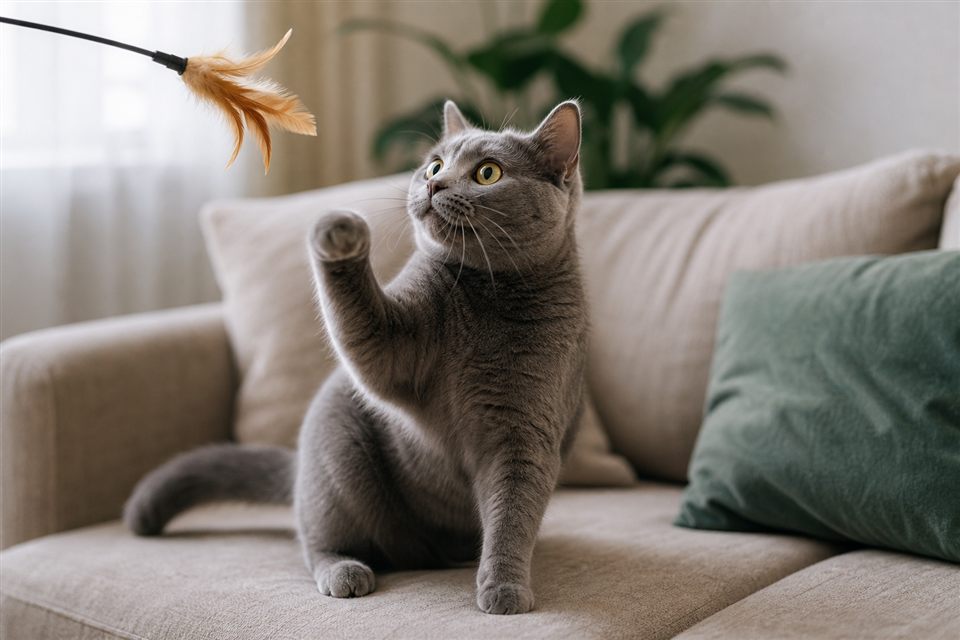
A paw reaches the edge of your desk, eyes fixed on you, and a pen clatters to the floor. Cat owners joke about “gravity testing,” but the behavior has real motivations rooted in feline hunting instincts, boredom, and learned attention. Understanding why your cat knocks things over is the first step toward protecting valuables without damaging trust.
Instinct: swatting prey and testing movement
Wild cats bat at scurrying prey to judge whether it is alive, edible, or dangerous. A rolling bottle cap or sliding phone case triggers the same motor pattern. The object’s movement and sound provide sensory feedback—texture, weight, and noise—that indoor life otherwise lacks.
High vantage points like shelves and counters mimic tree branches where cats watch territory. Items near the edge are simply within paw range during patrol. Knocking is not vandalism; it is exploration with consequences your cat may not predict the first few times.
Attention and learned behavior
If you leap up every time a mug falls, your cat learns that one swipe produces a dramatic human response. Even scolding is attention. Intelligent, understimulated cats repeat whatever reliably brings you into the room—especially if daytime play is minimal and you are on video calls for hours.
Early-morning knock-offs often coincide with hunger or routine feeding times. Cats are crepuscular; dawn activity plus an empty bowl creates a perfect storm for pencil avalanches on your nightstand.
Medical and stress factors to rule out
Sudden increase in destructive swatting—especially with restlessness, yowling, or appetite change—warrants a veterinary exam. Hyperthyroidism, pain, and cognitive dysfunction in senior cats can drive repetitive behaviors. Young cats with vision changes may misjudge distances and knock items accidentally more often.
Household stress—new baby, renovation noise, a bullying housemate—can increase displacement behaviors. Rule out health issues before assuming pure mischief.
Environmental management that works
Clear launch zones: Remove fragile or toxic items from ledges your cat frequents. Secure houseplants; many common plants are toxic if chewed after falling.
Provide legal outlets: Place puzzle balls, spring toys, or lightweight objects on a dedicated “cat shelf” where knocking is allowed. Rotate toys weekly.
Increase hunting play: Two daily 10-minute wand sessions with a final “catch” toy reduce idle paw traffic. Feed part of breakfast from a puzzle feeder so eating takes effort.
Ignore the performance: When safe, walk away instead of chasing the cat after a knock. Reward calm presence on the floor with treats, not chaos on the counter.
Training without punishment
Never spray water or yell—it teaches fear of you, not respect for the mantel. Use remote deterrents sparingly: double-sided tape on forbidden edges, motion-activated air puffs on specific shelves, or simply closing the office door when unsupervised.
Teach “off” by luring your cat down with a treat and rewarding four-on-the-floor. Place a cat tree near the window so your cat has an approved perch with a view—many cats knock desk items because the desk faces the bird feeder.
When to seek professional help
- Behavior escalates to biting or obsessive pacing
- Knocking persists after two weeks of enrichment and management
- Multiple cats fight after objects fall and startle them
- Senior cat shows confusion, vocalization, or house-soiling alongside new behaviors
A certified feline behavior consultant can design a plan tailored to your layout and schedule. Video your cat before and after changes—progress is easier to track on film than memory.
Protecting your workspace long term
Desk organizers with lip edges, museum putty under figurines, and cable clips reduce casualties. Laptops should close when unattended—curious paws can damage keys or overheat vents. If you work from home, schedule a pre-lunch play burst; cats that hunt successfully before noon often nap through afternoon meetings instead of auditing your stationery.
Multi-cat homes and shared surfaces
When one cat knocks items while another watches, the behavior can spread through social learning. Provide duplicate play stations in separate rooms so each cat has independent hunting territory. Feliway MultiCat diffusers may reduce tension-driven mischief during reintroduction periods—ask your veterinarian whether pheromone support fits your household.
Children should not wave toys on table edges; cats cannot distinguish “child’s pencil” from “forbidden vase.” Teach kids to keep small objects in drawers and to close bedroom doors if a particular cat targets nightstand items during dawn patrols.
This article is for general educational purposes only and does not replace professional veterinary advice. Contact your vet if your pet shows ongoing symptoms.