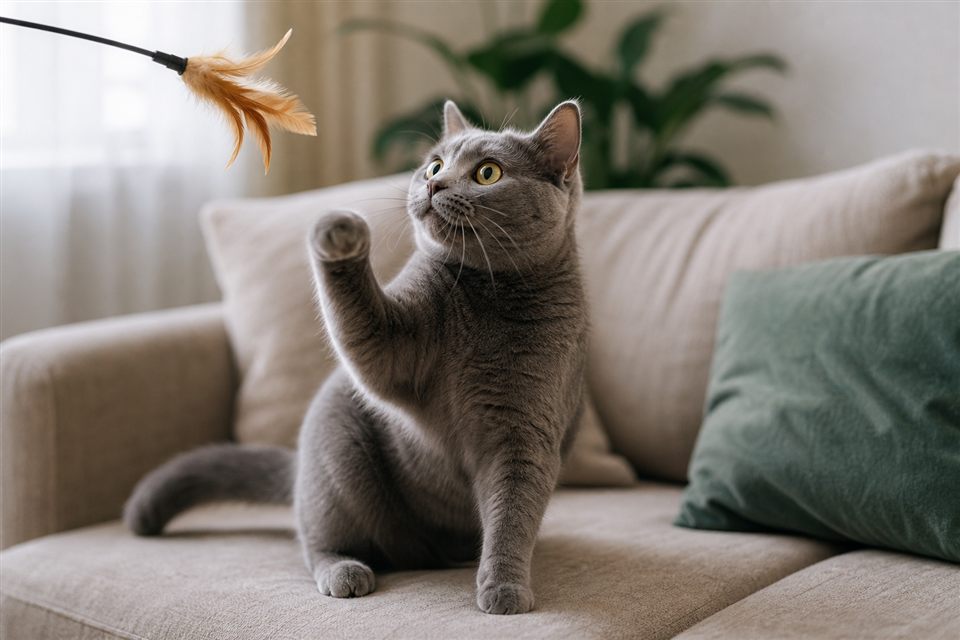
At two in the morning a cat trots down the hall with a stuffed mouse, yowling like a banshee. Owners stumble awake wondering whether something is wrong medically or whether the cat caught an invisible intruder. This dramatic performance is usually normal predatory behavior redirected to toys, sometimes mixed with attention seeking or breeding-season vocalization in unspayed females. Understanding the sequence helps you respond without reinforcing the loudest hours of the night.
What the behavior mimics
Outdoor mother cats carry captured prey to teach kittens or to announce a successful hunt. Indoor cats with no real mice may treat plush toys as prey and vocalize during the carry. Evening and overnight peaks match crepuscular hunting rhythms. Some cats add yowls because past experience showed humans appear after noise.
Other causes to consider
Unspayed or unneutered cats vocalize more during hormonal cycles. Hyperthyroidism, pain, and cognitive changes in seniors also increase nighttime noise. If yowling is new, constant, or unrelated to visible toys, medical evaluation comes before behavior plans.
Key Points
- Ignoring safe midnight parades prevents rewarding attention barking equivalents in cats.
- Pre-bed interactive play with wand toys drains hunting drive before you sleep.
- Food puzzles after play mimic eat-after-kill satisfaction for many cats.
- Automatic toys left out overnight may trigger the same vocal carry sequence.
- Single-cat homes see this more when daytime enrichment is limited.
Practical Tips
- Schedule fifteen minutes of vigorous chase play around dinner time.
- Rotate toy types weekly; crinkle balls and feather mice satisfy different textures.
- Close bedroom doors if needed; provide safe night activity zones elsewhere.
- Spay or neuter if not already done to reduce hormonal yowling.
- Place soft mats in hallways if your cat drops toys loudly on hardwood.
When to call your vet
Book an exam if yowling increases suddenly in an older cat, if weight loss or thirst changes appear, or if vocalization happens without toys and sounds distressed. Thyroid and blood pressure testing clarify medical contributors. Otherwise, enrichment and ignoring nighttime announcements often reduce repeat performances within a few weeks.
This article is for general educational purposes only and does not replace professional veterinary advice. Contact your vet if your pet shows ongoing symptoms.