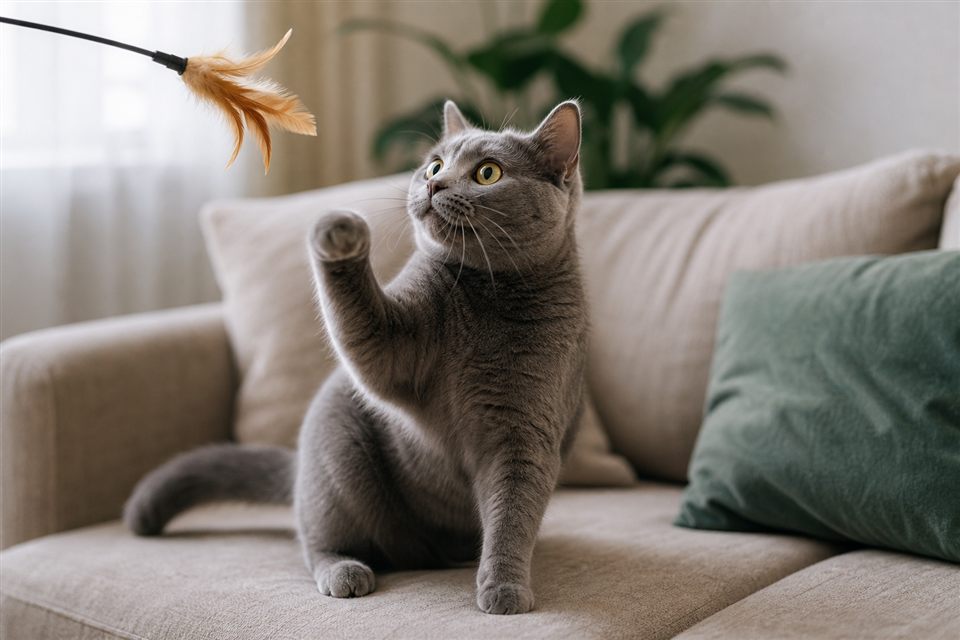
A paw extended toward your water glass—eye contact held deliberately—then push. Crash. Many cats master this performance daily. Knocking items off tables is not random malice; it combines predatory play, environmental exploration, and learned human reactions. Owners who leap up reinforce the behavior with drama cats interpret as success. Understanding function—boredom, hunger timing, territorial testing, or anxiety—guides solutions better than shouting after the vase already shattered. Environmental enrichment and predictable play sessions reduce gravity experiments more reliably than punishment.
Why Cats Love to Push Things Over
Paws test whether objects move like prey—rolling pens mimic scurrying mice. High vantage tables offer hunting platforms in multi-cat homes. Some cats learn that knocking triggers feeding or attention even if negative. Kittens explore physics through batting; seniors with cognitive changes may repeat actions obsessively. Tail flicking and crouch posture before swats indicate play; flattened ears and dilated pupils during repetitive knocking may signal stress needing broader assessment.
How to Reduce Tabletop Crashing
Provide daily interactive play with wand toys mimicking prey trajectory—ten minutes twice daily drains hunting drive. Use puzzle feeders so meals require effort rather than free-grazing boredom. Clear fragile items from edges when unsupervised; apply double-sided tape or motion deterrent mats on forbidden surfaces temporarily. Ignore knocking when safe—no eye contact or chase—to extinguish attention rewards. Reward calm presence on cat trees near windows instead. Multi-cat households need vertical space so competition does not express as object sabotage.
Key Points
- Knocking objects often combines play instinct and learned attention.
- Running to the crash teaches cats the behavior works.
- Scheduled hunting-style play reduces mischief more than scolding.
- Remove valuables from ledges during training transitions.
- Sudden increase in destructive behavior may reflect stress or pain.
- Puzzle feeders address boredom-linked knocking at meal times.
Practical Tips
- Rotate toy types weekly to maintain novelty without buying constantly.
- Install window perches so outdoor birds provide passive entertainment.
- Feed meals after play sessions to mimic hunt-eat-groom-sleep cycles.
- Use shallow trays on desks for pens instead of loose cups.
- Consult behavior specialists if knocking pairs with aggression or hiding.
When to Contact Your Veterinarian
Schedule exams if knocking intensifies suddenly alongside appetite loss, litter box changes, or over-grooming—pain or anxiety may underlie new compulsions. Senior cats with nighttime restlessness plus knocking need cognitive and pain evaluations.
This article is for general educational purposes only and does not replace professional veterinary advice. Contact your vet if your pet shows ongoing symptoms.