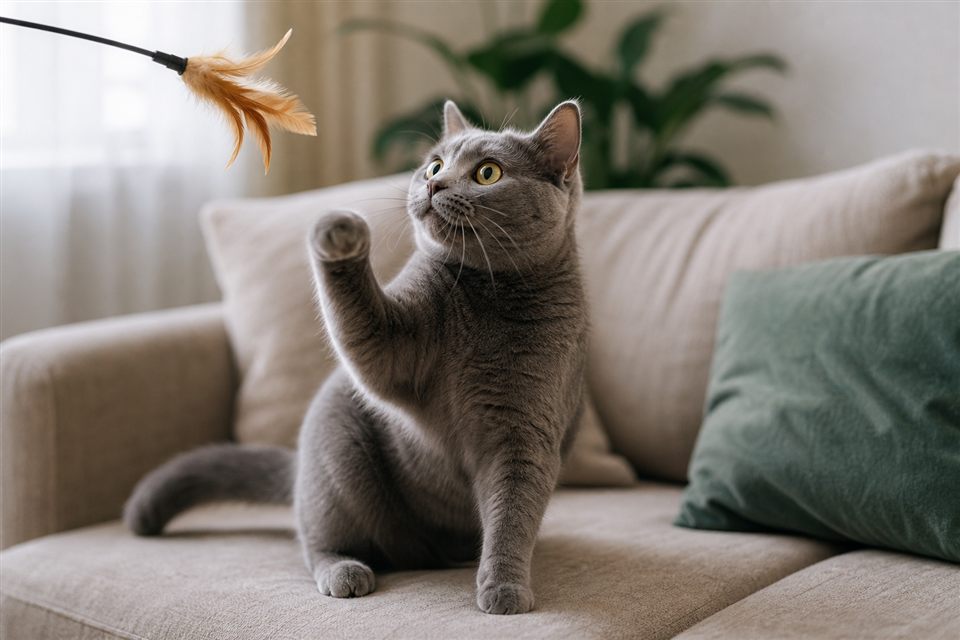
Indoor cats without predatory outlets redirect hunting drive toward curtains, knockable objects, and ankle ambushes especially at dawn and dusk. Active play differs from passive lap time; it requires chase, pounce, and capture sequences mimicking prey behavior. Many behaviorists recommend two or three structured play sessions daily totaling twenty to thirty minutes for average adult indoor cats, adjusted upward for high-energy breeds and downward for geriatric cats with arthritis limits.
Random short bursts help but scheduled interactive sessions with wand toys beat leaving static mice scattered on floors cats ignore within days. The sections below translate minutes into practical routines for busy households.
How long each play session should last
Most cats engage intensely for five to twelve minutes before losing interest; pushing beyond natural stop wastes effort. Run session until cat catches toy then allow brief victory chew before ending. Two sessions morning and evening align with crepuscular rhythms reducing nighttime zoomies. Kittens may need three shorter bursts; seniors one gentle session with floor-level toys.
Best toys for meaningful exercise
Wand toys with feather or mouse attachments simulate prey movement. Avoid laser pointers alone without catch reward object at end. Puzzle feeders extend mental effort at meal times. Vertical cat trees enable climbing between play bursts. Rotate toys weekly maintaining novelty without constant purchases.
Questions owners ask most often
Is fifteen minutes enough? Often yes split twice daily for calm adults; high-energy cats need more. Do automatic toys replace owner play? Partially; social hunting still needs human-led sessions. Can overweight cats play hard? Start gentle; consult vet before vigorous jumping.
Linking play to reduced destructive behavior
Scratching posts see more use when cats discharge energy first. Counter knocking often drops when evening hunt session precedes owner bedtime. Multi-cat homes reduce fights when parallel play channels rivalry into toys not siblings. Track destruction incidents against play consistency in simple calendar.
Play schedules for working owners
Five-minute morning wand session before commute plus fifteen-minute evening session beats skipping all week then one long weekend burst. Automatic feeder puzzles midday bridge gaps. Consider trusted cat sitter enrichment during long travel. Never substitute play with punishment when cat acts out from boredom.
Key Points
- Indoor cats need daily interactive hunting-style play not just lap time.
- Twenty to thirty total minutes often suits adults split into two sessions.
- End sessions while cat still engaged; let them catch prey toy.
- Wand toys outperform lasers without tangible capture reward.
- Consistent play reduces many boredom-related behavior problems over weeks.
Practical Tips
- Store wand toys out of sight between sessions to preserve novelty.
- Schedule evening play thirty minutes before your bedtime routine.
- Use feeding after play to mimic hunt-eat-groom-sleep cycle.
- Rotate three toy attachments weekly instead of buying dozens.
- Film one session to see if cat prefers air prey versus ground skitter.
- Adjust intensity for senior cats with joint limits per veterinary advice.
Building a two-week action plan
Choose one or two changes from this article to implement this week rather than attempting every tip at once. Note your pet's baseline behavior on day one, then review progress on day fourteen with the same lighting and timing conditions when possible. Small consistent adjustments outperform dramatic overhauls that last only a few days. If you see no improvement after following veterinary guidance for two weeks, schedule a follow-up rather than switching randomly to unrelated internet advice that may confuse the underlying issue further.
First-time pet owners often search these symptoms late at night and worry unnecessarily or wait too long. When in doubt, call your veterinary team with a short video clip; many clinics offer nurse triage by phone. The guidance here supports informed conversations with professionals rather than replacing hands-on examination of your individual dog or cat.
When to call your vet
Consult your clinic if sudden lethargy replaces playful behavior, if destructive behavior spikes with appetite or weight changes, or if overweight cats need exercise plan before vigorous play. Behavior referral helps when aggression during play injures owners despite adequate enrichment attempts.
Summary for busy owners
If you remember only a few points from this guide, keep these in mind: watch for patterns that repeat daily rather than one isolated incident, adjust home routines before buying expensive products, and contact your veterinary team early when behavior or appetite changes alongside the main symptom. Most problems improve fastest when medical causes are ruled out first and management stays consistent for at least two weeks before you declare an approach failed. Write down dates and take short videos so your next appointment covers facts rather than guesses.
This article is for general educational purposes only and does not replace professional veterinary advice. Contact your vet if your pet shows ongoing symptoms.