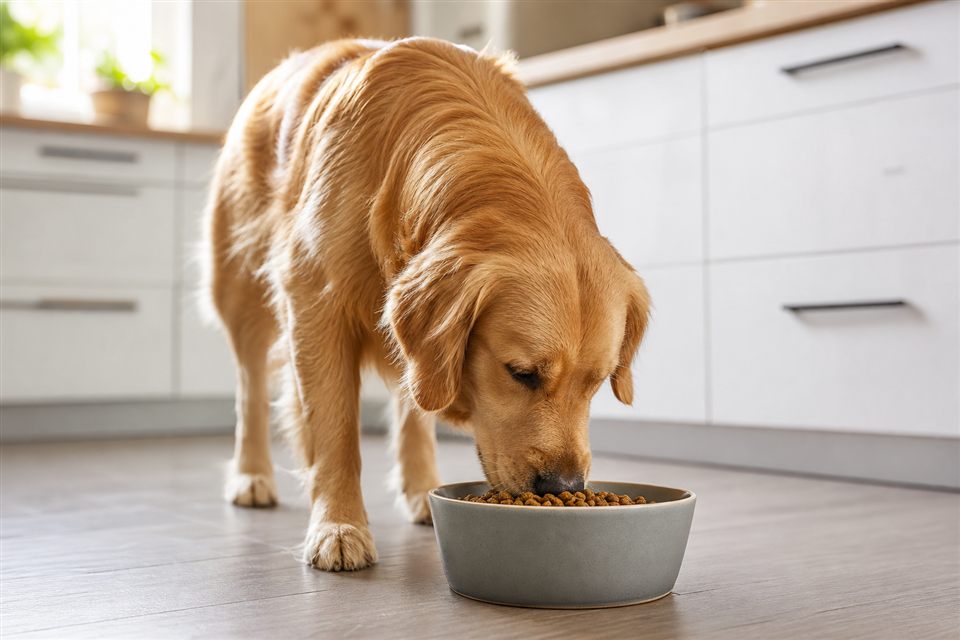
Monday at 5:50 a.m., Callum measured 1/2 cup of dry millet into a saucepan while Pepper, his 16-pound Cavalier King Charles Spaniel, clicked across the kitchen. The clinic had sent them home Sunday with a $128 exam and a bland-diet sheet that listed rice. Pepper had vomited rice twice in June. Callum wanted a different starch that was still boring, cooked, and unsalted.
Key points at a glance
- Plain cooked millet is a gluten-free grain many dogs tolerate
- Rinse it, cook it soft, and serve without oil, salt, or broth cubes
- Use millet only as the carb half of a vet-guided bland diet
- Start small: 1–2 teaspoons for a Cavalier-sized dog
- Millet is not a protein and does not replace prescription GI food
- Stop if vomiting returns or stool turns watery within 12 hours
Is millet okay for dogs on a bland diet?
Often yes, if the millet is hulled, well cooked, and paired with a lean protein the vet already approved. Millet is small, pale, and cooks into a porridge. That texture is easier for a nauseous dog than crunchy kibble.
Pepper’s first bowl was 2 teaspoons of millet mixed with 2 teaspoons of boiled chicken breast, cooled to about 75°F. She ate half, walked away, then finished it 20 minutes later. No vomit by noon. That is a win on a bland-diet morning.
White rice remains the default because clinics know the calorie math. Millet is a backup when rice fails or you are out of rice at 6 a.m.
How do you cook millet so dogs can digest it?
Rinse 1/2 cup dry millet under cold water until the water runs clearer. Use about 1 1/2 cups water. Simmer 15–20 minutes, lid on, until grains burst and the mix looks like wet couscous. If it is still al dente, add 2 tablespoons water and cook 5 more minutes. Dogs on a bland diet need mush, not chew.
| Cooking detail | Target |
|---|---|
| Dry-to-water ratio | 1 : 3 for extra-soft porridge |
| Salt | None |
| Fat | None (no butter, no olive oil drizzle) |
| Fridge life | 3 days in a sealed container |
| Reheat | Splash of water, then cool again |
A 1-pound bag of millet often costs $3–$6. That is cheaper than a second $128 visit if the grain stays plain.
How much millet should a dog eat?
Calories vary with how wet you cook it. A packed 1/4 cup of soft millet is roughly 50–70 calories. Treat the first day as a test, not a full calorie replacement, unless your vet gave exact cups.
| Body weight | Millet test serving | Typical bland mix (if vet agrees) |
|---|---|---|
| 10–16 lb | 1–2 tsp | 1–2 Tbsp millet + equal lean meat, 3–4 small meals |
| 25–40 lb | 1 Tbsp | 1/4 cup millet split through the day |
| 50–70 lb | 2 Tbsp | 1/3–1/2 cup split |
| 80+ lb | 3 Tbsp | up to 3/4 cup split |
Feed every 4–6 hours in small meals while the gut is angry. One giant bowl at 8 p.m. is how bland diets fail.
Millet vs rice vs pumpkin: which carb is better?
Rice is predictable. Pumpkin is fiber, not a full starch. Millet sits in the middle: more protein than white rice by dry weight, still mostly carbohydrate once cooked.
If Pepper’s stool was already loose, Callum would not stack millet and pumpkin on day one. Pick one carb. Add water. Log the stool.
Some dogs get gassier on millet than on rice. If the apartment smells like a barn by 9 p.m., drop the portion by half.
Who should not eat millet?
- Dogs with a grain allergy confirmed by a vet diet trial
- Dogs who need a hydrolyzed prescription food; homemade millet can wreck that trial
- Puppies under 12 weeks with diarrhea; they dehydrate fast
- Dogs who cannot keep water down
Callum wrote times on a notepad: 5:50, 10:00, 2:30, 7:00. Bland diets are clocks, not vibes.
This article is for general education only and does not replace veterinary care. Call your vet if symptoms persist or worsen.