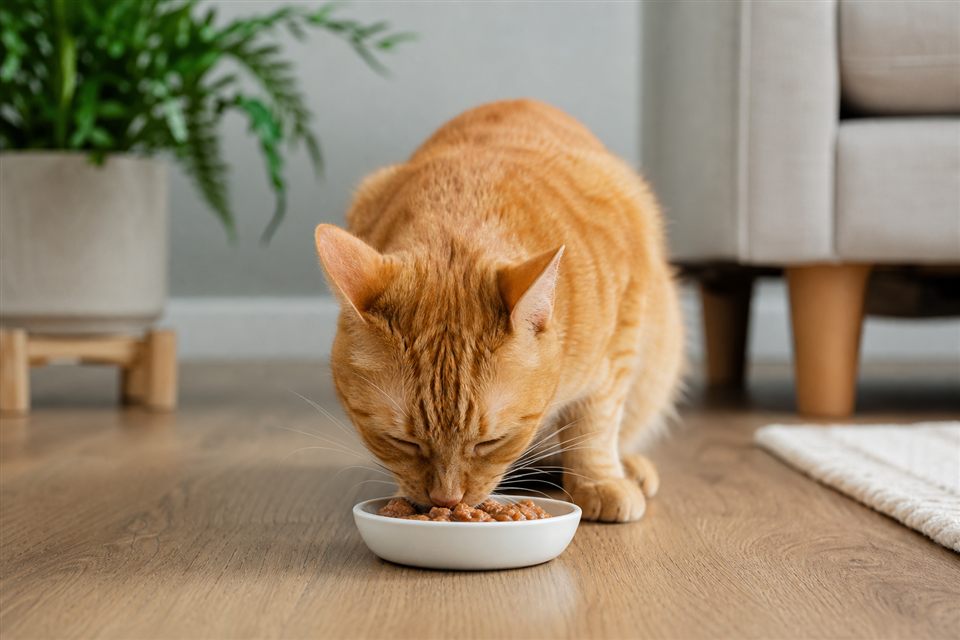
Cats are obligate carnivores, so it makes sense they stare at shrimp on your plate. Plain cooked shrimp is generally safe and offers lean protein, but it should stay a treat — not a replacement for balanced cat food. How you cook it, what you leave off, and how often you offer it determine whether shrimp becomes a fun bonus or a digestive problem.
Key points at a glance
- Plain, fully cooked shrimp without seasoning is safe for most cats in small amounts.
- Remove shells, tails, veins, and heads before serving.
- Shrimp is high in cholesterol and sodium — keep portions tiny and infrequent.
- Never feed raw shrimp, breaded shrimp, or shrimp cooked with garlic or onion.
- Cats with seafood allergies, kidney disease, or on restricted diets need vet approval first.
Is shrimp nutritionally appropriate for cats?
Shrimp delivers protein and amino acids cats need, but it lacks the full vitamin and mineral profile of complete cat food. Taurine, calcium, and several B vitamins must come from a balanced diet — shrimp alone cannot supply them. Treat shrimp as roughly 10% or less of total daily calories.
Boil or steam shrimp without salt, butter, Old Bay, soy sauce, or lemon pepper. Those seasonings range from unnecessarily salty to outright toxic when they contain onion or garlic powder.
How much shrimp can a cat have?
One or two small peeled pieces per week is plenty for an average adult cat. Overfeeding shrimp can lead to diarrhea, especially in cats unaccustomed to rich protein snacks.
| Cat weight | Suggested treat portion |
|---|---|
| Under 8 lbs | 1 small piece (about 1/2 inch) |
| 8–12 lbs | 1–2 small pieces |
| Over 12 lbs | 2 pieces maximum |
Kittens over 12 weeks can try a fingernail-sized piece, but their primary nutrition should still come from kitten formula food.
Preparation and safety tips
Always devein shrimp and peel completely — shells and tails can splinter or cause choking. Thaw frozen shrimp in the refrigerator, cook thoroughly until opaque, and let pieces cool before offering them. Skip fried, tempura, or cocktail shrimp from restaurants; batter, sauce, and cross-contamination with onion make those unsafe. Store plain cooked shrimp separately from seasoned human meals to avoid accidental seasoning transfer.
The bottom line
Plain cooked shrimp is a safe, occasional protein treat for most cats when shells are removed and portions stay small. It complements — never replaces — complete cat food. If your cat has health conditions or shows vomiting, itching, or loose stool after shrimp, discontinue treats and consult your veterinarian.
This article is for general education only and does not replace advice from your veterinarian. Always consult a qualified professional about your individual pet's diet and health.