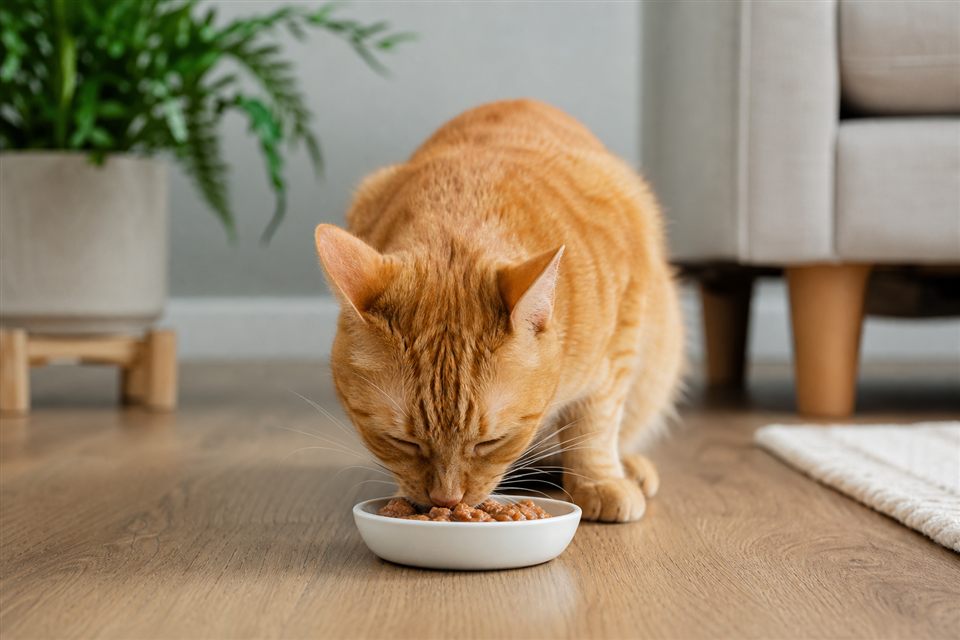
Lena's vet mentioned that a few green beans might help her chunky Domestic Shorthair, Biscuit, feel fuller between meals—without adding many calories. Lena was skeptical. Biscuit was a carnivore who treated kibble like a contractual obligation. She steamed four plain beans, chopped them rice-grain small, and mixed them into Biscuit's dinner. Biscuit ate the beans and the food around them. Two weeks later, Biscuit had lost a half-pound without screaming for food at 4 a.m.
Key points at a glance
- Plain cooked green beans are safe for most cats in small amounts
- Green beans add fiber and bulk with minimal calories
- Chop finely—whole beans are choking hazards and most cats reject them
- No salt, butter, garlic, onion, or canned seasoned varieties
- Green beans support weight plans only alongside vet-guided portion control
Are green beans safe for cats?
Yes. Green beans are non-toxic to cats. Unlike dogs, cats do not need vegetables for balanced nutrition, but green beans can serve as a low-calorie filler when a vet recommends reducing caloric intake while keeping meal volume satisfying.
The operative words are plain and cooked. Raw green beans are harder to digest and less palatable to most cats.
How do green beans help with weight and fiber?
Fiber adds bulk without many calories. A tablespoon of chopped green beans fills part of the bowl so Biscuit felt like she got a full dinner while actually consuming fewer calories from her high-protein wet food base.
Green beans are not a magic fix. They work as part of a measured plan: correct portion of complete cat food, reduced treats elsewhere, and regular weigh-ins.
| Goal | How to use green beans | What to avoid |
|---|---|---|
| Weight management | Mix 1–2 tsp chopped into meals | Replacing protein entirely |
| Occasional fiber | 1 tsp once or twice weekly | Large amounts causing gas |
| Treat substitute | Single bean, chopped fine | Canned salted beans |
How should you prepare green beans for cats?
Steam or boil fresh green beans until soft. Canned no-salt green beans work—rinse them first. Chop into pieces smaller than your cat's kibble. Most cats will not chew a whole bean; they swallow kibble-sized food whole by design.
Cool before serving. Mix into wet food rather than offering a pile of beans alone unless your cat has already shown interest.
How much is too much?
Start with one teaspoon mixed into a meal. Increase to one or two teaspoons for larger cats if stool remains normal. More than that risks gas, loose stool, or a cat filling up on fiber while missing protein and taurine from their main food.
Kittens generally do not need green bean filler. Focus on complete kitten nutrition unless your vet directs otherwise.
Raw vs cooked green beans for cats
Stick with cooked green beans for cats. Raw beans are firmer, harder to digest, and more likely to pass through whole without offering fiber benefits. Steaming until bendable takes five to seven minutes for fresh beans. If your cat refuses the first attempt, try mixing a smaller ratio into a strong-smelling wet food they already love.
When should cats avoid green beans?
Skip green beans if your cat refuses wet food entirely and relies on dry kibble—you cannot mix beans effectively and forcing new textures may reduce total food intake.
Cats with chronic kidney disease on protein-focused plans should not have meals diluted with vegetables without veterinary guidance. Cats with severe pickiness or history of food aversion may not benefit from bowl modifications.
Lena still steams a small batch of green beans every Sunday and stores them in the fridge for Biscuit's dinners. Biscuit's target weight came from her vet's calculation, not a blog chart. If your cat is losing or gaining weight unexpectedly, or has diabetes or kidney concerns, work with your veterinarian before using green beans or any dietary filler as part of a long-term plan.