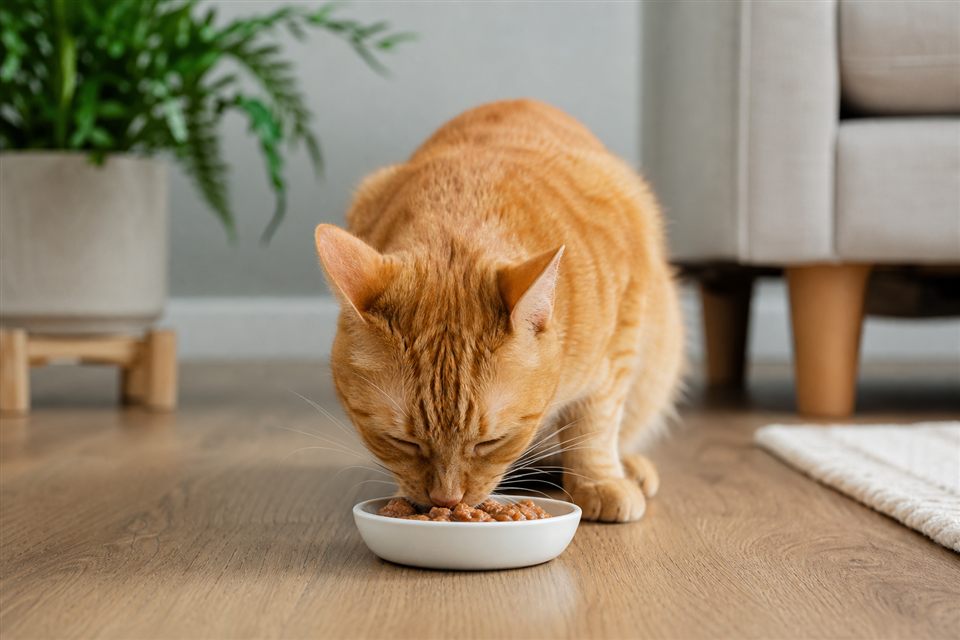
Rafael roasted eggplant for baba ganoush while his calico, Suki, watched from the back of a chair with surgical focus. He set aside one soft, unseasoned cube before adding tahini and lemon—Suki batted it off the plate, ate it, and returned to staring as if payroll were due. Rafael smiled, then opened his laptop to confirm whether eggplant belonged anywhere near a cat's diet.
Key points at a glance
- Plain cooked eggplant is generally non-toxic to cats in very small amounts.
- Cats are obligate carnivores and do not need vegetables in their diet.
- Raw eggplant and eggplant leaves contain more solanine and should be avoided.
- Never feed eggplant prepared with garlic, onion, oil, or salt.
- High fiber content may cause vomiting or diarrhea in cats.
- Eggplant should remain a rare curiosity, not a regular treat.
Is eggplant safe for cats?
Eggplant is not on standard lists of foods toxic to cats when ripe and cooked plain. That said, cats derive little nutritional benefit from eggplant. Their digestive systems evolved to process meat, not plant matter, so vegetables pass through as optional extras at best and stomach irritants at worst.
Solanine, a natural compound found in nightshade plants, is present in higher concentrations in raw eggplant and green portions of the fruit. Cooking reduces solanine levels, which is one reason plain cooked eggplant is safer than raw slices stolen from a cutting board.
Why cats do not need eggplant
Commercial cat food provides complete protein, taurine, arachidonic acid, and vitamins cats cannot synthesize adequately on their own. Eggplant offers fiber and some antioxidants but lacks the amino acid profile cats require. Treating eggplant as meaningful nutrition creates a gap where meat-based protein should be.
| Eggplant form | Guidance for cats |
|---|---|
| Plain cooked flesh | Tiny occasional piece OK for most cats |
| Raw eggplant | Avoid — higher solanine, harder to digest |
| Eggplant leaves | Avoid — potentially toxic plant parts |
| Eggplant parmesan | Never — garlic, onion, cheese, salt |
| Fried eggplant | Avoid — excess oil |
How to prepare eggplant safely
Use ripe eggplant with glossy skin and no green patches. Peel if you want to reduce fiber and skin toughness. Bake, steam, or boil until completely soft with no added oil or seasoning. Mash or dice into pieces smaller than a pea.
Cool thoroughly before offering a taste. Many cats sniff eggplant and walk away; forcing vegetables on unwilling cats creates stress without benefit.
Appropriate portion sizes
If your cat shows genuine interest, keep portions minimal:
- Typical adult cat: 1/2 teaspoon to 1 teaspoon of mashed cooked flesh
- Frequency: Once every few weeks at most
Even tolerant cats may develop loose stool if they eat too much plant fiber. Eggplant should never displace meat-based meals or exceed 10 percent of treat calories in a given week—and realistically, it should land far below that ceiling.
Signs of trouble
Vomiting, diarrhea, drooling, or lethargy after eating eggplant may indicate either too large a portion or sensitivity to solanine residues. Symptoms from seasoned dishes—especially those containing garlic or onion—require prompt veterinary attention.
Cats who explore gardens should not chew eggplant stems or leaves. If your cat ingests a large amount of raw eggplant or plant foliage, contact your veterinarian or poison control hotline for guidance.
Better treat choices for cats
Plain cooked chicken, freeze-dried meat treats, or small amounts of commercial cat treats designed for feline nutrition make more sense than vegetables. If you want to share human food bonding moments, lean toward animal proteins your cat's body actually uses.
Always consult your veterinarian before introducing new foods to cats with diabetes, kidney disease, inflammatory bowel disease, or prescription diets. This article provides general information and does not replace individualized veterinary care.