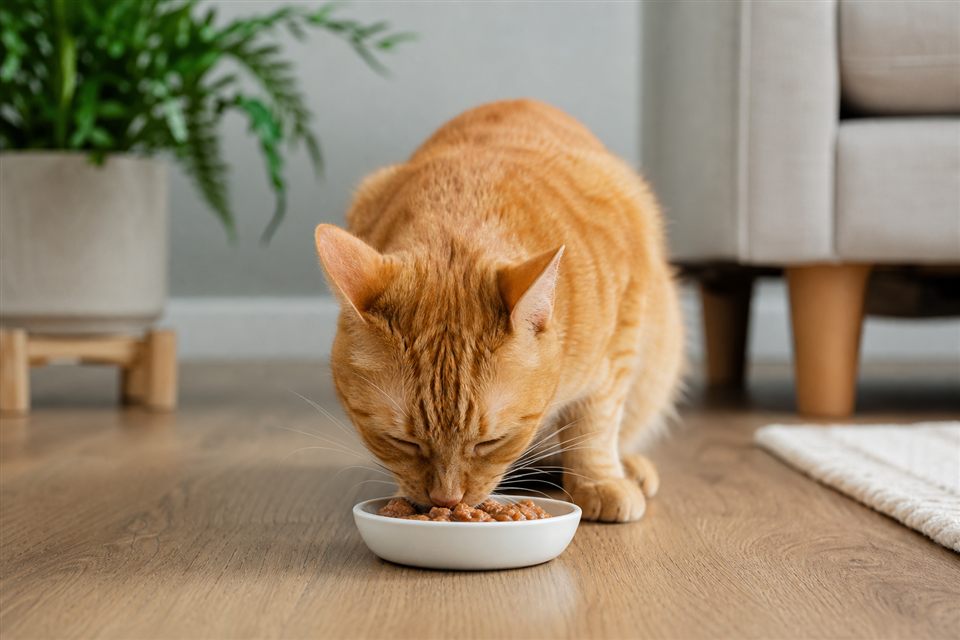
Sunday at 8:20 a.m., Rafael Ortega opened a $1.89 can of 100% pumpkin in his San Diego kitchen and set a 1/2-teaspoon measure on the counter. Cloud, his 12-pound Persian, had hacked a damp hair tube onto the bathroom rug at 5:40 a.m. for the third time that week. The $22 hairball gel in the cabinet was half-used and mostly on Rafael’s sleeve. He wanted a plain fiber option, not pie spice.
Key points at a glance
- Plain 100% canned pumpkin is used by many owners as a small fiber helper
- Pie filling is a no: sugar, spices, and possible xylitol
- Start with 1/4–1/2 teaspoon once a day, not a tablespoon
- Pumpkin does not replace brushing a Persian
- Call the vet if vomiting is frequent, the belly is tight, or appetite drops
- Refrigerate leftovers; a 15-ounce can is far more than one cat needs
Can cats eat plain canned pumpkin for hairballs?
Sometimes, in tiny amounts. Soluble fiber can add bulk and moisture to stool so swallowed hair moves through instead of coming back up. Cloud got 1/2 teaspoon mixed into breakfast wet food. By Wednesday he had one small hair vomit instead of three.
That is a n-of-one kitchen experiment, not a cure. Long-haired cats still need a comb. Pumpkin will not cut mats on a Persian’s ruff.
Pie filling stays in the baking cupboard. Sugar, nutmeg, and “sugar-free” xylitol blends do not belong in a cat bowl.
How much pumpkin should a cat get?
Less than internet comments suggest. A tablespoon is a dog-sized scoop.
| Cat weight | First dose | Typical short-term max |
|---|---|---|
| 7–8 lb | 1/4 teaspoon | 1/2 teaspoon once daily |
| 10–12 lb | 1/2 teaspoon | 3/4 teaspoon once daily |
| 14–16 lb | 1/2 teaspoon | 1 teaspoon once daily |
| 18+ lb | 3/4 teaspoon | 1 teaspoon once daily |
Give it 3–5 days. If stool turns to pudding, cut the dose in half or stop. If stool gets harder, add water to food and skip extra fiber. Cloud drinks from a fountain; Rafael still stirs 1 teaspoon of water into the wet food on 78°F afternoons.
A 15-ounce can holds many cat doses. Scoop, move the rest to a glass jar, refrigerate up to 5 days, or freeze 1/2-teaspoon dots on a tray.
How do you know the can is safe?
| Label | Use? | Why |
|---|---|---|
| 100% pumpkin | Yes | Plain mash |
| Pumpkin, water | Yes | Still plain |
| Pumpkin pie filling | No | Sugar and spices |
| Sugar-free filling | No | Xylitol risk |
| Pumpkin baby food | Only if pumpkin + water | Check onion and salt |
Rafael reads the ingredient line every time. Store brands change. A can that was safe in January can add “natural flavors” by fall.
When is pumpkin the wrong tool?
Hairballs that come with weight loss, a cat who hides, a hard or bloated belly, or vomiting more than a few times a week can be something else: food intolerance, inflammatory bowel disease, a linear foreign body, or just too much hair plus not enough grooming.
A Persian who cannot keep food down for 12 hours needs a clinic, not a second half-teaspoon. Constipation with straining and little or no stool for 48 hours is also a vet problem. Fiber can worsen a true obstruction.
If Cloud is on a urinary or GI prescription diet, ask before stacking pumpkin. Extra fiber can fight a $78 bag of food you chose for a reason.
What else actually reduces hairballs?
- Daily combing; a 5-minute session beats a weekend battle
- A rubber brush on the ruff and pants, where Persians mat
- A diet already formulated for hair control, if the vet agrees
- Play before meals so Cloud moves and then eats, instead of grooming for 40 minutes
Do not use petroleum “home remedies” from a garage shelf. Do not add oil to dry food as a guess.
Rafael put a sticky note on the jar: “Cloud, 1/2 tsp a.m.” The comb stayed on the bathroom hook. The rug got one less surprise.
This article is for general education only and does not replace veterinary care. Call your vet if symptoms persist or worsen.