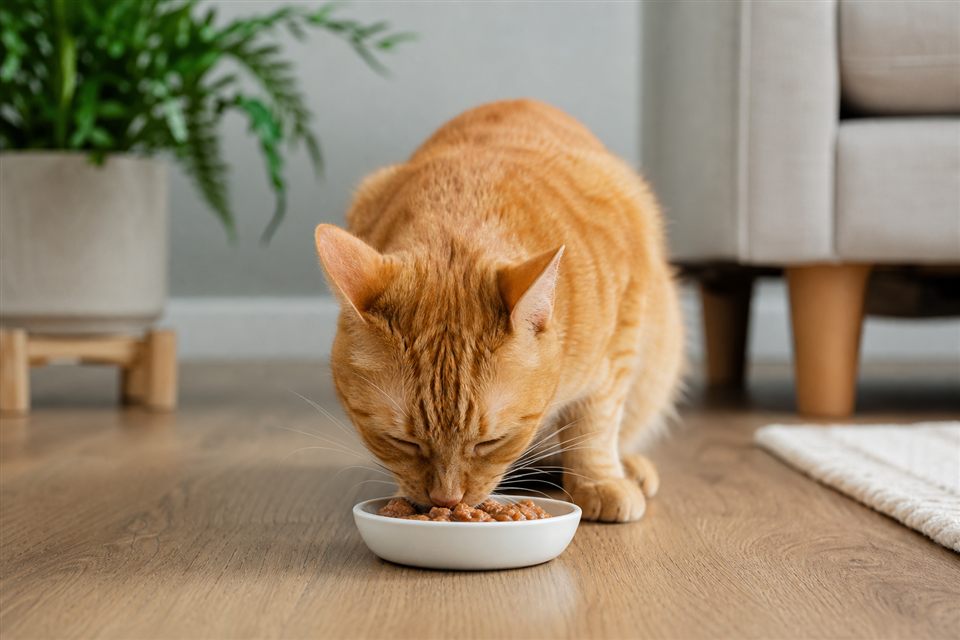
After a hunting trip, Greg trimmed silverskin from venison backstrap in his kitchen while his Maine Coon, Thor, supervised from a bar stool. Greg pan-seared a bite-sized cube with nothing added—no marinade, no juniper rub, no bacon wrap—and let Thor taste it. Thor purred through the whole sample and looked personally betrayed when the plate moved out of reach. Greg needed to know whether wild game was premium cat food or something to limit carefully.
Key points at a glance
- Plain cooked venison is generally safe and provides lean animal protein for cats.
- Cook thoroughly to an internal temperature of at least 165°F; never feed raw venison.
- Trim all visible fat and connective tissue before serving small cubes.
- Venison is a common novel protein in hypoallergenic cat diets.
- Avoid seasoned jerky, sausage, or processed venison products with garlic and salt.
- Treat portions should supplement, not replace, balanced cat food.
Is venison safe for cats?
Yes. Venison is lean red meat that fits a cat's requirement for animal-based protein. Many commercial limited-ingredient and novel-protein cat foods use venison specifically for cats with chicken or beef allergies. A plain cooked cube at home follows the same logic—single ingredient, low fat, high protein.
Raw venison carries risks of bacteria such as Salmonella and E. coli, plus parasites including Toxoplasma gondii. Freezing alone does not make raw wild game safe for cats. Always cook venison completely before serving.
Nutritional profile
Venison is lower in fat than farmed beef and rich in protein, iron, and B vitamins. For overweight cats, lean venison treats may carry fewer calories than cheese or commercial treats high in carbohydrates—provided you keep portions small.
| Venison preparation | Safe for cats? |
|---|---|
| Plain cooked lean muscle meat | Yes, in moderation |
| Raw venison | No — bacterial and parasite risk |
| Venison jerky with spices | Avoid — salt and seasonings |
| Venison sausage | Avoid — garlic, onion, fat |
| Commercial venison cat food | Yes — formulated for balance |
How to prepare venison for cats
Trim fat, silverskin, and gristle, which can cause pancreatitis or intestinal upset. Cut lean meat into half-inch cubes. Pan-sear, bake, or boil without oil, salt, or seasoning until juices run clear and the center reaches 165°F.
Let meat cool to room temperature. Shred or dice smaller for kittens or seniors with dental issues. Store cooked venison in the refrigerator for up to three days; do not leave it at room temperature.
Portion guidelines
Venison treats should stay within treat calorie limits:
- Average adult cat: 1–2 teaspoons of cooked lean meat (about 10–15 grams)
- Frequency: A few times per week at most unless your vet prescribes a venison-based elimination diet
Replacing full meals with home-cooked venison alone leads to taurine and calcium deficiencies over time. Complete cat food or a veterinary nutritionist-formulated recipe must remain the foundation.
When venison helps with food allergies
Cats with chronic itching, vomiting, or diarrhea linked to common proteins may undergo elimination diet trials under veterinary supervision. Venison sometimes serves as the sole protein during those trials. Never start an elimination diet without vet guidance—partial attempts make diagnosis harder.
Risks to watch for
Sudden diet changes can cause digestive upset even with plain meat. Processed venison products almost always contain unsafe levels of sodium and toxic seasonings. If your cat develops vomiting, constipation, or straining in the litter box after eating venison fat trimmings, contact your veterinarian.
Wild game sourcing matters. Meat from unknown sources or damaged carcasses increases contamination risk. When in doubt, use venison from regulated suppliers or commercial cat food brands rather than untested scraps.
This article provides general cat nutrition information and is not a substitute for advice from your veterinarian, especially for cats with health conditions or specialized diets.