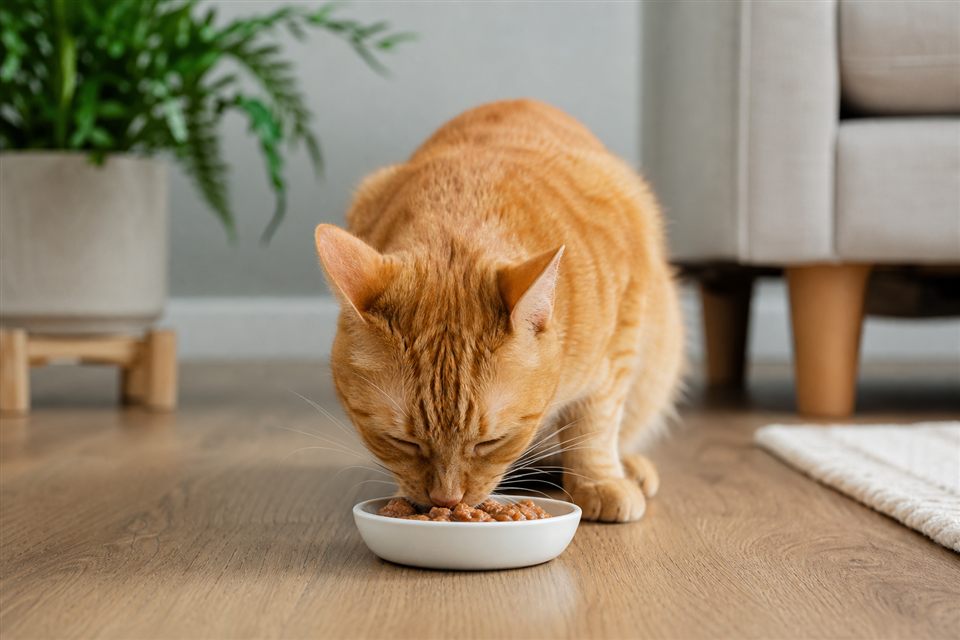
When the dermatologist suggested a food trial for Patch's chronic ear inflammation, his owner Simone faced a grocery puzzle: find a protein Patch had never eaten. Chicken, fish, and beef were off the table. A butcher sold her a plain rabbit leg, and Patch ate his first home-cooked portion with the quiet focus of a cat who finally got something new.
Key points at a glance
- Cooked plain rabbit meat without seasoning, bone, or added fat is a suitable novel protein for many cats in controlled portions.
- Rabbit is lean, highly digestible, and commonly used in veterinary elimination diets for food allergy trials.
- Portion as treat or trial component—not a complete diet unless formulated by a veterinary nutritionist.
- Offer one to two tablespoons of shredded cooked meat for average cats during trials, per veterinary protocol.
- Raw rabbit poses toxoplasmosis and bacterial risks; thorough cooking is mandatory.
- Small bones in rabbit cuts are hazardous—debone completely before serving.
- Cats with no allergy history benefit from rabbit as occasional variety, not daily unbalanced feeding.
Why rabbit works as novel protein
Food allergies in cats often target common proteins—chicken, beef, fish—present in commercial foods for years. A novel protein is one your cat's immune system has not encountered, reducing cross-reaction during elimination trials. Rabbit fits that role because few cats eat it before a vet directs them to.
Nutritionally, rabbit meat is lean with high protein density, low fat, and meaningful B vitamins including B12. Taurine content in rabbit is moderate; unlike mouse or rat natural prey, rabbit alone does not supply complete feline nutrition long term. Commercial rabbit-based prescription diets add synthetic vitamins and minerals rabbit flesh lacks in proper ratios.
Simone's trial lasted eight weeks on veterinary rabbit kibble with occasional plain cooked rabbit topper under her vet's gram-scale instructions. Patch's ears improved by week six—not magic, but systematic elimination doing its job.
Safe preparation and cooking
Source rabbit from reputable butchers or pet-food suppliers, not un inspected wild game unless your vet approves specific handling. Trim all visible fat if your cat is pancreatitis-prone, though rabbit is naturally leaner than beef or lamb.
Cook to internal temperature of 165°F (74°C)—no pink remaining. Boil, bake, or steam without oil, salt, garlic, or onion. Shred meat off the bone meticulously. Rabbit bones splinter like poultry; femur and rib fragments cause catastrophic obstruction if swallowed.
Cool before serving. Refrigerate leftovers within two hours; use within two days or freeze in labeled portions. Thaw frozen cooked rabbit in the refrigerator, not microwave hot spots that burn mouths.
Portion guidelines for treats versus trials
Outside formal trials, rabbit is an occasional protein treat—similar to plain chicken breast but with novelty value.
| Cat size | Occasional treat portion | Trial feeding |
|---|---|---|
| Small (under 8 lb) | 1 tbsp shredded | Vet-directed only |
| Average (8–12 lb) | 1–2 tbsp | Vet-directed only |
| Large (12+ lb) | 2–3 tbsp | Vet-directed only |
During elimination trials, any deviation—fish oil sneaks, flavored toothpaste, other treats—invalidates results. Follow your dermatologist's protocol exactly, including rabbit-only commercial food if prescribed alongside or instead of home cooking.
Home-cooked rabbit is not a complete diet
Feeding only rabbit meat causes taurine deficiency, calcium-phosphorus imbalance, and missing trace minerals within weeks. Cats develop dilated cardiomyopathy from taurine shortage— irreversible if prolonged. Veterinary nutritionists balance home recipes with supplements; DIY rabbit-only feeding kills slowly.
Commercial freeze-dried rabbit treats labeled for cats undergo formulation review; plain butcher meat does not. Treat categories differ fundamentally.
If cost limits prescription rabbit diets, discuss hydrolyzed protein alternatives with your vet rather than improvising unbalanced home rabbit meals indefinitely.
Rabbit versus other novel proteins
Venison, duck, and kangaroo appear in prescription diets with similar novel-protein logic. Rabbit tends to be leaner than duck and more available in some regions than kangaroo. Venison overlaps with outdoor exposure in hunting households—less novel if cats already encountered it in mixed foods.
Hydrolyzed diets break proteins into fragments the immune system ignores—another trial path when sourcing novel whole proteins fails or cats reject rabbit texture.
When rabbit is inappropriate
Cats with rabbit-specific allergy—rare but possible after prior exposure—will worsen on rabbit trials. Trial failure after strict compliance suggests environmental allergy or non-food causes, not necessarily wrong protein choice.
Gastrointestinal lymphoma, inflammatory bowel disease, and pancreatitis require structured diets beyond casual rabbit treats. Rabbit's leanness helps fat restriction but does not replace medical management.
Wild rabbit in endemic toxoplasmosis areas carries parasite risk even when cooked if handling is poor; commercial sourced meat reduces that concern.
Signs of problems after rabbit introduction
Vomiting, diarrhea, or refusal within 48 hours may indicate intolerance, undercooking, or bone fragment ingestion. Allergic flares during trials show as renewed ear scratching, facial rubbing, or skin lesions—contact your vet before switching proteins independently.
Constipation from bone ingestion or excessive lean meat without fiber balance warrants urgent evaluation if your cat strains without production for 24 hours.
The bottom line
Cooked plain rabbit meat in small portions serves healthy cats as a lean occasional treat and allergic cats as a valuable novel protein during veterinary-guided food trials. Debone thoroughly, cook completely, and never substitute rabbit alone for balanced cat food long term. Patch still eats rabbit prescription kibble daily; Simone saves plain cooked shreds for birthday mornings—and his ears stay quiet.
This article is for informational purposes only and is not a substitute for professional veterinary advice. Consult your veterinarian before introducing new foods, especially if your cat has existing health conditions.