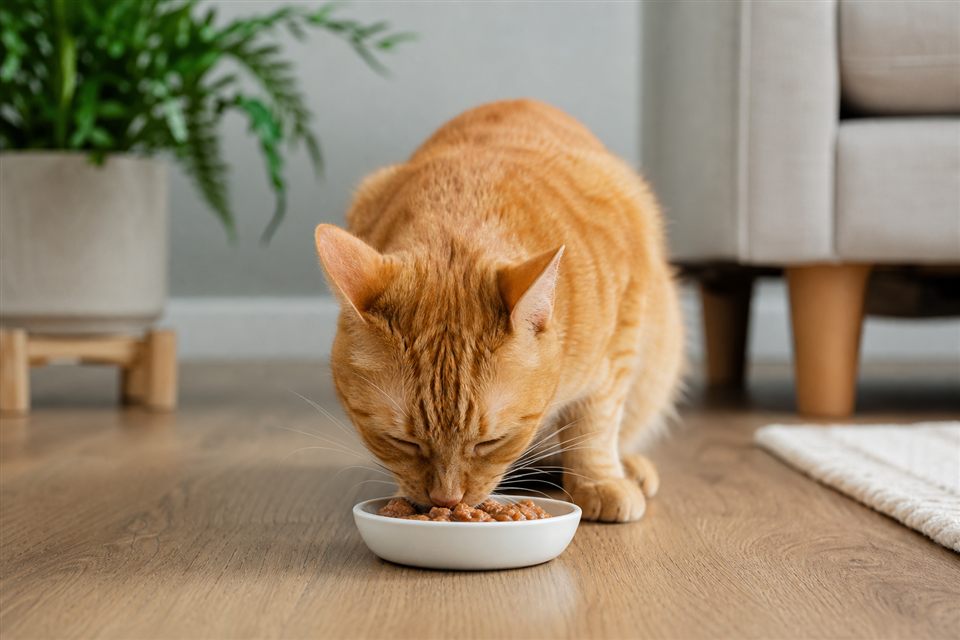
Thursday at 3:10 p.m., Camille Dubois pulled leftover roast goose from her Montreal fridge and peeled the skin off a $22 holiday bird that had fed six people. Brie, her 11-pound British Shorthair, sat on the chair like a guest who had not been invited but planned to stay. Last Christmas a bite of crispy skin had meant a greasy stool and a $165 “dietary indiscretion” invoice. Camille wanted lean meat only, no gravy, no sage.
Key points at a glance
- Plain cooked goose meat without skin can be an occasional treat for most cats
- Skin and drippings are the problem: they are extremely fatty
- Cook to 165°F; serve cooled 1/4-inch cubes
- No salt, onion, garlic, stuffing, or wine sauce
- Goose is richer than chicken; keep portions smaller than you think
- Skip it if your cat has a history of pancreatitis or a sensitive gut
Can cats eat cooked goose meat?
Yes, in tiny amounts, if you strip the skin and visible fat. Breast meat is leaner than thigh. Goose still carries more fat than turkey breast even after you trim. Brie got four 1/4-inch cubes—about 1 teaspoon—on top of her regular wet food. She ate them in 11 seconds and then stared at the carving board.
That stare is not a second serving.
Holiday tables are where cats get in trouble. A tablespoon of goose fat can trigger vomiting or a painful, hunched belly. Skin is delicious and dense with fat. It goes in the trash, not the bowl.
How should you prep leftover goose for cats?
Pull meat from a clean area that never touched stuffing, gravy, or cranberry sauce. Onion and garlic in a rub can damage red blood cells. Wine sauces add sugar and salt. If you cannot find a plain patch, do not share.
| Part | Cat-safe? | Why |
|---|---|---|
| Skinless breast, trimmed | Yes, tiny cubes | Leaner muscle |
| Skinless thigh, well trimmed | Sometimes | More fat; extra small serving |
| Skin and drippings | No | Fat bomb |
| Stuffing | No | Onion, bread, raisins, salt |
| Bones | No | Splinter risk |
| Gravy | No | Fat, salt, onion |
Reheat only if the meat sat in the fridge. Do not serve goose that sat on a buffet for 4 hours. Cool cubes to room temp. A 150°F cube burns.
If you cook goose just for the cat, roast or simmer a small piece of unseasoned breast to 165°F. That is cheaper than risking the holiday platter.
How much goose can a cat eat?
Treats stay near 10% of daily calories. Goose meat, even trimmed, can run 50–70 calories per ounce.
| Cat weight | First serving | Occasional max (holiday only is fine) |
|---|---|---|
| 7–8 lb | 1/2 teaspoon chopped | 1 teaspoon |
| 10–12 lb | 1 teaspoon | 2 teaspoons |
| 14–16 lb | 2 teaspoons | 1 tablespoon |
| 18+ lb | 1 tablespoon | 1.5 tablespoons |
Brie’s daily food is about 240 calories. Two teaspoons of goose is a treat. A “little plate” of scraps is a diet change and a gut gamble.
Camille weighs the cubes on a $12 kitchen scale. British Shorthairs gain weight if you blink.
What if my cat already ate the skin?
One lick of drippings often means a watchful night: water, a quiet room, no more extras. Vomiting more than twice, a cat who hides, a hard belly, or no appetite by morning is a clinic visit. Pancreatitis does not care that it was a holiday.
Do not “balance” the fat with milk. Do not add oil to “help it pass.”
Which cats should skip goose?
- Cats with pancreatitis history
- Cats on a low-fat GI diet
- Cats who are currently vomiting
- Cats on a novel-protein trial that does not include goose
Watch the litter box for 24 hours. Greasy stool, straining, or a cat who suddenly drinks much more than her usual 1 cup of water from the fountain deserves a pause.
Camille bagged the rest for people sandwiches. Brie got her teaspoon and a closed fridge door.
This article is for general education only and does not replace veterinary care. Call your vet if symptoms persist or worsen.