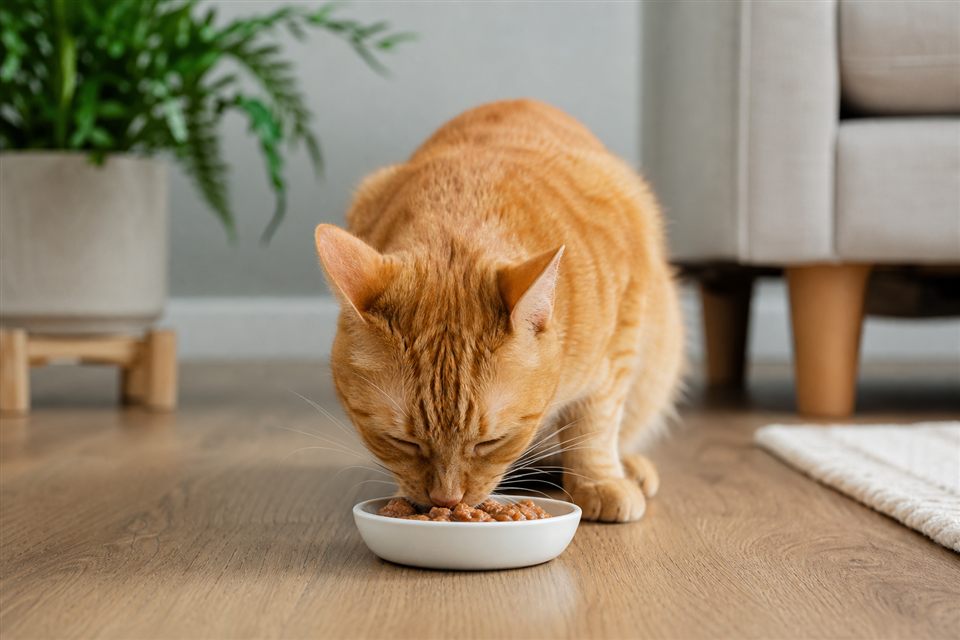
When the pet store ran out of Fig's usual treats, her owner Nate checked the freezer and found a duck breast he'd bought for himself. He trimmed the skin, baked a strip with nothing on it, and cut pea-sized cubes for Fig and her roommate, a skeptical ragdoll named Gumbo. Gumbo approved, which Nate considered a minor miracle given Gumbo's policy of rejecting anything that didn't smell like betrayal.
Key points at a glance
- Cooked plain duck breast without skin is safe for most cats in small portions.
- Duck is fattier than chicken breast — keep portions tiny and infrequent.
- It's useful as a novel protein during food allergy or intolerance trials.
- Never feed seasoned, salted, or crispy-skinned duck from human meals.
- Duck alone is not nutritionally complete for long-term feeding.
Why duck works for cats
Cats need animal protein — not optional, not negotiable. Duck breast delivers high-quality protein with a different amino acid profile and fat content than chicken or turkey, which makes it valuable during elimination diets when common proteins are suspects. Many commercial limited-ingredient cat foods use duck for exactly this reason.
Without skin, duck breast is leaner than many people assume, though it still carries more fat than skinless chicken breast. That fat makes it palatable — cats love it — but also means portion control matters, especially for overweight cats or those with a history of pancreatitis. A few pea-sized cubes go a long way.
Preparing duck breast the right way
Remove all skin and visible fat before cooking. Duck skin is delicious to humans and dangerously rich for cats eating more than a accidental lick. Bake, boil, or poach the breast until fully cooked (internal temp 165°F / 74°C). No salt, pepper, garlic, onion, soy sauce, or five-spice rub — cats don't need flavor enhancement, and many seasonings are toxic.
After cooking, let the meat cool and dice into pieces smaller than you think necessary. Cats don't always chew thoroughly. Shredded duck mixed into wet food works well for cats recovering from minor appetite dips.
Discard cooking fat and pan drippings. Pouring duck fat over kibble sounds indulgent; it's a pancreatitis invitation for sensitive cats.
Portion sizes
| Cat weight | Skinless cooked duck (treat portion) | Frequency |
|---|---|---|
| Under 8 lbs | ½ tsp diced | 1–2 times weekly |
| 8–12 lbs | 1 tsp diced | 1–2 times weekly |
| Over 12 lbs | 1–2 tsp diced | 2 times weekly max |
During a vet-supervised elimination trial, portions and frequency follow the protocol — often daily measured amounts mixed with a hydrolyzed or single-carbohydrate base. Don't extrapolate trial portions into everyday overfeeding once symptoms improve.
Duck and food allergies in cats
Cats develop food allergies and intolerances, though less dramatically than dogs in popular discussion. Chicken, fish, and beef are common triggers. Duck offers a less-exposed protein for trial diets. Success requires strict adherence — one breaded chicken strip stolen from the counter resets weeks of progress.
Over-the-counter duck cat foods sometimes contain hidden proteins — read labels or use veterinary diets during trials.
Risks to keep in mind
Fat content is the primary concern with duck. Vomiting, diarrhea, or a hunched posture after eating rich meat suggests pancreatitis or GI upset — contact your vet. Raw duck carries Salmonella and Campylobacter; cooking eliminates that risk and is the only approach worth recommending.
Bones — cooked or raw — are never appropriate. Long-term duck-only feeding without supplementation leads to nutritional gaps.
Duck vs. chicken for everyday treats
Chicken breast is leaner and cheaper; duck is richer and often more enticing. Rotate proteins rather than letting duck train picky habits.
The bottom line
Cooked plain duck breast without skin is a safe, high-value treat for most cats when served in pea-sized portions a couple of times a week. Trim fat, skip seasoning, and cook it through. It's particularly useful during novel protein trials, but even Gumbo-level picky eaters shouldn't get duck so often that it unbalances the diet or trains them to refuse everything else.
This article is for general informational purposes only and does not replace advice from your veterinarian. Always consult your vet before introducing new foods, especially if your cat has existing health conditions.