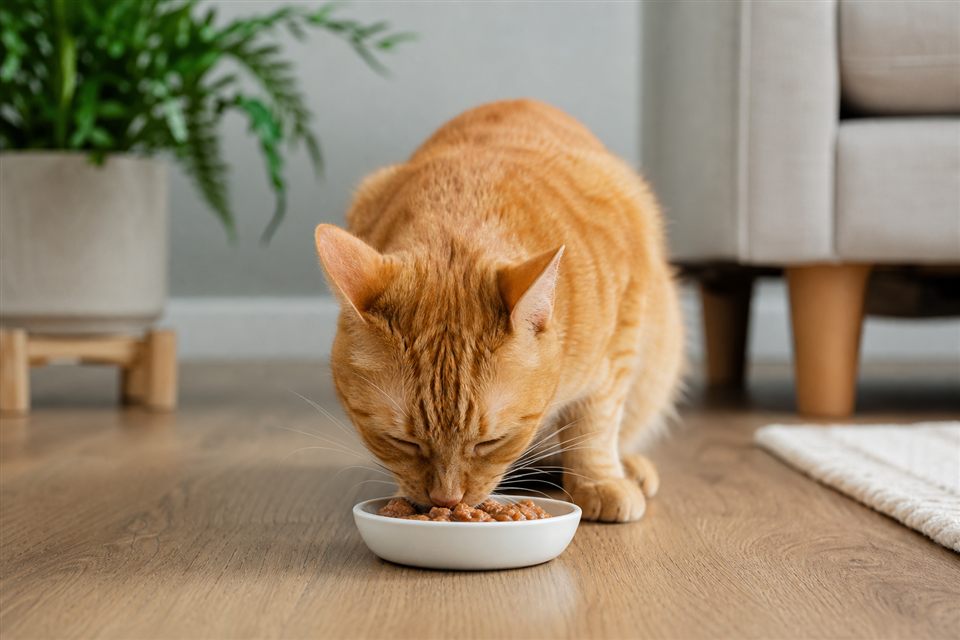
Denise cracked open snow crab legs for her anniversary dinner and noticed her tabby, Fig, performing full-scale surveillance from the counter stool. Fig had turned down chicken before. Crab was different. Denise pulled a forkful of white meat, checked for shell fragments, skipped the drawn butter entirely, and offered a dime-sized piece. Fig ate it and immediately tried to steal the fork.
Key points at a glance
- Plain cooked crab meat is safe for most cats in small amounts
- Shell fragments cause mouth injuries and intestinal blockages—remove all of them
- Skip butter, garlic, Old Bay, soy sauce, and salted cooking water
- Crab is a treat, not a balanced meal; it lacks taurine in meaningful amounts
- Cats with seafood allergies or kidney disease need vet approval first
Is crab meat safe for cats?
Yes. Crab is lean protein that most cats accept eagerly because of its strong aroma and soft texture. Cats are obligate carnivores; animal protein aligns with their biology. Plain cooked crab—with no seasoning and zero shell—is a reasonable occasional treat.
What makes crab risky is how humans prepare and eat it, not the meat itself.
Why is shell so dangerous?
Crab shells are sharp, brittle, and indigestible. A fragment stuck in gum tissue causes pain and infection. Swallowed pieces can puncture or block the digestive tract. Even "soft shell" crab still contains hard chitin that cats cannot break down.
Pick through meat carefully with your fingers or a light. Shred it finely for kittens or senior cats with weak teeth. If you would not serve it to a toddler without checking twice, do not serve it to your cat once.
How should you prepare crab for your cat?
Steam or boil crab in plain water. Do not use salted seafood boil bags, beer, lemon-garlic butter, or pre-seasoned crab cakes. Canned crab meat can work if it is packed in water with no added salt—read the label.
Serve at room temperature, not straight from the steamer. Cut into cat-appropriate bites: pea-sized for average adults, smaller for kittens.
| Cat size | Portion | Frequency |
|---|---|---|
| Average adult | 1–2 teaspoons shredded meat | Once weekly |
| Large adult | 1 tablespoon max | Once weekly |
| Kitten | 1/2 teaspoon | Rarely; ask your vet |
Does crab provide good nutrition for cats?
Crab offers protein, B12, and zinc. It is low in fat compared to some meats. What it does not provide in adequate quantity is taurine—the amino acid cats must get from diet. A cat eating only crab would develop serious deficiencies over time.
Treat crab like shrimp or chicken tidbits: a bonus on top of complete cat food, not a meal replacement.
Imitation crab vs real crab: safe for cats?
Imitation crab—surimi—is processed white fish mixed with starch, egg, sugar, and salt. It is not toxic in a tiny bite, but the additives and sodium make it a poor choice compared to plain real crab meat. If you are going to share crab, use actual cooked crab flesh without seasoning. Skip crab dips, crab rangoon filling, and sushi rolls that include avocado, spicy mayo, or tempura.
What about mercury and allergies?
Crab is lower in mercury than large predatory fish like tuna or swordfish, but it is still seafood. Limit frequency to avoid cumulative exposure, especially if your cat already eats fish-based cat food daily.
Seafood allergies in cats exist. Signs include vomiting, diarrhea, itchy skin, or ear inflammation after eating. Stop feeding crab and consult your vet if those appear.
Denise gives Fig crab two or three times a year when they have it at home—never from restaurant leftovers with hidden seasoning. Fig's regular diet stays a taurine-fortified wet food her vet recommended. If your cat has hyperthyroidism, kidney disease, or a history of urinary blockages, ask your veterinarian before adding crab or any new protein source.