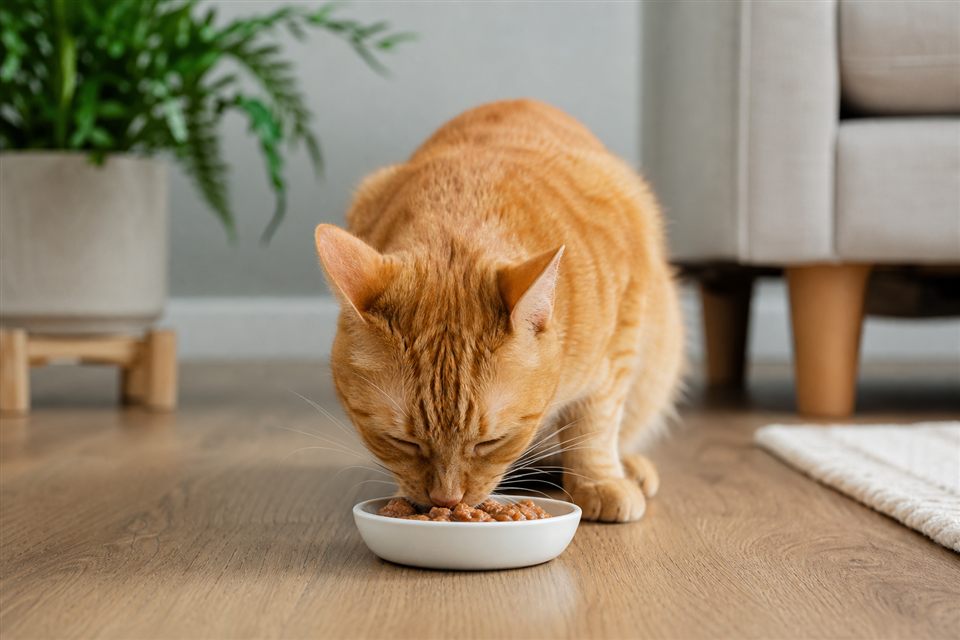
Rosa browned ground beef for tacos and scooped a tablespoon of plain meat into a saucer before adding cumin, chili powder, and onion to the skillet. Her senior cat, Guillermo, appeared from nowhere—a talent cats reserve for beef. Rosa knew taco night seasoning was poison for him; the question was whether the plain scoop itself was kindness or clutter in an already complete diet.
Key points at a glance
- Cooked plain lean ground beef without seasoning, onion, garlic, or added fat is safe for most healthy cats in small occasional portions.
- Choose 90% lean or higher to limit fat load that triggers pancreatitis in susceptible cats.
- One tablespoon per average cat per serving, two to three times weekly maximum, treats beef as supplemental—not staple.
- Ground beef alone lacks taurine, calcium, and essential vitamins; it cannot replace balanced cat food.
- Raw ground beef carries E. coli and salmonella risk for cats and humans handling litter afterward.
- Cats with beef allergy, kidney disease, or fat-restricted diets need veterinary clearance before beef treats.
- Greasy drippings, seasoned crumbles, and burger patty mixes are never appropriate.
Why lean ground beef appeals to cats
Beef delivers animal protein cats metabolize efficiently, with iron, zinc, and B vitamins including B12. Aroma from cooking triggers feline interest stronger than many vegetables or grains— irrelevant to cats nutritionally, highly relevant to owners trying to medicate or reward.
Lean ground beef cooks quickly and mixes into food for picky eaters when vet-approved. The texture suits cats who reject chunkier meat cuts. Rosa uses plain beef crumbs to hide a pill twice weekly—Guillermo accepts the bribe without rejecting his renal-support kibble afterward.
Fat content separates safe treat from risky indulgence. 70% lean ground beef renders substantial grease when browned; that grease concentrates saturated fat linked to pancreatitis flares. Drain thoroughly or start with 93% lean and above. Blot cooked crumbles with paper towel if any sheen remains.
Safe cooking and preparation
Cook until no pink remains—160°F (71°C) for ground beef. Break into fine crumbles cats cannot choke on. No cooking oil in the pan; nonstick pans or tiny water splash prevent sticking without added fat.
Never add salt, pepper, garlic powder, onion flakes, or taco seasoning. Commercial spice blends hide allium derivatives even when you cannot see pieces. Cook your cat's portion first, set aside, then season human food separately—Rosa's system prevents cross-contamination.
Cool to lukewarm before serving. Refrigerate within two hours; use within two days or freeze flat in teaspoon portions for quick thawing.
Portion sizes by cat size
Treat beef like concentrated protein calories, not bulk filler.
| Cat size | Plain lean beef portion | Frequency |
|---|---|---|
| Small (under 8 lb) | 1 tsp–1 tbsp | 2–3× weekly |
| Average (8–12 lb) | 1 tbsp | 2–3× weekly |
| Large (12+ lb) | 1–2 tbsp | 2–3× weekly |
Senior cats with reduced activity need smaller portions despite unchanged enthusiasm. Guillermo gets one level tablespoon; more caused weight creep Rosa noticed only at the scale.
Nutritional gaps home beef cannot fill
Taurine destruction occurs with excessive cooking and is marginal in muscle meat relative to heart tissue. Cats fed beef exclusively develop taurine-deficient cardiomyopathy. Calcium deficiency follows when meat replaces bone or formulated mineral sources. Vitamin A from meat alone lacks preformed retinol balance without liver inclusion—another formulation puzzle home cooks misjudge.
Prescription and premium cat foods solve these equations. Beef toppers supplement; they do not restructure total nutrition unless a board-certified veterinary nutritionist designs the full recipe.
Beef in food allergy context
Beef is a common allergen in cats alongside chicken and fish. Chronic itching, eosinophilic granuloma complexes, or gastrointestinal signs may trace to beef exposure in multi-protein kibble fed for years. Elimination trials remove beef entirely—plain beef treats sabotage trials if introduced mid-protocol.
Novel or hydrolyzed diets exist partly because beef ubiquity makes it a frequent culprit. If your vet suspects beef allergy, treats must match trial rules strictly.
When ground beef causes harm
Pancreatitis presents as hunched posture, vomiting, dehydration, and abdominal pain—often after fatty meals including greasy beef crumbles. Obese cats accumulate calories from "small" daily beef habits that exceed 10% treat guidelines.
Kidney disease cats may need protein moderation depending on stage; beef protein density can exceed renal diet targets when piled on top of prescription food without subtracting equivalent kibble calories.
Raw feeding advocates sometimes offer raw ground beef; bacterial shedding in feces endangers pregnant owners, elderly household members, and immunocompromised individuals. Cooking eliminates that zoonotic pathway.
Seasoned beef products to avoid entirely
Taco meat, spaghetti bolognese, seasoned burger patties, meatloaf with breadcrumb and ketchup, and commercially seasoned frozen crumbles—all contain onion, garlic, salt, and sometimes nutmeg or other spices toxic or harmful to cats. Fast food burger patties add phosphate preservatives and excessive sodium.
Beef jerky for humans includes soy sauce, sugar, and curing agents. Dog treats with beef flavoring are formulated for dogs, not cats— nutrient profiles and additive levels differ.
Signs beef treats are not working
Soft stool or diarrhea within 12 hours suggests fat overload or intolerance. Chronic ear scratching after beef reintroduction during trial hints at allergy persistence. Weight gain appears gradually—monthly weigh-ins catch drift early.
Refusal of regular food in favor of waiting for beef toppers indicates behavioral conditioning, not medical issue. Reduce treat frequency and offer regular food on schedule without substitution bargaining.
The bottom line
Cooked plain lean ground beef in small unseasoned amounts suits most healthy cats as an occasional treat or medication disguise when fat is drained and portions stay modest. Seasoned taco meat belongs on tortillas, not in cat bowls—and beef alone never replaces complete feline nutrition. Guillermo still materializes on taco night, but Rosa's plain scoop happens before the spice jar opens, and that sequence protects him better than any extra tablespoon ever could.
This article is for informational purposes only and is not a substitute for professional veterinary advice. Consult your veterinarian before introducing new foods, especially if your cat has existing health conditions.