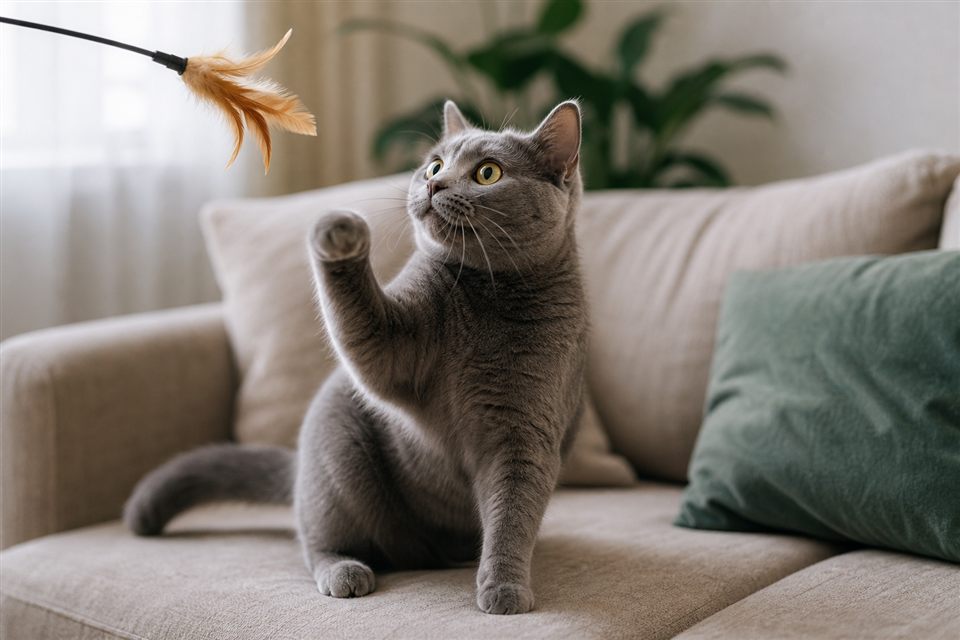
You buy catnip mouse; one cat rolls and drools, the other walks away bored. Nepeta cataria is safe for most healthy cats in moderation — sniffing triggers 10-minute euphoria, eating dried leaves sometimes sedates. Genetics decide responder vs the thirty percent who ignore it entirely.
Key points at a glance
- Fresh or dried catnip — occasional treat OK — not daily meal.
- Kittens under ~6 months — often no response — develop later maybe.
- Non-responders — inherited — try silvervine or valerian alternatives.
- Overeating dried nip — mild GI upset — limit portions.
- Pregnant cats — avoid — uterine stimulation concern.
Sniff vs eat vs toy stuffing
| Exposure | Typical effect |
|---|---|
| Sniff dried | Rolling, rubbing, zoomies 5–15 min |
| Eat small amount | Some cats calm or nap |
| Fresh plant chew | Stronger response |
| Toy refill monthly | Potency fades — refresh |
Response wears off ~10 minutes — refractory period ~2 hours — cannot "catnip all day."
Why some cats ignore catnip
Autosomal dominant gene — responders inherit sensitivity to nepetalactone. Non-responders lack receptor trigger — not broken cat, just genetics.
Breed anecdote — some Asian breeds lower response rates reported — individual variation dominates.
Try silvervine (Actinidia) — ~80% cat interest in studies — mix for novelty.
Safe amounts
- Pinch dried on mat — once daily max
- Fresh sprig — supervised — pot safe if not pesticide
- Avoid essential oil concentrates — too strong, skin irritant
Catnip tea for humans — not cat drink — other additives.
Overinduction and tummy upset
Binge dried leaves — vomiting or soft stool — remove access, plain water.
Aggression spike — rare — multi-cat — separate play sessions.
Storage
Airtight jar — freezer extends potency — stale nip explains sudden "stopped working."
The bottom line
Cats can eat and sniff catnip safely in small occasional doses — responders get short legal highs, non-responders need no fix. Kittens and genetically indifferent adults ignoring catnip is normal; try silvervine if you wanted enrichment. Daily catnip buffets cause stomach upset, not better behavior — treat it as a party trick, not nutrition.
This article is for general education only and does not replace advice from a licensed veterinarian.